Agentic Shopping Will Reshape How Consumers Find Your CPG Brand
AI shopping agents are already filtering CPG brands before humans see them. Here is what strong operators are doing to stay visible as agentic commerce scales.
AI Shopping Agents Are Already Qualifying Your Products Without You in the Room
Within the next 24 months, a meaningful share of online purchase decisions will be made not by humans browsing search results, but by AI agents acting on behalf of consumers. Google's push into agentic commerce is not a future trend to monitor. It is an operational reality that brand operators need to account for right now, in how they structure listings, content, and distribution.
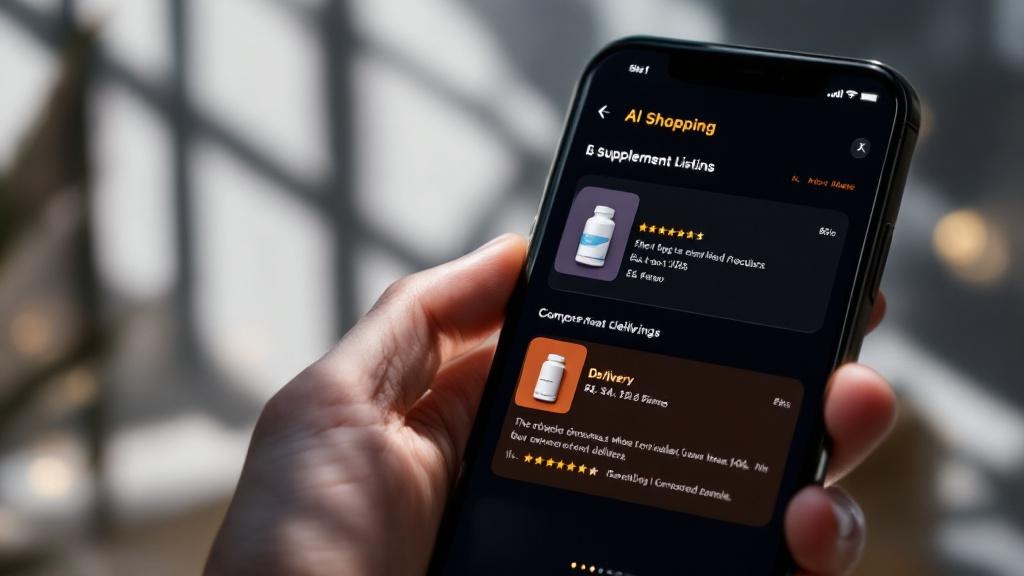
Agentic shopping refers to AI systems that receive a goal from a user, such as 'find me the best magnesium supplement under $30 with fast delivery,' and then autonomously research, compare, and complete the purchase. The agent pulls structured data, reviews, pricing signals, and fulfillment reliability to make a recommendation or execute a transaction directly. Google has outlined its agentic shopping vision as part of a broader shift toward AI-powered consumer experiences that reduce friction at every stage of discovery and conversion.
What This Means for Brands Selling on Amazon and TikTok Shop
The implications for CPG brands are direct. If an AI agent is making purchase decisions, it is not responding to lifestyle imagery or aspirational copy. It is parsing structured signals: ingredient lists, fulfillment speed, return rates, review velocity, price competitiveness, and content completeness. Brands with weak catalog infrastructure will be filtered out before a human ever sees them.
Amazon is already operating in this direction. Its Rufus AI shopping assistant processes listing content to answer buyer questions, and its ranking systems weight fulfillment reliability and review quality heavily. TikTok Shop, meanwhile, is building recommendation infrastructure that surfaces products based on engagement signals and purchase intent data. Both platforms are moving toward environments where algorithmic agents, not browsing humans, control the first cut of what gets seen.
The brands that win in an agentic commerce environment are the ones whose product data is clean, complete, and consistent across every touchpoint. That is not a content task. That is a systems task, and it requires a partner operating at the infrastructure level, not just managing ad spend.
What Separates Strong Operators from Weak Ones in This Environment
Most agencies are still optimizing for human browsers. They write bullet points for people, design A+ content for people, and run PPC campaigns targeting keywords that people type. That approach will degrade in value as agentic layers absorb more of the discovery process.
Strong operators are already building for both audiences simultaneously. Here is what that looks like in practice:
- Structured catalog hygiene: Every attribute field populated, every variant mapped correctly, every backend keyword reflecting how AI systems parse intent rather than how humans search. An agent querying for 'protein powder with no artificial sweeteners, Prime eligible, 4.5 stars or higher' needs every one of those signals available in structured form.
- Review velocity and recency management: Agentic systems weight social proof heavily. A brand with 200 reviews from 18 months ago will lose to a brand with 80 reviews from the last 60 days. A serious operator has a systematic approach to generating compliant review volume continuously.
- Fulfillment reliability as a ranking signal: Late shipment rates, cancellation rates, and FBA compliance metrics are not operational details. They are algorithmic inputs. An agent recommending a product to a user is not going to surface a brand with a 4% late shipment rate when a competitor has 0.8%.
- Pricing architecture that survives algorithmic comparison: If your pricing is inconsistent across channels, agentic systems will flag the discrepancy or deprioritize you entirely. MAP enforcement and channel pricing discipline are now part of your content strategy.
- Content that answers questions, not just sells: AI agents are already being used to answer pre-purchase questions. Your listing content, your A+ modules, and your product detail page structure need to function as a knowledge base, not just a conversion asset.
Why Distribution Strategy Matters More Than Ever
Agentic commerce also changes the calculus on distribution. When a human browses Amazon, they might find your product through a sponsored placement or a category browse. When an AI agent is executing a purchase, it is looking for the most qualified result matching a specific set of criteria. That means unauthorized resellers, inconsistent pricing from third parties, and gray market listings are no longer just brand integrity problems. They are algorithmic liability.
If an agent compares your authorized listing at $34.99 to an unauthorized reseller at $29.99 with the same ASIN data, it may route the transaction to the reseller. The brand gets the revenue hit without the customer relationship. This is exactly why 3P exclusive distribution, where a single qualified operator controls the brand's presence on a given marketplace, is becoming a structural advantage rather than just a preference.
Eleviam operates on this model. As a brand's exclusive Amazon and TikTok Shop partner, the incentives are fully aligned: catalog integrity, pricing discipline, review management, and fulfillment performance all sit under one operator with skin in the game. There is no diffusion of accountability across multiple resellers. The brand's algorithmic health is managed as a single unified asset.
The Window for Getting This Right Is Narrowing
Brands that treat agentic commerce as a 2026 problem will spend 2025 losing ground to competitors who are already building the infrastructure that AI systems reward. The shift is not abrupt, but it is consistent and directional. Google's investments in agentic shopping technology signal that the major platforms are accelerating this transition regardless of whether brand operators are ready.
The question is not whether to prepare. The question is whether your current operator is capable of preparing you, or whether they are still running 2022 playbooks while the environment moves underneath them.
Running $75k+/month on Amazon or TikTok Shop? Book a free 30-minute audit call and we'll show you exactly where the margin is leaking.
Book a Free Call →More From the Eleviam Blog
Amazon AMC Data Reveals What Separates Scaling CPG Brands From Stalling Ones
September 13, 2026
Amazon CPC in 2026: What Your Brand Can Actually Afford Per Click
September 12, 2026