AI Shipping Analytics Are Table Stakes Now — Here's What Actually Matters
AI shipping analytics are now standard — but most brands still can't answer basic questions about their true cost per unit. Here's what your operator should be doing.
Shipping costs are quietly destroying your Amazon margins, and weekly reports won't save you
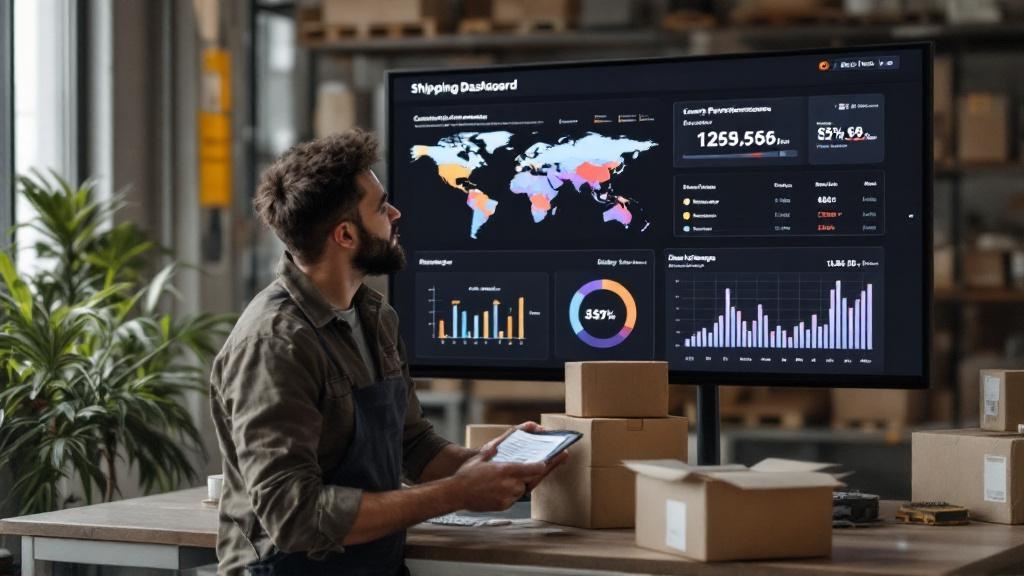
The average CPG brand doing $100K+/month on Amazon loses between 8% and 14% of gross revenue to shipping-related line items they never fully see: carrier surcharges, weight adjustments, zone mismatches, and invoice corrections that quietly chip away at what looked like a healthy P&L. Shippo's latest update to its Intelligence platform — adding AI-generated weekly insights emails, interactive delivery performance maps, and dedicated surcharge dashboards — is a signal that the industry is finally admitting the problem exists. The announcement confirms what serious operators have known for years: static reporting is not a logistics strategy.
Surcharge visibility is a starting point, not a solution
Shippo's new surcharges dashboard breaks down additional fees by carrier and service level. The positive adjustments dashboard flags invoice changes that reduce shipping costs. For a brand managing its own shipping in-house, this is genuinely useful. But for a brand scaling on Amazon FBA or growing through TikTok Shop fulfillment, the more important question is whether your operator — agency, 3PL, or distributor — is doing this analysis on your behalf, at scale, and acting on it proactively.
A weekly email summarizing last week's shipping trends is reactive intelligence. A capable operations partner should be identifying surcharge exposure before it hits your invoice, not after. That means understanding which ASINs are generating dimensional weight penalties, which carriers are running hot on a given region, and whether your inbound FBA prep is creating unnecessary repackaging costs downstream.
What separates good operators from those just running reports
There's a meaningful difference between a partner who gives you data and one who takes action on it. When evaluating any agency or distribution partner for your Amazon or TikTok Shop business, the shipping and fulfillment layer is one of the most important due diligence questions you can ask — and most brands never ask it.
- Are they monitoring surcharge exposure by carrier and service level, or just reconciling invoices after the fact? Surcharges on major carriers have surged in 2025 and 2026, reshaping ecommerce unit economics across the board. A reactive partner costs you 3–6 weeks of unnecessary spend per billing cycle.
- Can they show you on-time delivery performance by region, not just overall? Regional delivery failure rates directly affect your Amazon seller metrics, review velocity, and Buy Box eligibility. Aggregate OTD numbers hide the ZIP-level problems that are quietly suppressing conversion.
- Do they have visibility into your full cost stack — not just COGS and ad spend? The brands that consistently grow contribution margin are the ones whose operators treat shipping cost as a dynamic input, not a fixed line item.
The FBA layer adds complexity most agencies ignore
For Amazon-native CPG brands, the shipping intelligence problem has an additional layer: FBA fee structures change, inventory placement requirements shift, and Amazon's own carrier preferences evolve. A brand that understood its shipping cost structure in Q3 2025 may be working from completely outdated assumptions by Q1 2026.
This is where the agency-first model matters. An operator managing multiple brands across Amazon and TikTok Shop has exposure to pattern recognition that a single-brand in-house team simply doesn't. They see which carriers are generating the most positive invoice adjustments. They know when Amazon is flagging certain prep configurations for additional handling fees. That institutional knowledge, applied proactively to your account, is what turns shipping from a cost center into a managed variable.
TikTok Shop fulfillment is the next frontier for cost leakage
TikTok Shop's fulfillment infrastructure is maturing rapidly, but the cost visibility tools available to merchants are still catching up to what's available in the Amazon ecosystem. Brands entering or scaling on TikTok Shop right now are largely flying blind on their true shipping unit economics — particularly when mixing fulfilled-by-platform inventory with direct shipping from their own warehouse or 3PL.
The brands that get ahead of this are the ones working with operators who are already building the analytics infrastructure to track cost per shipped unit across both channels, not waiting for TikTok Shop's native tooling to catch up. The Shippo Intelligence model — AI surfacing the patterns, humans taking action — is the right framework. The question is whether your current partner has built that framework for your specific SKU mix and channel split.
What you should be asking your current partner right now
If you're doing $75K or more per month on Amazon or TikTok Shop and you can't immediately answer these three questions, your shipping cost structure deserves attention:
- What percentage of our shipped units last month incurred surcharges beyond base carrier rates, and which SKUs drove the most exposure?
- What is our on-time delivery rate by destination region, and how does it correlate with our review scores in those markets?
- How has our average cost per shipped unit trended over the last 90 days, and what is driving the change?
If your partner can't answer those questions within 24 hours, the margin leakage is real — and it's compounding every week.
Running $75k+/month on Amazon or TikTok Shop? Book a free 30-minute audit call — we'll show you exactly where the margin is leaking.
Book a Free Call →