Amazon AMC Attribution Data Is Separating Winning Brands From Losing Ones
Amazon Marketing Cloud gives brands attribution data most agencies never touch. Here is what separates partners who use AMC well from those who do not.
Most Amazon Advertisers Are Flying Blind on Attribution
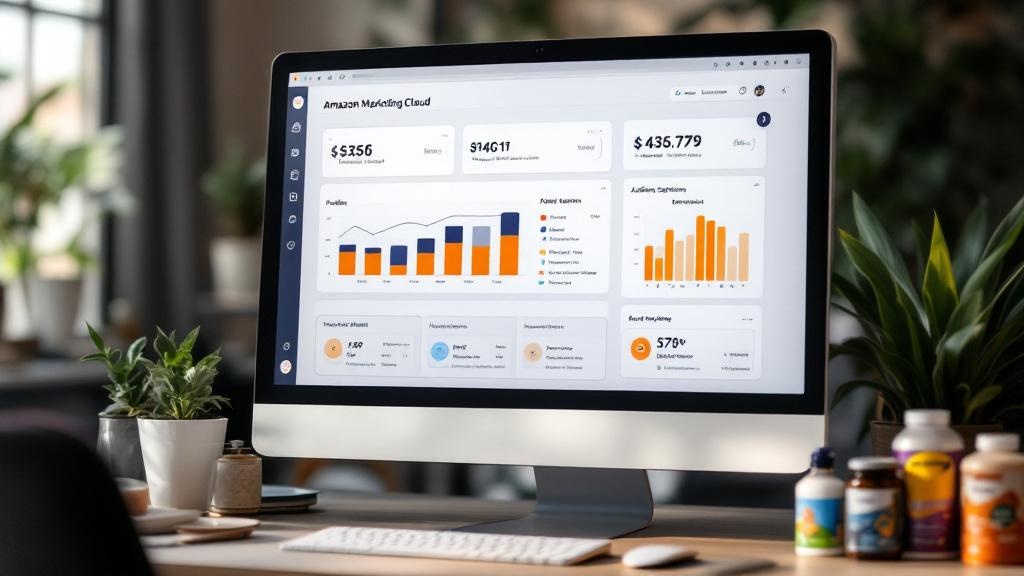
Amazon Marketing Cloud gives brands access to household-level audience data, multi-touch attribution across the full funnel, and path-to-purchase analysis that standard Seller Central reporting cannot touch. Yet the majority of CPG brands doing $75K to $500K per month on Amazon have never run a single AMC query. Their agencies are optimizing campaigns on last-click ROAS while leaving the deeper signal completely untapped.
That gap is where margin leaks. And it is also where the best operators are quietly pulling ahead.
What AMC Actually Tells You That Standard Reporting Does Not
Amazon's native campaign manager shows you clicks, spend, and attributed sales within a narrow conversion window. AMC operates at a different level entirely. It connects Sponsored Products, Sponsored Brands, DSP, and streaming ad exposures into a single deduplicated view of how real shoppers move toward a purchase decision.
Specifically, AMC allows brands and their partners to analyze which ad touchpoints drove new-to-brand customers versus repeat buyers, how long the actual purchase cycle is for a given category, which audience segments have the highest lifetime value after first purchase, and where spend is overlapping across campaign types without adding incremental reach. Amazon's own documentation on AMC makes clear this is an enterprise-grade tool built for brands serious about understanding full-funnel economics, not just optimizing a single keyword bid.
For a CPG brand with a 60-day repurchase cycle, knowing that DSP exposure 45 days before purchase drove 30% of conversions that would have been attributed to a Sponsored Products click is worth real money in budget reallocation decisions. Without AMC, that insight does not exist.
The Agency Capability Gap Is Larger Than Most Brands Realize
AMC requires SQL-based querying inside a clean room environment. It requires a DSP relationship, proper audience setup, and the analytical capacity to turn raw query outputs into actionable campaign changes. Most Amazon agencies, particularly those managing 50 or more brand accounts simultaneously, do not have this infrastructure in place. They are running templated Sponsored Products and Sponsored Brands campaigns and calling it full-funnel strategy.
Brands evaluating agency partners should ask three direct questions: Do you have active AMC access? Can you show us a sample query output from a comparable brand? What campaign decisions have you made in the last 90 days based on AMC data? If the answers are vague, the agency is not operating at the level the platform now demands.
At Eleviam, AMC analysis is part of how we build audience strategy for both Amazon advertising and the broader cross-channel picture. Brands running on Amazon alongside TikTok Shop need to understand where their customer acquisition is actually happening, because the attribution story on each platform looks very different depending on which window you use and what the buyer's path actually looked like.
New-to-Brand Customer Acquisition Is the Metric That Compounds
One of AMC's most valuable applications for CPG brands is separating new-to-brand revenue from repeat purchase revenue at the campaign level. This distinction matters enormously for growth decisions. A campaign with a 2.5x ROAS that is entirely reaching existing buyers looks very different from a campaign with a 1.8x ROAS that is pulling in 70% new-to-brand customers who will repurchase at 40% rates over the next six months.
Standard campaign reporting cannot make that distinction. AMC can. Brands that optimize purely on short-window ROAS end up over-investing in retention-adjacent campaigns that feel efficient but are not actually growing the customer base. The brands scaling past $500K per month consistently are the ones whose partners are measuring new-to-brand acquisition cost as a primary KPI, not an afterthought.
DSP Access Is a Prerequisite, Not a Premium Add-On
AMC's full capabilities require Amazon DSP access. DSP is not available to every seller and typically requires either direct Amazon account management relationships or an agency with managed DSP access. This is one of the structural advantages of working with a full-service partner rather than a self-service model.
Brands scaling on Amazon should understand that the advertising infrastructure that unlocks AMC, streaming ad measurement, and off-Amazon audience targeting is not accessible through Seller Central campaign manager alone. A partner with DSP relationships changes what is measurable, and what is measurable changes what is optimizable. Amazon's DSP overview outlines the inventory and targeting capabilities that become available at this level, which are qualitatively different from sponsored ad placements.
What Separates Partners Who Use AMC Well From Those Who Do Not
Having AMC access and using it well are two different things. The brands getting real value from AMC work with partners who have established query libraries for CPG-specific analysis, who connect AMC outputs to actual budget decisions within defined review cycles, and who use audience insights from Amazon to inform creative and messaging strategy, not just bid adjustments.
Poor AMC usage looks like running a few queries once per quarter to include in a slide deck without connecting findings to campaign structure changes. Strong AMC usage looks like weekly audience refresh cycles, continuous new-to-brand cohort tracking, and using path-to-purchase data to sequence ad exposure intentionally across the funnel.
The difference in outcomes between these two approaches, for a CPG brand spending $50K to $200K per month on Amazon advertising, can easily be 20 to 35% in effective ROAS improvement over a 6-month period once attribution is properly understood and acted on.
The Bottom Line for Brands Evaluating Their Amazon Strategy
Amazon's advertising platform has matured well beyond what most brand-side teams or generalist agencies can fully operate. AMC represents a real capability threshold. Brands whose partners have crossed it are making fundamentally better allocation decisions. Brands whose partners have not are optimizing a simplified version of reality and paying for the gap in lost margin and slower growth.
Running $75k+/month on Amazon or TikTok Shop? Book a free 30-minute audit call and we'll show you exactly where the margin is leaking.
Book a Free Call →