ChatGPT Instant Checkout Failed: What CPG Brands Must Learn Now
ChatGPT Instant Checkout converted at 3x lower rates than standard commerce. Here's what CPG brands scaling on Amazon should take from this failure.
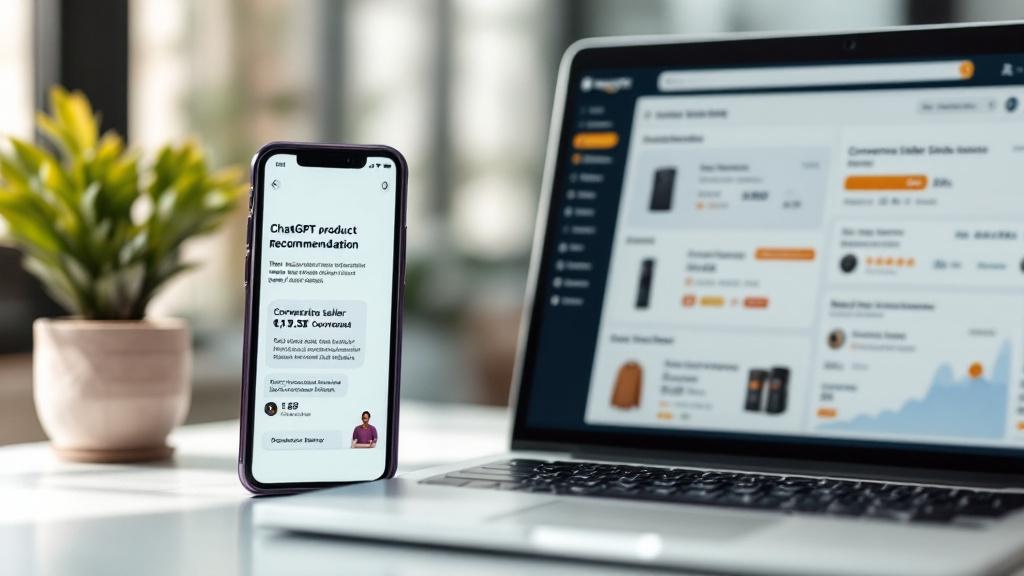
AI-assisted checkout converts at one-third the rate of standard commerce, and the brands that moved fast on ChatGPT Instant Checkout have little to show for it.
Six months ago, ChatGPT's Instant Checkout was being pitched as the next frontier of frictionless commerce. Retailers integrated early, marketers wrote think pieces, and operators started asking whether Amazon's dominance could be disrupted by an AI-native shopping layer. The answer, at least for this iteration, is no. OpenAI has scaled back the feature after merchants including Walmart and Etsy reported conversion rates roughly three times lower than standard checkout flows. Walmart's EVP of AI acceleration confirmed the results directly: sales were disappointing, and customers didn't want a fragmented checkout that bypassed their existing cart.
This is not a story about AI failing. It is a story about execution outrunning consumer behavior, and about brands learning the hard way that discovery and conversion are two entirely different problems requiring two entirely different solutions.
What Actually Happened with Instant Checkout
The mechanic was straightforward. A user asked ChatGPT what product they wanted, received recommendations pulled from across the web, and for merchants with Instant Checkout enabled, could complete the purchase directly inside ChatGPT without leaving the app. The merchant handled fulfillment, returns, and customer support on the back end.
The friction point OpenAI didn't anticipate: consumers use ChatGPT to research, not to transact. The Information reported that OpenAI's own staff recognized this behavioral gap, noting that ChatGPT users were actively researching products but not following through to purchase within the interface. When Walmart ran the numbers, conversion on Instant Checkout was a fraction of what their standard commerce flow produced. Customers worried about receiving five separate boxes when they wanted one consolidated shipment. They didn't trust the AI to understand their full cart context.
OpenAI responded by pivoting to a model where merchants build their own apps that plug into ChatGPT, rather than operating inside a generic Instant Checkout template. Etsy, one of the first merchants to enable the feature in September 2025 with millions of items listed, confirmed it saw no significant sales volume through the channel. The company is now redirecting its efforts toward building a custom ChatGPT app that gives it more control over the user experience and better surfaces its sellers' original products.
Discovery Value Is Real. Conversion Value Is Not There Yet.
The nuance brands need to internalize is that ChatGPT is already generating meaningful referral traffic. Etsy confirmed that ChatGPT recommendations are driving eyeballs back to their marketplace. That discovery function has value. But discovery is not conversion, and conflating the two leads to misallocated resources and inflated expectations.
For CPG brands scaling on Amazon and TikTok Shop, this distinction matters enormously. The marketplaces where consumers are already primed to buy, where trust in the checkout flow is established, where fulfillment reliability is baked into the infrastructure, those are where conversion happens at scale. AI-assisted discovery may eventually funnel more qualified traffic toward those destinations. But the destination still has to be optimized to close the sale.
What This Means for How You Evaluate Your Commerce Partners
The ChatGPT Instant Checkout episode is a useful stress test for evaluating how your commerce partners think about channel strategy. The brands that over-rotated toward the new shiny channel at the expense of their core marketplace operations made a structural mistake. A competent operator would have recognized the behavioral gap early, treated ChatGPT as a discovery and brand awareness channel, and continued investing in the conversion infrastructure on Amazon and TikTok Shop where purchase intent is already high.
Here is what separates disciplined operators from reactive ones when a new commerce channel emerges:
- They audit whether the consumer behavior on that channel actually supports conversion, not just engagement or discovery.
- They protect the existing checkout experience rather than fragment it across unproven surfaces.
- They allocate test budgets proportionally, without pulling resources from channels with proven ROI.
- They monitor early signals like conversion rate data and referral traffic quality before scaling integration.
- They treat new platform relationships as distribution experiments, not strategy pivots.
Amazon and TikTok Shop Are Where Conversion Infrastructure Exists Today
OpenAI's own language in its March 24 blog post is telling. The company wrote that it wanted to offer merchants more flexibility in how they convert consumers, and acknowledged that the initial version of Instant Checkout did not meet that standard. What OpenAI is describing is the same problem every brand encounters when it moves away from a marketplace with built-in conversion infrastructure: trust, logistics clarity, and purchase momentum don't transfer automatically to new surfaces.
Amazon has spent decades building the checkout trust layer. TikTok Shop is building it rapidly through social proof, creator-driven content, and seamless in-app purchase flows. These are not perfect platforms, but they are where consumers have demonstrated willingness to complete transactions. A brand's operational excellence on these channels, its listing quality, its inventory positioning, its advertising precision, its review management, determines whether discovery moments anywhere on the internet, including ChatGPT, convert into revenue.
The right partner for a CPG brand scaling on Amazon or TikTok Shop is not one chasing every new feature announcement. It is one that maintains rigorous focus on the channels where purchase behavior is proven, while monitoring emerging surfaces for real signals rather than noise. ChatGPT just provided a very expensive data point that distinguishes the two.
Running $75k+/month on Amazon or TikTok Shop? Book a free 30-minute audit call and we'll show you exactly where the margin is leaking.
Book a Free Call →