How Discovery Commerce Is Reshaping Retail Media Strategy in 2026
Search captures demand. Discovery creates it. Here is how the shift to discovery commerce in 2026 changes what your retail media partner should be doing.
Search Captures Demand. Discovery Creates It.
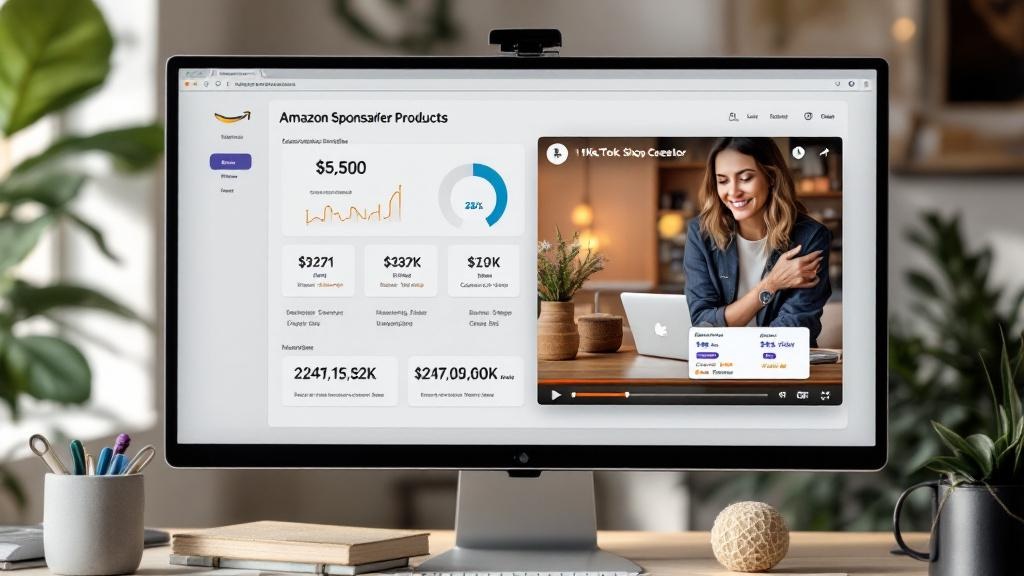
Brands that treat Amazon search as their primary growth lever are already behind. In 2026, the highest-performing retail media programs treat search as a conversion mechanism for demand that was shaped upstream, not the origination point of that demand. The shift from keyword-first to signal-driven discovery is the defining change in how products get found, considered, and purchased across retail platforms this year.
This is not theoretical. According to Pacvue's 2026 retail media analysis, discovery commerce, where platforms proactively surface products through behavioral data, algorithmic feeds, and recommendation logic rather than waiting for typed queries, is now the dominant upstream force shaping purchase decisions across Amazon, Walmart, and TikTok Shop.
What This Actually Means for Your Retail Media Program
Discovery placements now influence what shoppers notice, remember, and want before they ever open a search bar. Homepage feeds, sponsored browse carousels, dynamic category rankings, and AI-driven recommendation modules on retailer-owned platforms are determining product exposure at scale. Organic and paid visibility on these surfaces depends on structured product content, behavioral engagement signals, pricing competitiveness, and inventory health, not just bid levels.
The practical consequence: brands running media programs built exclusively around Sponsored Products are funding a conversion layer while leaving the consideration layer completely uncontested. Competitors with coordinated Sponsored Brands, video formats, DSP, and TikTok Shop creator activity are shaping what shoppers want before those shoppers ever reach the search bar. By the time a shopper types a keyword, the competition may already be over.
Three Discovery Environments Your Partner Should Be Managing
A capable retail media partner understands that discovery does not happen in one place. It operates across three distinct environments, and each requires a different operational approach.
- Social and content-led platforms: TikTok, Instagram, and YouTube are no longer optional brand awareness channels. Creator content, shoppable video, and algorithmic feeds generate latent demand that converts on Amazon and retailer sites days or weeks later. A product that trends in TikTok content on Tuesday will produce measurable branded search lift on Amazon by Thursday. Your agency should have the infrastructure to connect these signals across platforms and attribute that upstream influence correctly.
- Retailer-owned discovery surfaces: Amazon's "Inspired For You" feeds, Walmart's personalized browse modules, and Target's recommendation carousels are powered by first-party behavioral data that brands cannot access directly. Your partner's ability to optimize product listings, maintain clean catalog architecture, and signal quality through review velocity and conversion rate determines whether your products surface here. Bid strategy alone will not get you placement.
- Hybrid validation journeys: Shoppers regularly discover a product on one platform, validate it through marketplace reviews on another, and convert via branded search on a third. Brands without coordinated presence across these touchpoints lose consideration at the validation stage even after successful discovery. The agencies that understand these cross-platform journeys and can measure them holistically are operating at a fundamentally different level than those managing channel-specific dashboards in isolation.
What Separates Strong Operators From Weak Ones Right Now
The agencies still optimizing retail media as if it is purely a keyword auction are delivering artificially efficient ROAS numbers on a shrinking share of total addressable demand. They look good in the metrics they control and ignore the demand they never helped create.
Strong operators in 2026 are doing three things differently. First, they are coordinating investment across the full funnel, with DSP and video formats feeding consideration that Sponsored Products then converts. Second, they treat TikTok Shop not as a separate channel but as a discovery and demand-generation engine that amplifies Amazon performance through search lift. Third, they are measuring incrementality, not just last-click attribution, because discovery-influenced demand rarely gets credited correctly in standard retail media reporting.
For CPG brands doing $75K or more per month on Amazon, the margin impact of getting this wrong is material. A brand spending $40,000 per month on Sponsored Products while a competitor spends $15,000 on Sponsored Products and $25,000 on discovery-layer formats will lose category share over a 90-day window even if the first brand's keyword-level ROAS looks stronger on paper.
What to Look for in a Partner Built for Discovery Commerce
The right partner for this environment has specific capabilities that most agencies lack. They manage Amazon and TikTok Shop as connected systems, not separate accounts. They have access to DSP and can execute video and display formats at the brand level, not just search. They understand how to build and brief creator content on TikTok in a way that drives measurable downstream search volume. And they can read the signals from retailer-owned discovery surfaces, catalog quality scores, content completeness, conversion rate relative to category benchmarks, to diagnose why products are or are not surfacing in non-search placements.
Equally important is incentive alignment. Partners operating under pure management fee structures have no stake in whether your discovery-layer investment actually converts to revenue. The agency models with shared upside, particularly those operating as exclusive 3P distribution partners, are structurally motivated to build demand across the full funnel because their returns depend on it.
Discovery commerce is not an emerging trend to monitor. It is the operating reality of retail media in 2026. The brands that recognize this and choose partners built for it will compound share. Those that do not will defend keyword rankings while their category drifts upstream to competitors who got there first.
Running $75k+/month on Amazon or TikTok Shop? Book a free 30-minute audit call and we'll show you exactly where the margin is leaking.
Book a Free Call →