Why Most Amazon Brands Are Bleeding Margin Without Knowing It
Most Amazon brands lose 8–15% of gross margin to fees, inefficient PPC, and inventory gaps before they notice. Here's what rigorous operators do differently.
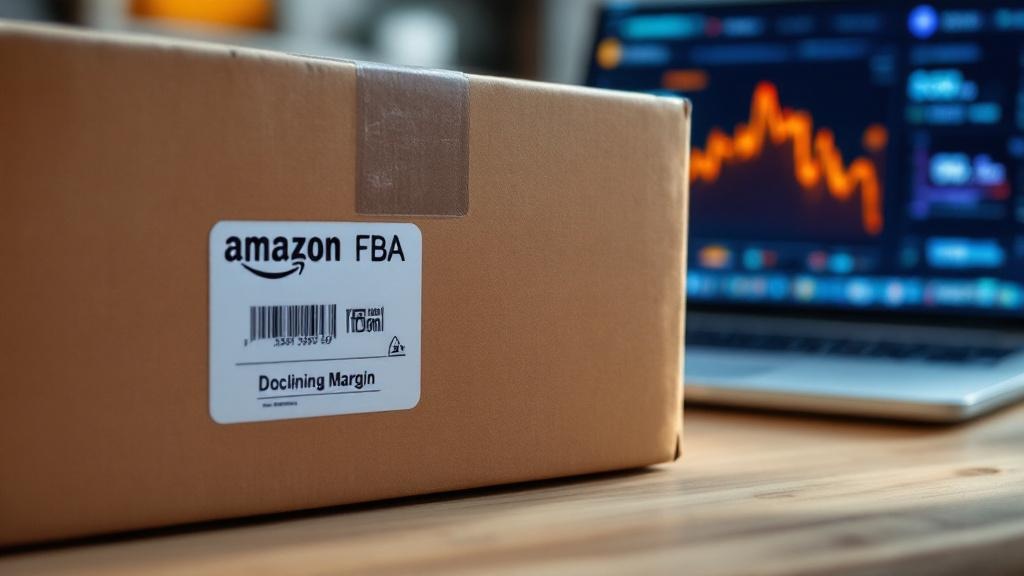
Margin erosion on Amazon is silent, systematic, and almost always preventable.
The average CPG brand scaling past $75K/month on Amazon loses between 8% and 15% of gross margin to fees, chargebacks, inefficient ad spend, and inventory mismanagement — before they even look at their P&L closely enough to notice. By the time they do, the damage compounds across SKUs, categories, and quarters.
This isn't a content problem or a listing problem. It's an operations problem. And it's one that separates brands that scale profitably from brands that scale themselves into cash flow crises.
What's Actually Draining Your Amazon Margin
Most brands fixate on TACoS. That's a mistake. TACoS is one lever in a much larger system. The real margin killers are structural:
- FBA fee miscalculations: Amazon recalculates dimensional weight and storage fees constantly. Brands that aren't auditing these monthly are routinely overcharged — often $0.30 to $0.80 per unit across high-velocity SKUs. At 10,000 units/month, that's real money.
- Vendor chargeback exposure: For brands operating in 1P (Vendor Central), chargebacks for compliance violations — labeling, PO accuracy, ship window misses — can run 2% to 5% of wholesale revenue. Most brands don't contest them systematically.
- Stranded and aged inventory: FBA long-term storage fees hit at the 181-day and 365-day marks. Without active inventory health management, brands absorb penalties that compound across every ASIN in the catalog.
- Poorly structured PPC: Broad match campaigns without negative keyword discipline funnel spend into irrelevant traffic. A campaign with a 35% TACoS on paper can carry a real TACoS of 50%+ once you account for the impressions that were never going to convert.
The Operator Gap: Why Self-Management Fails at Scale
Brands that manage their own Amazon accounts past $1M/year in revenue almost universally hit the same ceiling. The account becomes too complex for a single in-house hire to manage well — PPC, catalog, inventory, compliance, creative, and analytics are each full disciplines. Distributing them across a generalist team creates accountability gaps. No one owns the number.
A qualified external partner doesn't just manage tasks. They own outcomes. There's a structural difference between an agency that charges a flat retainer regardless of performance and one that operates with aligned incentives — where their upside is tied to yours. The latter asks harder questions about your cost structure because it directly affects their results.
This is why the agency-first plus 3P exclusive distribution model exists. When a partner holds your exclusive distribution rights on Amazon, they're not optimizing for their management fee. They're optimizing for the same margin you care about, because their economics depend on it.
What to Look for in an Amazon Partner
If you're evaluating whether your current setup is serving your brand's margin goals, there are four operational standards worth pressure-testing:
- FBA audit cadence: Are they reconciling FBA fees and reimbursements monthly? Amazon routinely fails to automatically credit brands for lost or damaged inventory. A competent operator recovers these systematically — the average brand is owed between $2,000 and $15,000 in uncollected reimbursements at any given time.
- Inventory forecasting accuracy: Stockouts on high-velocity SKUs cost more than the lost sale — they damage organic rank, which can take 4 to 6 weeks to recover. Your partner should be forecasting demand at the ASIN level with a rolling 90-day horizon, not reacting to low-stock alerts.
- PPC structure and discipline: Good operators run tightly segmented campaigns with clear budget allocation between branded, category, and conquesting terms. They maintain negative keyword lists proactively. They don't run auto campaigns indefinitely without harvesting and restructuring the data.
- Reporting that surfaces margin, not just revenue: Revenue growth on Amazon that isn't margin-accretive is worse than flat performance — it depletes cash and inflates the brand's perceived health. Your partner should be reporting contribution margin by ASIN, not just top-line sales and ROAS.
TikTok Shop Is Compressing the Window for Complacency
The margin conversation is becoming more urgent because the competitive landscape is accelerating. TikTok Shop is pulling first-mover advantage away from brands that wait. According to data tracked across the CPG category, brands that established TikTok Shop presence in 2023 and early 2024 are now generating 20% to 40% of their total DTC-equivalent revenue through the channel — at customer acquisition costs that Amazon PPC can't match.
But TikTok Shop has its own margin traps: affiliate commission structures that run 10% to 20% per order, fulfillment complexity for brands not set up for direct ship, and creator economics that require active management to stay efficient. Retail Dive has documented the rapid growth of social commerce channels and the operational demands they place on brands trying to scale across multiple platforms simultaneously.
The brands that are winning on both Amazon and TikTok Shop aren't running two separate strategies. They're running one integrated operation with shared inventory logic, unified margin targets, and a partner structure that handles both channels without the brand having to build two separate internal capabilities.
The Standard You Should Demand
If your Amazon and TikTok Shop operation isn't being run with this level of margin discipline — weekly PPC optimization, monthly FBA reimbursement audits, 90-day inventory forecasting, and contribution margin reporting by ASIN — you're leaving money on the table every single month. The gap between what most brands accept and what a rigorous operator delivers is measured in percentage points of margin that compound into six figures annually at meaningful volume.
The question isn't whether you can afford a partner with this standard. It's whether you can afford to operate without one.
Running $75k+/month on Amazon or TikTok Shop? Book a free 30-minute audit call — we'll show you exactly where the margin is leaking.
Book a Free Call →More From the Eleviam Blog

Amazon Liquidation Pallets: What Separates Smart Operators From Losing Bets
March 26, 2026
AI-Powered Product Discovery Is Rewriting How Shoppers Find Your Brand
March 26, 2026