Eight-figure CPG brands on Amazon are not built on clever PPC tactics. They are built on product integrity, supply chain control, and the discipline to play a longer game than your competitors will.
The story of Naoki Matcha, documented in a recent Helium 10 Serious Sellers Podcast episode, is one of the clearest examples of what separates brands that scale from brands that stall. Two co-founders, Samuel Loo and Singchuen Chiam, started in Singapore selling fragile, generic glass teapots. The products were easy to copy and had no defensible edge. Rather than doubling down on that model, they made a harder choice: find a category with real barriers to entry and build something worth protecting.
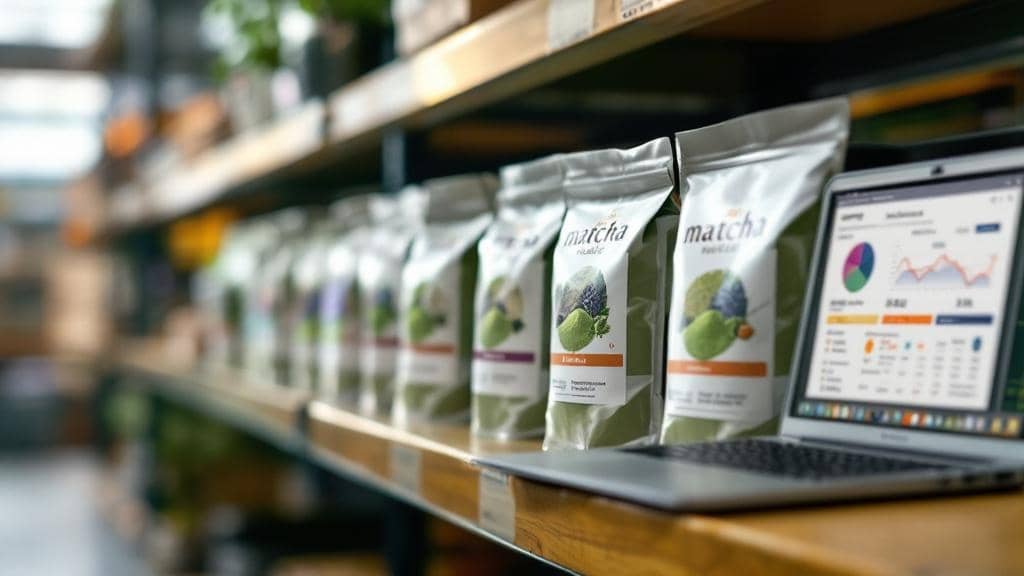
That decision led them to matcha, a category requiring direct supplier relationships in Japan, deep product knowledge, and an obsession with taste profiles that generic sourcing simply cannot replicate. The result is a brand now doing eight figures annually on Amazon. For CPG founders evaluating how to scale, the lessons here are not about what Naoki Matcha did in a vacuum. They are about what every serious brand must get right operationally, and whether the partners around them are equipped to support that ambition.
Why Category Selection Determines Your Ceiling
Naoki Matcha's pivot away from commodity products was not accidental. It was a recognition that the brands with the highest long-term value are the ones competitors cannot easily replicate overnight. Matcha required sourcing trips to Japan, relationships with specific tea-producing regions, and years of product refinement based on customer feedback.
For CPG brands evaluating their Amazon positioning, this principle applies directly. If your product can be knocked off by a Chinese factory in 60 days, your listing performance will erode faster than any agency can compensate for. The right partner should be asking hard questions about your product moat before they ever touch your ad account. Brands without differentiation need product strategy, not just traffic.
Supply Chain Depth Is a Competitive Weapon
One of the most instructive moments in the Naoki Matcha story is how they handled the global matcha shortage. While competitors faced stockouts and were forced into price hikes, Naoki Matcha stayed in stock. The reason was not luck. It was years of investing in supplier relationships and supply chain planning that most brands treat as an afterthought.
On Amazon, inventory availability is a ranking and revenue factor that many brands underestimate until a stockout wipes out months of momentum. According to Helium 10 research, losing the Buy Box due to inventory gaps can reduce sales velocity by 30 to 50 percent in a matter of days, and recovering rank after a stockout can take weeks. Your operator should have a clear view into your inventory position, your reorder cadence, and your FBA inbound pipeline at all times. If they are reactive on inventory rather than proactive, that is a structural problem.
Upper Funnel Investment Separates Mature Brands from Stagnant Ones
Naoki Matcha did not build to eight figures by running Sponsored Products campaigns in isolation. As the brand matured, they moved into Meta, DSPs, and TikTok, channeling investment toward growing branded search volume rather than just capturing existing demand. This is the move that most Amazon brands never make, and it is exactly why their growth flatlines after a certain revenue threshold.
Branded search is one of the most valuable assets an Amazon brand can build. When consumers search for your brand name directly, you own that conversion at a fraction of the cost of a competitive keyword. Growing branded search requires off-Amazon activity: content, social proof, influencer presence, and channels like TikTok Shop that meet customers earlier in their discovery journey.
This is where the structure of your partnership matters enormously. An operator who only manages your Amazon listings cannot drive that kind of growth. You need a partner who can run Amazon and TikTok Shop in an integrated way, with aligned incentives across both channels. Eleviam operates as both an agency and an exclusive 3P distribution partner, which means our revenue is tied directly to yours. There is no scenario where it benefits us to ignore a channel that would compound your brand's value.
In-House Creative Is Not Optional at Scale
Naoki Matcha invested heavily in building internal creative capability. This is not a luxury. At eight figures, your listing images, A-plus content, and video assets are conversion rate levers that compound over time. A brand relying on one-off freelance creative work will always lag behind a brand with a consistent visual identity and a production rhythm tuned to performance data.
When evaluating a partner, ask directly: who is producing your creative, how often is it being tested, and how are those decisions connected to your conversion data? If the answer is vague, that is a signal the creative function is not treated as a performance driver.
What the Naoki Matcha Story Actually Teaches
The eight-figure outcome for Naoki Matcha was not the result of one smart move. It was the result of consistent discipline across product, supply chain, creative, and channel strategy over multiple years. Most brands never reach that level not because they lack the product, but because the operational infrastructure around them cannot support that kind of growth.
If your current operator is managing your listings but not your supply chain, running your ads but not building your brand equity off-Amazon, or reporting on revenue without connecting it to a three-year growth thesis, you are leaving the majority of your brand's value on the table.
Doing $1M+ a year on Amazon or TikTok Shop? Book a qualification call and we'll show you where demand is leaking between the two channels.
Book a Qualification Call →