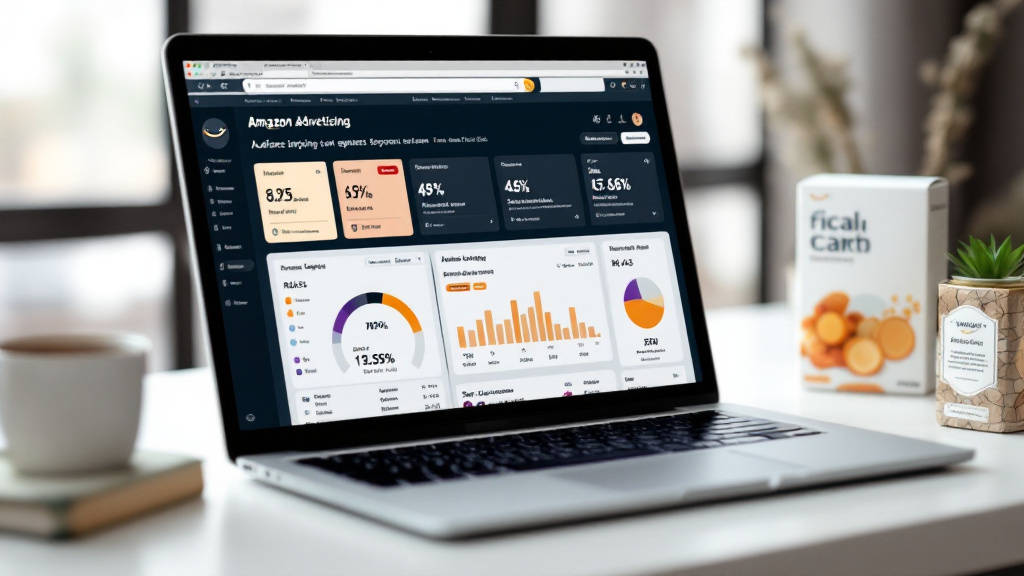
Why AI-Powered Ecommerce Tools Require Expert Oversight to Deliver Real Results
AI tools alone won't scale your Amazon or TikTok Shop brand. Learn what separates real full-service management from automated dashboards dressed up as strategy.

AI Tools Without Strategic Oversight Burn Budget Faster Than Any Other Mistake
Brands scaling on Amazon and TikTok Shop are being sold a dangerous idea: that AI-powered ecommerce tools are a shortcut to growth. They are not. AI is infrastructure, not strategy. The brands winning at $500K per month did not get there by plugging in a SaaS tool. They got there because experienced operators knew how to configure, interpret, and act on what those tools surface.
The distinction matters enormously when your margin is already compressed by fees, ad spend, and logistics costs. A misconfigured AI bidding system on Amazon PPC does not just underperform; it actively destroys margin at scale. Understanding where AI helps and where it requires a human decision layer is the single most important thing a scaling CPG brand can get right in 2025.
What AI Actually Does Well in Marketplace Management
To be clear, AI tools have genuine value in ecommerce operations. The categories where they perform consistently include:
- Keyword clustering and search term analysis across large SKU catalogs
- Bid adjustment automation within defined guardrails on Sponsored Products campaigns
- Inventory velocity forecasting when trained on at least 90 days of clean sales data
- Listing quality scoring against current A9 and TikTok Shop ranking signals
- Anomaly detection for BSR drops, suppressed listings, or Buy Box loss events
These are pattern recognition tasks. They are repeatable, data-dense, and low-ambiguity. AI handles them faster and more consistently than any analyst working manually. A good agency is running AI across all of these functions simultaneously, processing signals that no human team could monitor at the same speed.
But pattern recognition is not the same as judgment. And judgment is where most AI-only ecommerce strategies collapse.
The Three Places AI Gets Brands Into Trouble
First: promotional strategy. AI tools optimize toward historical conversion data. They do not understand that a 20% Lightning Deal might spike velocity but cannibalize your organic rank recovery after a restock delay. That call requires someone who knows your inventory position, your competitor's promotional calendar, and your margin floor. It is a judgment call, not a pattern match.
Second: new product launches. AI has no historical data to work with on a new ASIN. It cannot tell you how aggressive to be on PPC in weeks one through four, what review velocity you need to exit the honeymoon period with ranking momentum, or how to sequence your TikTok Shop creator seeding to build social proof before scaling paid. These decisions require operators who have launched dozens of products and know what the first 60 days should look like.
Third: account health and brand protection. Automated systems flag issues. They do not resolve them. A counterfeit seller on your listing, a false IP complaint, a suppressed variation parent: these require human response within hours, not the next reporting cycle. Brands with no experienced operator in their corner find out about these problems days after the damage is done.
What Separates Good Partners from Vendors Selling You Tools
The ecommerce agency market is full of operators who have rebranded as AI platforms. They have dashboards, they have automated reporting, and they charge retainers for access to software that surfaces data you could find yourself. That is not account management. That is a product subscription with a customer success overlay.
A real partner uses AI as one layer of a broader operating model. The questions to ask any prospective agency include: Who makes the decision when the AI recommendation conflicts with your inventory reality? What is your escalation protocol when account health drops? How do you handle TikTok Shop creator vetting, not just seeding volume? What does your human review cadence look like for listings, not just your automated audits?
If the answers are vague, the agency is selling you tooling, not management.
How Eleviam Thinks About AI in Full-Service Operations
At Eleviam, AI tools are embedded in daily operations across Amazon and TikTok Shop, but they are always downstream of human strategy. We run AI-assisted PPC analysis across our brand portfolio, but a human operator reviews every major bid change before it goes live. Inventory forecasting models inform our FBA replenishment planning, but the final decision accounts for supplier lead times, seasonal demand curves, and promotional commitments that no model has visibility into.
On TikTok Shop, we use AI to identify creator content patterns that correlate with conversion, but creator selection, briefing, and relationship management are done by people who understand brand positioning and category dynamics. The tool narrows the field. The operator makes the call.
This matters especially for our 3P exclusive distribution clients, where we are buying inventory and carrying the risk. In that model, a bad AI-driven decision is not just a suboptimal campaign outcome; it is a direct hit to our own margin. Aligned incentives produce better judgment about when to trust the model and when to override it.
The broader conversation around AI in ecommerce is accelerating, but the brands that will win are not the ones who adopted AI fastest. They are the ones who paired AI with operators experienced enough to know its limits.
The Standard Your Agency Should Be Hitting
By month three of any account management relationship, your agency should be able to show you: which AI-generated recommendations they overrode and why, what their human review cadence caught that automation missed, and how their AI tooling is calibrated to your specific margin structure, not generic ecommerce benchmarks.
If they cannot answer those questions with specifics, they are running your brand on autopilot. That is fine for brands doing $10K per month. At $75K and above, it is how you plateau.
Running $75k+/month on Amazon or TikTok Shop? Book a free 30-minute audit call and we'll show you exactly where the margin is leaking.
Book a Free Call →More From the Eleviam Blog
Amazon AMC Data Reveals What Separates Scaling CPG Brands From Stalling Ones
September 13, 2026
Amazon CPC in 2026: What Your Brand Can Actually Afford Per Click
September 12, 2026