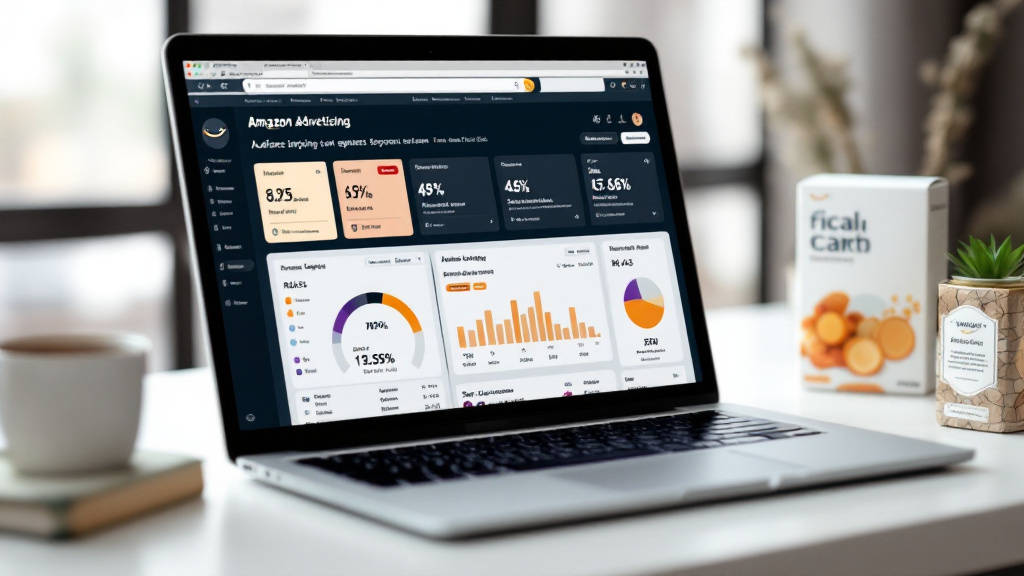
Review Syndication Strategy: What CPG Brands Must Demand From Partners
Thin listings with stale reviews are killing conversion rates on Amazon and TikTok Shop. Here is what serious operators do differently about review strategy.

Thin product pages are quietly destroying your Amazon conversion rate
A product listing with three reviews from 2022 loses the sale before the shopper even reads the description. This is not a hypothesis. Research from Bazaarvoice shows that high-quality user-generated content can boost retail media ROAS by up to 21% and reduce return rates by up to 20%. For CPG brands scaling past $75K per month on Amazon and TikTok Shop, the product detail page is no longer just a destination. It is an asset that either compounds returns or quietly bleeds them.
Most brand operators understand this in theory. In practice, they hand off catalog management to an agency that treats listings as static documents, updates them once at launch, and moves on. The result is a digital shelf that looks neglected, converts poorly, and becomes invisible to the filters that modern shoppers use daily.
You cannot advertise your way out of a content deficit
This is the trap that kills otherwise well-funded brands. A team pours budget into Amazon Sponsored Products or TikTok Shop ads, drives real traffic to a page with 11 reviews and a 3.6-star average, and wonders why ROAS is collapsing. The problem is not the ad. The problem is what the ad is pointing to.
Authentic social proof is the final conversion variable. When shoppers arrive at a listing, they are looking for confirmation from people who have already made the purchase. Studio photography does not provide that. A keyword-optimized title does not provide that. Verified, recent, specific reviews do.
The right agency partner treats review strategy as a core function, not an afterthought. If your current operator is not actively managing review volume, recency, and syndication across retail channels, they are leaving a measurable amount of revenue on the table every single month.
What separates serious operators from everyone else
The brands that compound growth on Amazon and TikTok Shop share a few operational traits that distinguish them from the ones stuck at a plateau. Here is what your agency partner should be doing proactively:
- Maintaining review abundance across the full catalog. Not just the hero SKUs. Shoppers filter by star rating and review count. Any product sitting below a viable threshold is effectively invisible to a large portion of qualified traffic. A serious operator audits SKU-level review coverage and has a strategy to address gaps.
- Prioritizing recency and authenticity. A page with 200 reviews from 2021 signals a dead product. Consistent incoming reviews signal a product that real people are buying right now. Post-purchase review generation needs to be a systematic, ongoing process built into fulfillment and customer communication workflows.
- Structuring content for AI discovery. Consumer search behavior has shifted dramatically. Shoppers are asking AI tools detailed, conversational questions about specific product attributes. If your listing content and review data are not structured in a way that AI crawlers can parse and cite, you are invisible to an expanding segment of high-intent buyers. This is not a future problem. It is happening now.
- Syndicating review content across channels. A review earned on Amazon should be working across every retail touchpoint where the product appears. Syndication is the mechanism that turns one piece of authentic content into a multiplier across the entire digital shelf.
Why aligned incentives matter here
Most agencies charge a flat management fee regardless of your sales outcome. That structure creates a quiet misalignment. The agency gets paid whether your conversion rate improves or not, which means there is no urgency to fix a thin listing or address a review velocity problem.
Eleviam operates as both an agency partner and a 3P exclusive distributor, which means our revenue is directly tied to your sell-through. When your product detail page underperforms, we feel it in our own numbers. That structure changes everything about how aggressively we manage content quality, review strategy, and listing health across Amazon and TikTok Shop.
The questions every brand should be asking their operator
Before renewing a contract or signing with a new partner, get specific answers to these questions:
- What is our current review coverage rate across active SKUs, and what is the plan for SKUs below threshold?
- How are we generating reviews consistently post-launch, not just at launch?
- How is our listing content structured for AI-driven discovery, and when was it last audited?
- Are reviews being syndicated across all retail channels where this product appears?
- What does our retail media ROAS look like segmented by listing quality, and are we pausing spend on underperforming pages?
If your current operator cannot answer these questions with specific data, that gap is costing you. The relationship between content quality and conversion is well-documented, and the brands winning on Amazon and TikTok Shop in 2025 are the ones treating it as a first-order operational priority, not a nice-to-have.
The product page is your most important salesperson. It works 24 hours a day, across every time zone, with no management overhead. The question is whether your agency partner is treating it that way.
Running $75k+/month on Amazon or TikTok Shop? Book a free 30-minute audit call and we'll show you exactly where the margin is leaking.
Book a Free Call →More From the Eleviam Blog
Amazon AMC Data Reveals What Separates Scaling CPG Brands From Stalling Ones
September 13, 2026
Amazon CPC in 2026: What Your Brand Can Actually Afford Per Click
September 12, 2026