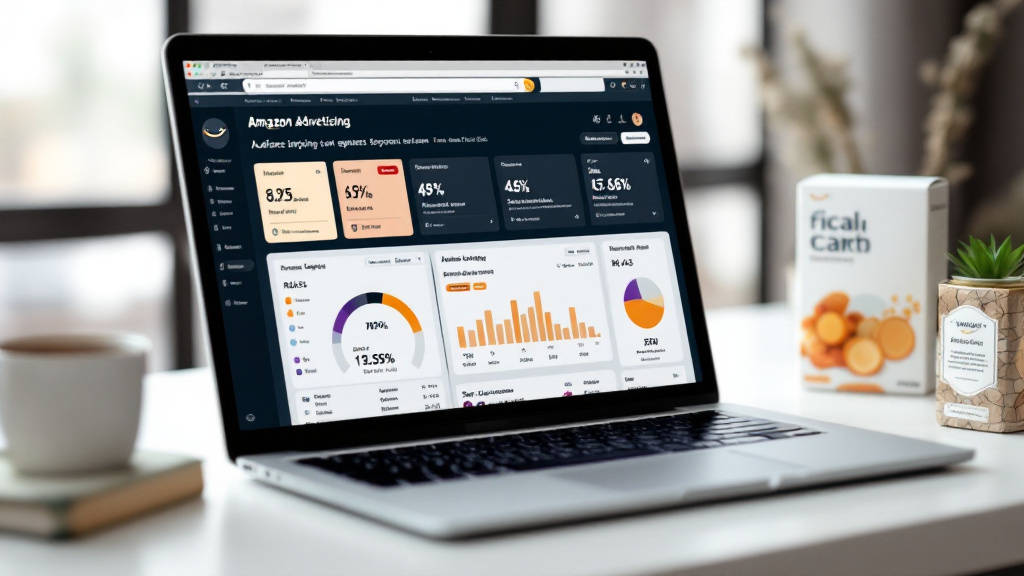
Why AI Ecommerce Tools Fail Brands Without the Right Operator Behind Them
AI tools don't grow marketplace brands. Operators who know how to act on AI outputs do. Here's what separates strong partners from weak ones.

AI Is Not a Strategy. An Operator Who Knows How to Deploy It Is.
Brands scaling on Amazon and TikTok Shop are being sold a simple story: plug in an AI tool, watch your revenue climb. The reality is that AI ecommerce technology, however sophisticated, produces results only as good as the operator interpreting its outputs and making decisions from them. For CPG brands doing $75K or more per month on marketplaces, the difference between a partner who uses AI well and one who uses it poorly is often six figures in annual margin.
What AI Actually Does in a Marketplace Context
AI tools in ecommerce today fall into a few practical categories: demand forecasting, listing optimization, advertising bid management, and customer review analysis. Each of these has genuine value when embedded inside a broader operational system. Each of them also produces garbage outputs when fed bad data, interpreted by generalists, or disconnected from real inventory and margin constraints.
A demand forecasting model, for example, might flag an expected sales spike for a SKU in Q4. That signal is only useful if your operator has already coordinated with your 3PL or FBA prep center, confirmed inbound lead times, and stress-tested your cash position against the purchase order required to meet that demand. AI surfaces the insight. Human operators with marketplace expertise convert it into a decision that actually protects your business.
The brands that get burned are the ones whose agencies treat AI dashboards as conclusions rather than starting points.
Three Things a Good Operator Does With AI That a Bad One Does Not
- Contextualizes signals against catalog and margin data. A PPC platform might recommend increasing bids across 40 keywords based on conversion trends. A strong operator cross-references that recommendation against contribution margin by SKU, current inventory depth, and suppression risk before touching a single bid. A weak operator hits approve and sends you a report showing improved click-through rates.
- Builds feedback loops between channels. TikTok Shop velocity data should be informing your Amazon inventory positioning within days, not quarters. AI tools can accelerate this data sharing, but only if your partner has built the operational process to act on cross-channel signals in real time. Most agencies running these channels in silos are leaving serious money on the table.
- Uses forecasting to protect cash, not just justify ad spend. AI-powered forecasting is most valuable as a capital planning tool. A partner who understands your unit economics will use forecast data to help you avoid stockouts on hero SKUs and prevent overbuying on slow movers. A partner optimizing for their own agency metrics will use it to pitch you on higher monthly ad budgets.
Why Aligned Incentives Change Everything
Here is the structural problem with most agency relationships in marketplace management: the agency gets paid a flat retainer or a percentage of ad spend. Their financial outcome is largely decoupled from your margin performance. AI tools in that environment get used to generate impressive-looking reports, not to make decisions that protect your profitability.
The model that actually aligns incentives is one where your operator has skin in the game on your revenue. When an agency takes on 3P distribution responsibility or structures compensation around your net sales performance, every AI-powered decision they make is filtered through the same question you care about: does this grow the business profitably?
Eleviam operates on exactly this model. On Amazon and TikTok Shop, we manage brands either as a full-service agency with deep operational integration or as an exclusive 3P distribution partner. Either way, our outcomes are tied to yours. That changes how we use every tool in the stack, including AI.
What to Ask Any Partner About Their AI Approach
When evaluating a marketplace partner, do not ask whether they use AI. Every agency will say yes. Ask these instead:
- How does your AI-generated forecast data connect to purchase order decisions and FBA inbound planning?
- Who on your team reviews the AI outputs before a bid change or listing update goes live, and what is their marketplace experience?
- Can you show me a case where an AI recommendation conflicted with your human judgment, and what did you do?
- How do signals from TikTok Shop feed into your Amazon strategy for the same brand?
A partner who cannot answer these questions with specifics is using AI as a selling point, not as an operational tool. That distinction matters enormously when you are doing real volume and real margin is at stake.
The Brands Winning Right Now Are Doing This Differently
The CPG brands outperforming on Amazon and TikTok Shop in 2024 and into 2025 are not the ones with the most sophisticated AI stack. They are the ones with operators who have the experience to know when to trust a model and when to override it, the systems to move fast when a signal is real, and the incentive structure to make decisions in the brand's interest rather than the agency's. AI ecommerce coverage continues to grow, but the operational gap between brands who use it well and brands who do not is widening faster than the technology itself is improving.
If your current partner cannot articulate a clear answer to how AI outputs translate into operational decisions with real dollar consequences, that is your answer about whether they are the right partner for the next stage of your growth.
Running $75k+/month on Amazon or TikTok Shop? Book a free 30-minute audit call and we'll show you exactly where the margin is leaking.
Book a Free Call →More From the Eleviam Blog
Amazon AMC Data Reveals What Separates Scaling CPG Brands From Stalling Ones
September 13, 2026
Amazon CPC in 2026: What Your Brand Can Actually Afford Per Click
September 12, 2026