Most Amazon agencies are optimizing campaigns without seeing the full customer picture.
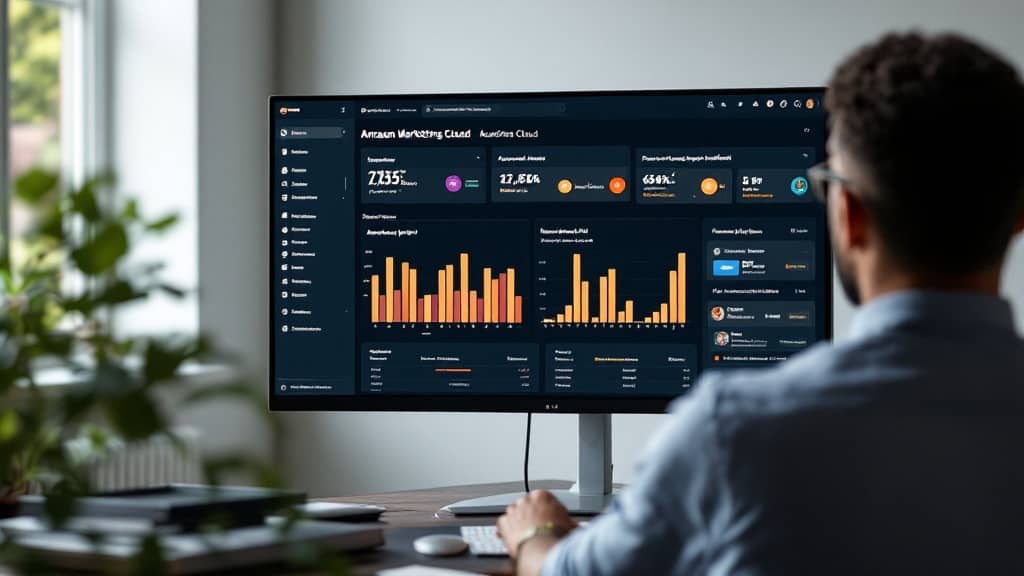
Amazon Marketing Cloud gives brands access to one of the most powerful attribution datasets in retail. It connects ad exposures across Sponsored Products, Sponsored Brands, Streaming TV, and DSP to actual purchase behavior at the household level. Brands working with agencies that have not built AMC into their reporting workflows are making budget decisions based on incomplete signals, and they are almost certainly leaving margin on the table.
This is not a minor gap. Brands doing $75,000 or more per month on Amazon are running enough volume that measurement errors compound fast. A misattributed conversion path means misallocated budget, which means you are either overspending on a tactic that looks productive but is not driving incremental revenue, or you are underfunding a channel that is quietly closing sales your last-click model never credits.
What AMC Actually Makes Possible
AMC is a clean room environment. Raw event-level data lives inside Amazon's infrastructure, and queries run against it without exposing individual user data. The output is aggregated insights that no standard Campaign Manager dashboard can produce.
A capable agency uses AMC to answer questions like:
- What is the true path to first purchase for new-to-brand customers, and how many ad touchpoints does it require on average?
- Which audience segments show the highest lifetime value after converting, and are we allocating DSP spend toward them?
- Where does overlap exist between Sponsored Products exposure and DSP retargeting, and what is the marginal return of each additional impression?
- How long is the consideration window for your category, and are our campaign flight lengths actually matching it?
These are not academic questions. The answers directly determine whether your media mix is profitable or just busy.
The Gap Between Agencies That Use AMC and Those That Do Not
The majority of Amazon agencies still report on a last-touch basis. They show you ACoS, ROAS, and total ad spend by campaign type. That tells you what happened inside a single campaign. It does not tell you how campaigns interact, who your highest-value customers actually are, or whether your new-to-brand acquisition rate is growing or eroding.
An agency operating with AMC access and the SQL capability to query it properly can build audience segments directly inside Amazon's ecosystem. They can push those segments back into DSP campaigns with precision that a standard managed service cannot match. They can identify, for example, that customers who saw a Streaming TV ad before a Sponsored Brand ad converted at 2.3x the rate of customers who only saw Sponsored Products. That insight changes your upper-funnel investment logic immediately.
When you are evaluating a potential Amazon partner, ask directly: do you have AMC access, and can you show me a sample query output from a current client? If the answer involves vague references to dashboards or third-party tools that pull in Amazon data, you are not talking to an AMC operator. You are talking to an agency that is managing campaigns, not managing growth.
Why This Matters More for CPG Brands Specifically
Consumer packaged goods brands have category dynamics that make AMC insights especially valuable. Repurchase cycles, bundle behavior, and cross-ASIN pathing all show up in AMC data in ways that standard reporting obscures. A CPG brand with a 45-day repurchase cycle needs to know whether its Subscribe and Save subscriber base is being acquired through paid media or organic discovery. That distinction has enormous implications for customer acquisition cost and payback period calculations.
AMC also surfaces new-to-brand purchase rates at a granularity that lets an operator separate genuine market expansion from recirculation spend. If your agency cannot tell you what percentage of your ad-attributed revenue last quarter came from customers who had never bought your brand on Amazon before, they do not have the data infrastructure to help you scale intelligently. They are helping you spend, not helping you grow.
What a Serious Operator Does With AMC on Day 30
Within the first 30 days of onboarding a brand, an operator with real AMC capability should deliver three things: a baseline path-to-purchase analysis showing average touchpoints to first conversion by channel, an audience segmentation that identifies your highest-LTV customer profile, and a media mix recommendation grounded in overlap analysis between your active campaign types.
That output then feeds directly into campaign restructuring. Budget shifts toward proven high-LTV acquisition paths. DSP audiences get rebuilt around actual purchaser behavior instead of broad category interest signals. Flight lengths get aligned to your category's real consideration window instead of defaulting to 30-day calendar blocks.
This is the difference between an agency that manages your Amazon account and a partner that treats your Amazon presence as a data asset to be continuously refined. The brands scaling past $500,000 per month on Amazon are not doing it by running smarter Sponsored Products campaigns. They are doing it because their operator has a full-funnel view of the customer and makes every budget decision against that view.
Questions to Ask Before Signing Any Amazon Management Agreement
- Do you have AMC access and an in-house team member who writes AMC queries?
- How often do you run path-to-purchase analysis, and what does the output look like?
- Can you show an example of an audience segment you built in AMC and pushed to a DSP campaign?
- What is your process for identifying new-to-brand acquisition rates versus recirculation spend?
- How do you adjust campaign structure when AMC data shows diminishing marginal return on a given tactic?
If an agency cannot answer these questions with specifics, your media budget is funding their learning curve, not your brand's growth.
Doing $1M+ a year on Amazon or TikTok Shop? Book a qualification call and we'll show you where demand is leaking between the two channels.
Book a Qualification Call →