Most CPG brands on Amazon are leaving 15 to 25 percent of their gross revenue on the table because they treat FBA as a logistics checkbox rather than a margin and growth engine. The brands scaling past $5M on Amazon are not working harder inside Seller Central. They have partners who operate the full stack: inventory positioning, fee recovery, advertising efficiency, and channel architecture.
Here is what separates the brands winning on Amazon FBA from the ones funding their competitors' growth.
FBA Fees Are a Margin Problem First
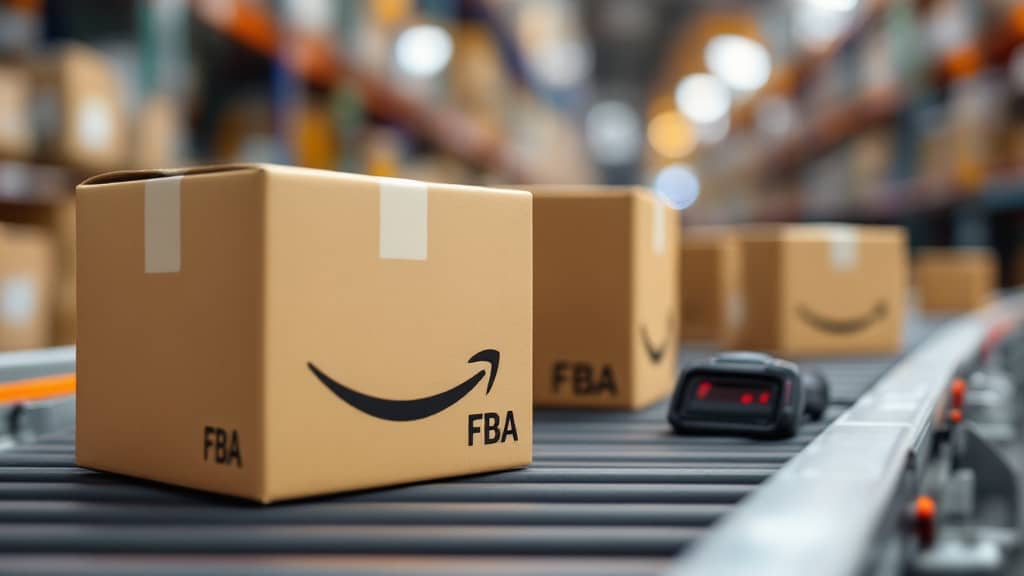
Fulfillment by Amazon is not free convenience. Fulfillment fees, storage fees, aged inventory surcharges, inbound placement fees, and returns processing costs compound fast. For a mid-size CPG brand doing $3M on Amazon, fee drag alone can represent $400,000 to $600,000 per year in costs that are either optimized or simply accepted.
The brands that accept those costs usually have a single reason: no one on their team or at their agency is accountable for the number. The advice-only consultant will tell you fees are going up and recommend an audit. The agency billing on a percentage of ad spend has no structural reason to care about your FBA cost line. Neither is solving the problem.
An operator-led partner bills on gross revenue, which means every dollar recovered in fees is a dollar that improves the brand's economics and the partner's performance. That alignment produces a fundamentally different level of attention to margin recovery on Amazon.
Inventory Positioning Is Where FBA Either Works or Fails
Amazon's inbound placement program now routes inventory based on where Amazon wants it, not where your brand wants it. Brands that do not plan around this pay placement fees and face regional stockouts that collapse organic rank in a matter of days.
The right partner is modeling sell-through velocity by ASIN, mapping reorder cadence to lead times, and building a buffer strategy that accounts for Amazon's unpredictable inbound windows. They are not reacting to stockout alerts. They are preventing them four to six weeks in advance.
Tool-only vendors can surface the data. They cannot make the operational calls. There is a real difference between a dashboard that shows you a stockout risk and a partner who has already submitted the replenishment order.
Advertising Efficiency Is Not About Spending More
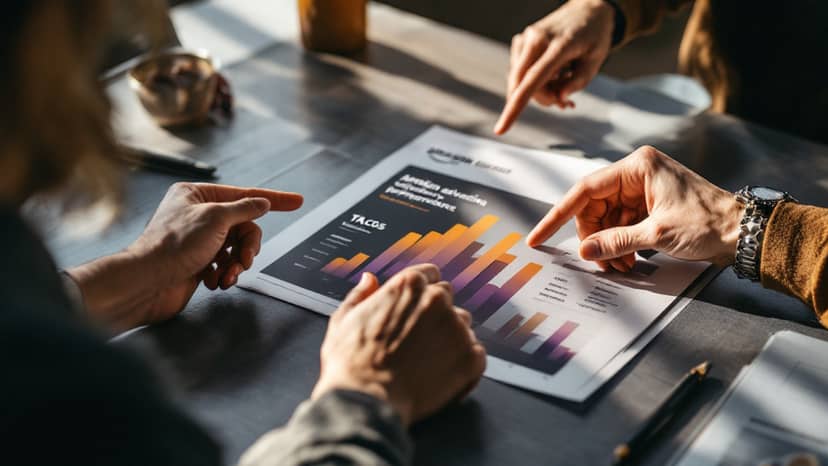
The agency model that bills on a percentage of ad spend creates a direct conflict of interest. More spend means more revenue for the agency, regardless of whether that spend is profitable for the brand. This structure is common and it consistently produces bloated budgets, inflated TACoS, and campaigns that look busy but do not drive profitable growth.
The brands winning on FBA are running advertising that is measured against contribution margin, not just ROAS. They know their break-even TACoS. They are cutting spend on terms that convert at a loss and doubling down on terms where they dominate. Reducing TACoS on Amazon without sacrificing revenue is a structural discipline, not a campaign tweak.
A partner with aligned incentives manages advertising as a profit lever, not a volume lever. That distinction compounds over 12 months in a way that shows clearly in the brand's P&L.
FBA Alone Is No Longer Enough
The CPG brands treating Amazon FBA as their entire channel strategy are building on a single point of failure. Amazon controls the buy box, the algorithm, the fee structure, and the customer relationship. Brands that have diversified to TikTok Shop as a second primary channel are seeing two benefits that FBA alone cannot produce: direct customer acquisition at lower cost and content-driven velocity that feeds back into Amazon rank.
This is not a theoretical advantage. TikTok Shop's affiliate network and shoppable content format is generating first purchases from customers who then reorder on Amazon. The brands capturing this flywheel are outgrowing the brands optimizing FBA in isolation.
A full-service partner that runs both channels as a single engine can attribute that cross-channel lift and invest accordingly. A partner that only runs Amazon will always tell you Amazon is enough. That is not objectivity; it is the limit of their model.
What to Look For in an FBA Partner
When you are evaluating who should manage your Amazon FBA operation, the structural questions matter more than the pitch deck. Consider the following:
- Does the partner bill on gross revenue or on ad spend? Fee structure tells you whose growth they are incentivized to optimize.
- Do they deploy their own capital as a distributor, or only advise? Skin in the game changes how decisions get made.
- Do they run TikTok Shop alongside Amazon, or is Amazon their only offering? Single-channel partners give single-channel advice.
- Do they own fee recovery and inventory management, or do they hand that off to you as a recommendation?
- Can they show you TACoS trajectory and margin improvement for brands at your revenue stage?
The distributor that never runs the agency engine will get product into FBA and stop there. The agency billing on ad spend will run campaigns and stop there. Neither is operating the full model that CPG brands at $1M to $10M actually need.
See how Eleviam approaches Amazon management for CPG brands and what a fully integrated FBA operation looks like when the partner is accountable for the whole P&L, not just one line item.
The Standard Is Higher Than Most Brands Realize
Amazon FBA in 2026 rewards precision: precise inventory planning, precise advertising efficiency, precise fee management, and precise channel coordination. Brands that are growing fast on the platform are not doing more. They are doing the right things with a partner who has real accountability for the outcome.
The gap between a well-operated FBA brand and a mediocre one is not ambition. It is operator quality and structural alignment between what the partner earns and what the brand achieves.
Want to see exactly where your brand stands? Get the free CPG Amazon Benchmark Report and see your margins, ad costs, conversion, and fees benchmarked against the real state of Amazon in 2026.
Get the Benchmark Report →