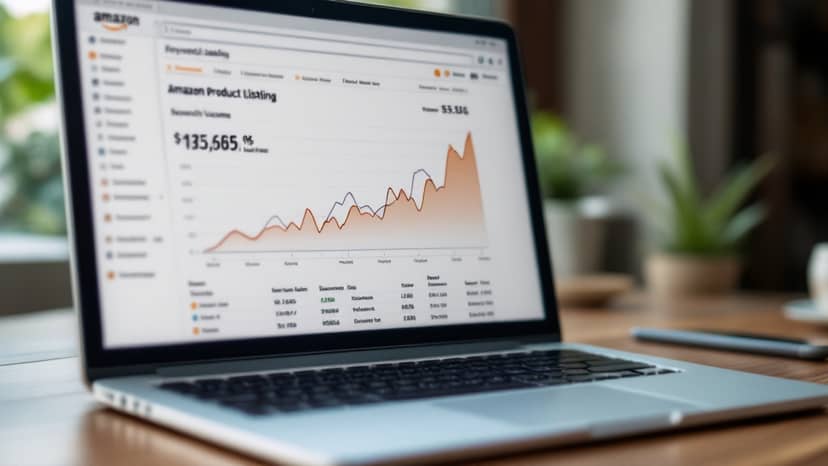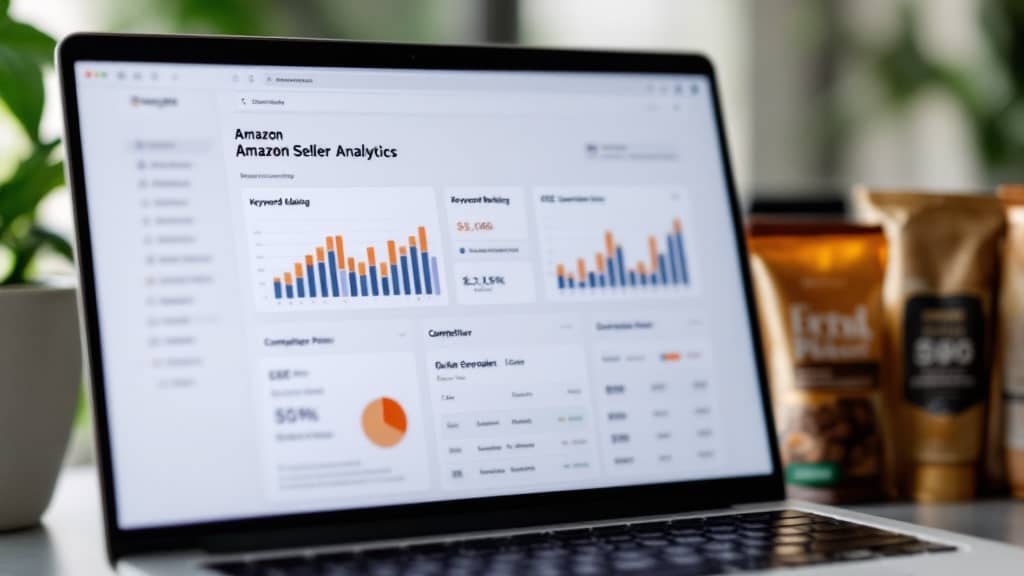
The agency partners worth trusting are the ones who have already connected their data infrastructure before you even ask about it. How a partner handles Amazon research and analytics access tells you almost everything about how they actually operate your brand behind the scenes.
Most brands scaling on Amazon are sitting on a data problem they do not fully see. Their agency runs keyword research in one tool, tracks rankings in another, monitors competitors in a third, and then someone manually exports all of it into a deck once a month. By the time that information reaches you, it is weeks old and filtered through whatever narrative your account manager decided to build around it.
That is not an operations model. That is a reporting theater model.
What Integrated Research Data Actually Enables
The brands moving fastest on Amazon right now are not the ones with access to more tools. They are the ones whose partners have built those tools into a single operating layer, where data flows into decisions without anyone manually stitching it together each week.
When keyword rankings, market share signals, competitor pricing, and listing performance all feed into one connected system, a few things happen that cannot happen otherwise. Alerts fire in real time rather than showing up in a monthly report. Listing changes are informed by current search performance data, not last quarter's ranking snapshot. Brand analysis can run against live Seller Central data instead of against static exports.
The difference in decision speed is not marginal. A brand that catches a ranking shift on a core keyword within 24 hours can respond before a competitor locks in that position. A brand that finds out in the next agency call has already lost ground it will spend months and ad budget trying to recover.
The Agency Model That Rewards Slow Data
Here is the structural problem with how most Amazon agencies are built. An agency billing on a percentage of ad spend has no financial incentive to build tighter data infrastructure. More budget flowing through the account means more revenue for the agency, regardless of whether that budget is efficient. Research tools that would surface keyword inefficiencies or identify organic ranking opportunities that reduce paid dependency are, in that model, threats to the billing line.
The advice-only consultant has a different but equally real problem. They can read the data and tell you what it means, but they are not accountable for what happens next. Their deliverable is the insight, not the outcome. When you ask how your brand is performing against the market, you want someone who has skin in the result, not just the report.
A tool-only vendor gives you access to data but leaves the interpretation and execution entirely on your team. For a CPG brand doing real volume, that is a full-time internal hire problem dressed up as a software subscription.
What the Right Partner Has Already Built
When evaluating an Amazon partner, the research and analytics question is one of the sharpest filters available to you. Ask directly: how does competitor intelligence flow into your listing decisions? How are keyword ranking changes surfaced and acted on? What happens between the data and the next action on my account?
A partner operating at a high level will describe a connected system, not a series of manual steps. They will have API integrations with research platforms already live, not as a premium add-on, but as a baseline expectation for how the work gets done. They will talk about data in terms of what it triggered, not what it showed.
At Eleviam, this is foundational to how we run both Amazon and TikTok Shop as one growth engine. Research data is not something we export and review. It is wired into the operating layer so that what is happening on search, in competitor positions, and across conversion feeds directly into what we do next. For CPG brands where margin is tight and ad efficiency is the difference between a profitable channel and a cash drain, that connection is not optional. You can learn more about how we approach this on our Amazon agency for CPG brands page.
The Distributor That Never Runs the Agency Engine
One archetype that CPG brands frequently encounter is the distributor who offers to put your product on Amazon as part of a broader retail relationship. The pitch sounds simple: they handle the marketplace, you focus on the brand.
The problem is that a distributor with no agency engine behind them has no mechanism for the work that actually drives Amazon performance. Keyword research, rank tracking, listing optimization informed by live search data, competitor monitoring, and algorithmic advertising management are not things that happen by default when a product goes live on Amazon. They require deliberate, ongoing execution by people whose job is to make the channel perform.
A distributor that deploys its own capital and runs a full agency operation on top of that inventory is a structurally different partner. The incentives align because they own the position, not just the relationship. That is the model that produces sustained TACoS reduction and margin recovery over time, not a one-time listing setup. If you are evaluating how to reduce TACoS on Amazon, the first question is whether your partner's incentives are actually pointing the same direction as yours.
The Question to Ask Before You Sign Anything
Before committing to any Amazon agency or distribution partner, ask them to walk you through exactly how research data flows into account decisions. Not what tools they have access to. How the data moves from signal to action, and how fast.
The answer to that question will tell you more about how your brand will actually be managed than any case study or pitch deck they put in front of you.
Want to see exactly where your brand stands? Get the free CPG Amazon Benchmark Report and see your margins, ad costs, conversion, and fees benchmarked against the real state of Amazon in 2026.
Get the Benchmark Report →