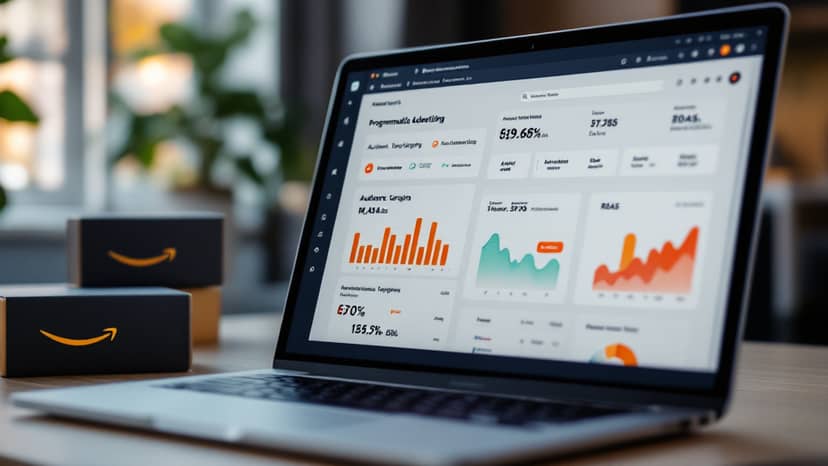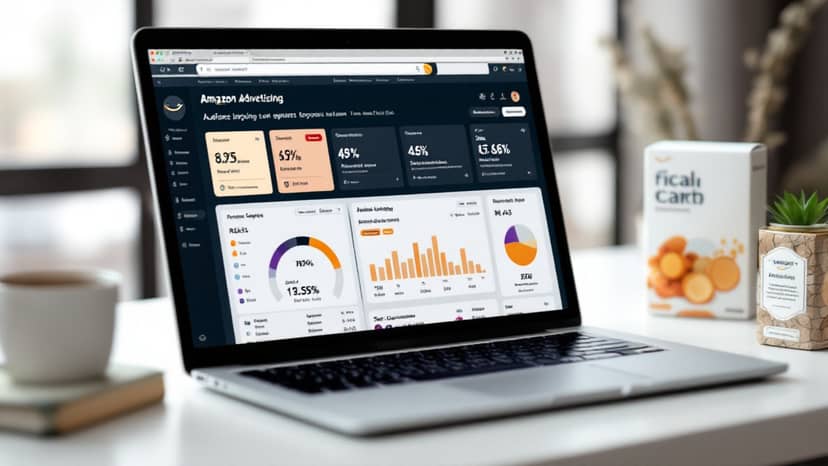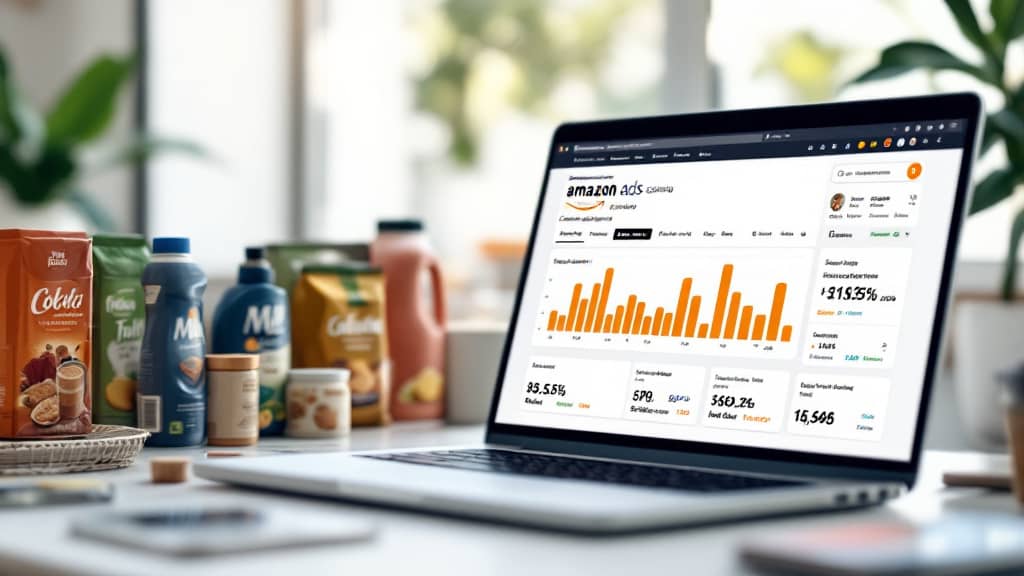
Amazon's new Full-Funnel Campaigns hand your entire ad mix to an AI and ask you to trust the output. For CPG brands scaling on Amazon, that trade deserves a harder look than most agencies are giving it.
Launched in open beta on September 29, 2026, Full-Funnel Campaigns is one of three campaign types now sitting inside Amazon Ads Agent, Amazon's unified advertising platform. The premise: set your products, a daily budget, an optional ROAS threshold, and your creative assets. Amazon's AI then picks the formats, including sponsored ads, display, video, and streaming TV, and moves budget between them in real time. One campaign. One budget. No manual allocation.
Amazon's own beta data claims early advertisers saw 67% higher Long-Term ROAS on average and acquired new-to-brand customers at 29% lower cost per purchase compared to running the same formats independently. Those numbers are worth noting. They are also worth interrogating before you restructure your budget around them.
What You Control and What You Give Up
The honest summary of Full-Funnel Campaigns is this: you trade precision for reach. You stop deciding where each dollar goes. In return, you get streaming TV and online video distribution without the overhead of building and managing those channels separately.
Here is exactly what each side controls:
- You control: which products are promoted, the daily budget total, an optional ROAS floor, and creative assets (your own or AI-generated ones you approve before launch)
- Amazon's AI controls: audience selection using first-party shopping signals, format selection per impression, and real-time budget allocation across funnel stages
Your existing campaigns run alongside this one. You do not need to tear down your current sponsored ads structure to test it.
One cost detail matters for brands used to a CPC world: depending on where ads serve, some spend will be billed on a CPM basis, not per click. That changes how you measure efficiency. You cannot evaluate a streaming TV impression by the same logic you apply to a sponsored product click. A qualified partner will account for that shift in measurement before a dollar moves, not after.
The Metric Gap Most Agencies Will Miss
Amazon's headline metric for Full-Funnel Campaigns is Long-Term ROAS, which includes a 12-month projected sales estimate. That projection is Amazon's model, not your verified revenue. If your agency presents Long-Term ROAS as the primary success indicator for this campaign type, that is a problem.
The right evaluation uses metrics your brand actually tracks: new-to-brand customer acquisition cost, attributed sales within your standard lookback window, and blended TACOS across your full account. A partner who manages TACOS as a core account health metric will be able to isolate what Full-Funnel Campaigns actually contributed versus what your existing sponsored ads would have driven anyway.
This is where the structural difference between an advice-only consultant and an operator becomes visible. A consultant can explain what the beta data says. An operator runs the test with a defined budget, a clean control period, and a measurement framework built before spend begins. Then they tell you whether the numbers hold for your category and your margin profile.
Who This Campaign Type Actually Fits
Full-Funnel Campaigns are not a starting point. They are a scaling tool for brands whose sponsored ads foundation is already profitable. If your conversion rate is soft, your listing quality is unresolved, or your TACOS is already elevated, handing budget to an AI that optimizes across formats will not fix underlying account problems. It will distribute them across more channels.
The brands best positioned to test this are those with:
- A profitable sponsored ads baseline with stable TACOS
- Brand Registry enrollment and approved creative assets
- Enough daily budget to generate statistically meaningful data within a contained test window
- A partner capable of separating Full-Funnel attribution from halo effects in existing campaigns
Agencies billed on a percentage of ad spend have a structural incentive to increase your total budget. A new AI-managed campaign type with an opaque budget allocation mechanism is exactly the kind of vehicle that rewards spend inflation over brand growth. A partner whose incentives are aligned with your growth, as Eleviam's are, is only well-served if the new spend actually converts into incremental sales. That alignment matters when you are evaluating whether to expand into a format that moves your budget in ways you cannot directly control.
What a Strong Operator Does Before You Test This
Before recommending Full-Funnel Campaigns to any brand, a qualified Amazon partner for CPG brands should complete several steps. They should audit your current account structure and confirm your sponsored ads baseline is profitable. They should define a specific test budget with a clear time boundary, typically 30 to 45 days. They should establish which metrics they will use to evaluate success, and those metrics should not be Amazon's own projected estimates. They should also confirm the minimum daily budget requirement directly in the campaign builder, since Amazon's public documentation does not specify it.
Full-Funnel Campaigns represent a real capability shift in how Amazon Ads works. Amazon's first-party signals, applied across streaming TV and display simultaneously, can create audience efficiencies that separate campaigns cannot replicate. The question is not whether that capability exists. The question is whether your account is structured to capture it, and whether your partner is structured to measure it honestly.
Want to see exactly where your brand stands? Get the free CPG Amazon Benchmark Report and see your margins, ad costs, conversion, and fees benchmarked against the real state of Amazon in 2026.
Get the Benchmark Report →