CPG brands that treat every shopper touchpoint as identical leave conversion on the table at every stage of the buying cycle. On Amazon and TikTok Shop, a shopper discovering your product for the first time needs completely different proof than a shopper who added it to their cart three weeks ago and is still deciding. The brands scaling past $5M on marketplaces understand this. The ones stalling at $1M often do not.
The Four Moments That Actually Drive Purchase Decisions
Research consistently shows that modern shoppers move through four distinct mental states before committing: discovery, consideration, purchase, and advocacy. Each state runs on different evidence. At discovery, a shopper asks what your product is. At consideration, they ask whether it actually works. At purchase, they ask whether it is worth their money today. At advocacy, they ask who else in their circle needs to know about it.
The problem most brands face is not a lack of content. It is the wrong content deployed at the wrong moment. A brand running the same creative to cold audiences and warm retargeting audiences is not running personalized marketing. It is running broadcast advertising and calling it performance.
Data from Bazaarvoice's 2026 Shopper Experience Index supports this directly: over 30% of consumers hold items in digital carts for up to four months while they assess risk and compare prices. On Amazon, that hesitation shows up as lost sessions and suppressed conversion rates. On TikTok Shop, it shows up as views and saves that never become checkouts. The gap between intent and purchase is not a creative problem. It is a messaging sequencing problem.
What a Real Operator Does Differently
An advice-only consultant will map your shopper journey in a deck and hand it back to you. An agency billing on a percentage of ad spend has a structural incentive to increase budgets, not to tighten the messaging at each funnel stage. A tool-only vendor gives you dashboards without execution. None of these models closes the trust gap that kills CPG conversion.
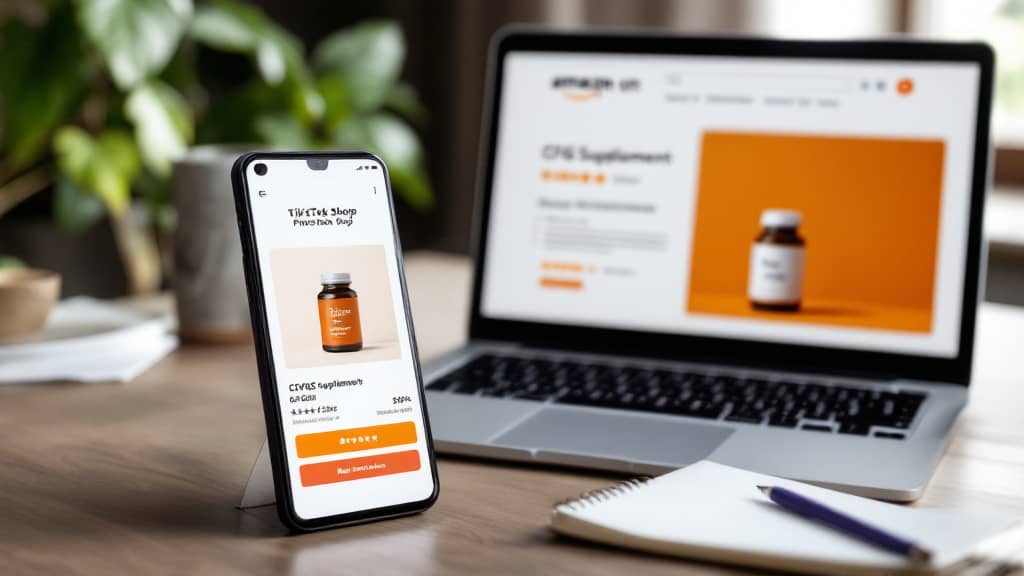
A true operator builds the sequencing into the campaign architecture itself. On Amazon, that means discovery ads feeding into sponsored brand video for consideration, followed by retargeting at the purchase stage with proof points: review counts, star ratings, and bundled value. On TikTok Shop, it means seeding with creator content for discovery, deploying product-specific UGC for consideration, and activating affiliate-driven conversion content at the moment of purchase intent.
The underlying brand identity never changes. What changes is the volume turned up on whichever proof point matters most in that moment. That is the operational difference between brands that compound their marketplace presence and brands that spend more each quarter to hold the same position.
If your Amazon agency is not segmenting your ad creative by funnel stage and aligning it to shopper intent signals, you are paying for impressions that will never close.
Customer Voices Are the Carrying Mechanism
At every stage of the shopper journey, third-party proof outperforms brand-originated claims. Shoppers at the consideration stage are not reading your About page. They are scanning reviews, watching creator content, and looking for social confirmation that your product performs as described. Brands with fewer than 50 reviews on their primary Amazon listings are competing at a structural disadvantage against products with 500 reviews, even when the product quality is equivalent.
This is why the distributor model that never runs the agency engine falls short. A distributor can place your product in front of Amazon shoppers. It cannot build the review velocity, the content infrastructure, or the TikTok Shop creator pipeline that converts a browser into a buyer at the consideration stage. Distribution and demand generation are different functions. Brands that conflate them wonder why their sell-through rate plateaus.
Personalization in this context is not about serving each shopper a unique experience from scratch. It is about having the right content asset ready for each stage and deploying it with enough precision that the shopper feels understood rather than marketed at. Review content does this better than almost any brand-produced creative because it mirrors the shopper's own language back to them.
What This Means for Brands Evaluating Partners in 2026
When you are evaluating a marketplace partner, ask how they sequence creative and content across the funnel. Ask whether their TikTok Shop strategy feeds their Amazon strategy or runs as a separate silo. Ask how they build review velocity and what they do when conversion drops at the consideration stage versus the purchase stage. Those are different problems with different solutions, and a partner that conflates them will cost you six months of runway finding out.
Eleviam manages Amazon and TikTok Shop as one integrated engine, billing on gross revenue so incentives are aligned with brand growth, not ad spend inflation. The model is built for brands that need both distribution and demand generation running from the same playbook. If you want to see how your current funnel stages up against real CPG benchmarks, the data is more useful than a general strategy conversation.
Your TikTok Shop strategy and your Amazon presence should be reinforcing each other at every shopper stage. If they are not, you are leaving the trust gap open for a competitor to fill.
Want to see exactly where your brand stands? Get the free CPG Amazon Benchmark Report and see your margins, ad costs, conversion, and fees benchmarked against the real state of Amazon in 2026.
Get the Benchmark Report →