Major retailers are deploying AI to identify lapsed customers, build precision audiences, and predict purchase intent at scale. CPG brands that ignore this shift will find themselves outbid, outranked, and increasingly invisible on every marketplace that matters.
Best Buy's public commentary on its AI rollout in 2026 is a useful signal for CPG operators, not because Best Buy is your direct channel, but because its strategy reveals where retail is heading. When a top-10 North American ecommerce retailer describes using large language models to identify demand signals, target lapsed buyers at exactly the right moment, and unify customer data into a single agent, that is the competitive environment your brand now operates in.
Amazon has been running a version of this playbook for years. The brands winning on Amazon in 2026 are not the ones with the biggest ad budgets. They are the ones working with partners who treat data the same way Best Buy describes: as a live signal to act on, not a report to review quarterly.
What This Means for How Your Amazon Partner Should Operate
The retailer AI story has a direct parallel in how Amazon agencies approach campaign management and audience strategy. There are two fundamentally different operating modes in the market right now.
The first is the traditional agency model: a team that manages your campaigns, bills you on a percentage of ad spend, and has a structural incentive to grow your budget rather than your margin. When ad spend goes up, their fee goes up. When your TACoS climbs, their revenue climbs with it. That misalignment compounds over time, especially as Amazon's advertising environment becomes more sophisticated and expensive.
The second model is operator-led. Your partner deploys its own capital, runs the full account, and bills on gross revenue. Their incentive is to make your brand more profitable, because their upside is tied to your topline, not your ad budget. That structure forces the kind of precision audience work and demand signal analysis that Best Buy is describing internally.
If your current agency cannot tell you exactly how it targets lapsed buyers, when it triggers reactivation campaigns, and what signals it uses to time those decisions, that is a gap worth closing. Reducing TACoS on Amazon is not just a bidding problem. It is a data and targeting problem, and it requires a partner who treats it that way.
The TikTok Shop Connection
Best Buy's Ask Blue assistant combines product knowledge, reviews, availability, and pricing into a single conversational interface. That convergence of content and commerce is exactly what TikTok Shop has already operationalized at the brand level.
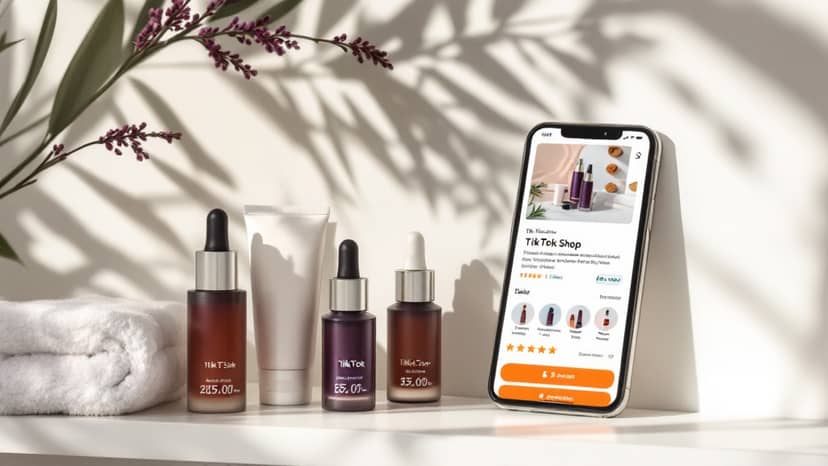
On TikTok Shop, the discovery layer, the content layer, and the purchase layer are the same layer. A shopper watches a 30-second video, sees social proof in real time, and converts without leaving the app. Brands that run Amazon and TikTok Shop as separate programs, managed by separate teams with separate goals, are leaving attribution on the table and missing the compounding effect of cross-channel demand generation.
An operator-led partner runs both channels as one engine. TikTok Shop content drives first-touch discovery. Amazon captures the intent that follows. The data from both feeds back into audience building on each platform. That is the loop that separates growing CPG brands from flat ones in 2026. A TikTok Shop partner built for CPG understands that the channel is not a social experiment; it is a full-funnel commerce engine that directly supports your Amazon rank and conversion rate.
What Separates Good Operators from Everyone Else
The Best Buy story highlights one capability that most CPG brands have not yet demanded from their marketplace partners: the ability to act on lapsed customer signals in real time. Here is what that looks like in practice for a CPG brand on Amazon and TikTok Shop:
- Your partner identifies which ASINs have declining repeat purchase rates before the rank starts to slip.
- Sponsored display and DSP campaigns are structured to re-engage buyers at the right interval based on your product's repurchase window, not a generic 30-day rule.
- TikTok Shop affiliate and paid content is timed to reinforce Amazon search demand during peak repurchase windows.
- Inventory positioning is coordinated so that demand you generate never hits a stockout that kills your ranking momentum.
None of that happens inside a tool. None of it happens with a consultant who sends a monthly report. It happens when your partner has skin in the game and the operational depth to act on data across both channels simultaneously.
The Standard You Should Hold Your Partner To
As AI becomes the baseline for how every major retailer targets, segments, and reactivates customers, the gap between a sophisticated marketplace operator and a basic agency will widen. The question for your brand is not whether AI is being used. It is whether the partner managing your Amazon and TikTok Shop presence is using it to grow your margin or just to justify their retainer.
If you are evaluating partners or questioning whether your current setup is built for where Amazon is heading in 2026, understanding what separates a real operator from an advice-only agency is the right starting point. The retailer AI arms race is real. The brands that win will be the ones backed by partners who are already running the same playbook.
Want to see exactly where your brand stands? Get the free CPG Amazon Benchmark Report and see your margins, ad costs, conversion, and fees benchmarked against the real state of Amazon in 2026.
Get the Benchmark Report →