Beauty brands that wait for retail to validate them before investing in marketplace infrastructure lose 12 to 18 months of compounding revenue they will never recover.
The dynamic playing out in physical spa and specialty retail channels is instructive for any beauty brand pursuing growth. Retail buyers want brands their customers already recognize. That recognition, in 2026, is built on Amazon and TikTok Shop before it is built anywhere else. The implication for brand operators is clear: your marketplace presence is not a sales channel in isolation. It is the credibility engine that makes every other channel easier to open.
Why Retail Doors Open After Marketplaces Do
Spa directors and specialty retail buyers are not evaluating your pitch deck. They are evaluating whether their clients will recognize your product on the shelf. A brand doing $2M per year on Amazon with 4.4 star ratings and 800 reviews walks into that conversation differently than a brand with a beautiful product and a blank search results page.
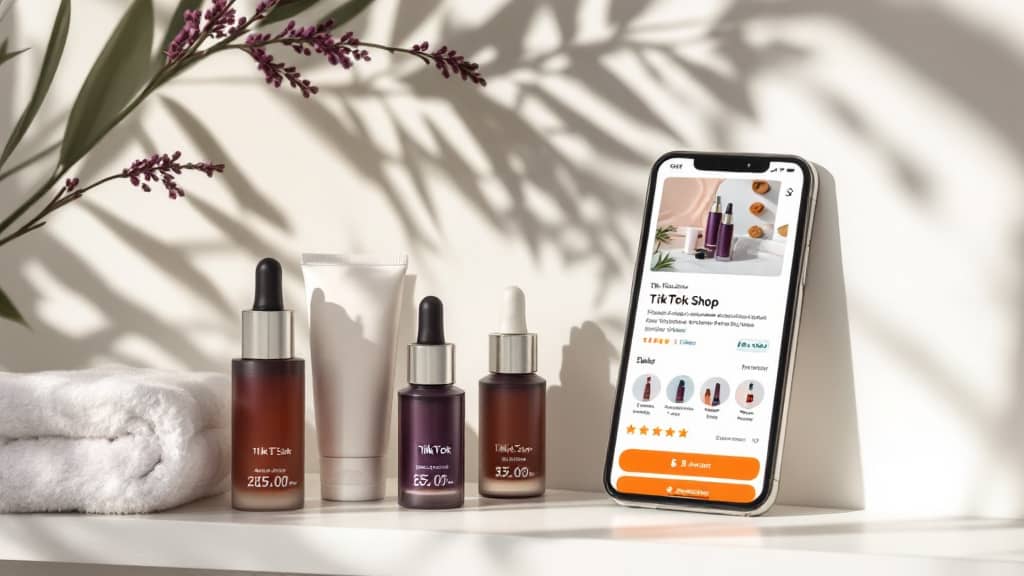
The same logic applies to TikTok Shop. When a buyer can search your brand and find 40 creator videos, a live shopping history, and a product with 10,000 units sold through organic content, that is a form of social proof that no trade event booth can replicate. The shelf placement conversation shifts from convincing a buyer to take a risk, to confirming a brand they already know is underrepresented in their store.
This is the omnichannel reality beauty founders need to internalize: TikTok Shop and Amazon are not digital afterthoughts to a retail strategy. They are the upstream validation that makes retail achievable at scale.
What Most Beauty Brands Get Wrong About Channel Sequencing
The typical approach is to pursue retail first, then use retail credibility to justify marketplace investment. That sequencing made sense in 2015. It does not make sense now, when the average beauty consumer checks Amazon reviews before they buy anything, including a product they discovered at a spa.
Brands that sequence correctly build Amazon and TikTok Shop simultaneously, treating them as one integrated engine rather than two separate budgets. Amazon captures purchase intent. TikTok Shop creates it. A shopper who discovers a serum through a TikTok creator video, searches it on Amazon, sees strong ratings and Prime availability, and then encounters it at a resort spa is experiencing a brand, not just a product. That customer converts at retail because the marketplace work already happened.
Brands working with an Amazon-focused partner who also manages TikTok Shop see this dynamic in their numbers. TikTok Shop drives branded search volume on Amazon. Amazon drives unit economics that justify creator seeding on TikTok. The two channels reinforce each other when managed as one system.
What Separates a Real Operator from an Advice-Only Partner
The advice-only consultant will tell you to sequence your channels thoughtfully and invest in brand awareness before conversions. That advice is accurate and costs you nothing except the time you spend acting on it alone.
An agency billed on a percentage of ad spend has a structural incentive to grow your advertising budget regardless of whether the underlying product detail page converts, your inventory position is healthy, or your retail expansion actually needs marketplace support. The budget grows; the brand may not.
A distributor that never runs the agency engine gives you shelf placement but leaves the digital side unmanaged. Your retail buyer gets nervous when customers cannot find your product online. The partnership weakens.
The model that works for beauty brands scaling across channels combines operational control, aligned incentives, and capital deployment. When your partner bills on gross revenue rather than ad spend, they are incentivized to grow the whole brand, not the media line item. When they can deploy their own capital into 3P exclusive distribution, they have real skin in the performance of your catalog. When they run Amazon and TikTok Shop as one engine, the channel sequencing described above actually executes instead of staying on a slide.
The Margin Question Beauty Brands Ignore Until It Is Too Late
Physical retail negotiation in beauty involves training commitments, seasonal protocol development, and six-month timelines from introduction to first order. That is a real cost of channel development. Brands that have not optimized their Amazon margin before entering retail often discover they cannot afford the retail channel development costs without eroding their overall profitability.
Amazon fee structures, ad spend ratios, and FBA costs compound quickly in beauty, where SKU counts are high and return rates matter. A brand running a 35% total advertising cost of sale on Amazon while simultaneously funding retail market development is burning from both ends. Getting those numbers right before scaling is not optional.
Beauty brands at $1M to $5M in annual revenue typically have 15 to 25 percentage points of recoverable margin sitting in their Amazon operation before they ever increase revenue. That recovered margin is what funds the trade events, the esthetician training programs, and the creator seeding budgets that open physical doors.
The Right Question to Ask Any Potential Partner
Before signing with any marketplace partner, ask them to explain how their TikTok Shop operation feeds branded search volume to Amazon, and how their Amazon catalog health protects retail channel credibility. If they answer those as two separate questions handled by two separate teams, you have your answer about how integrated their operation actually is.
Beauty is a category where brand perception is everything and operational details compound invisibly until they do not. The brands winning across Amazon, TikTok Shop, and physical retail in 2026 are not doing so because they have better products. They are doing so because they found a partner who treats every channel as part of one brand-building system.
Want to see exactly where your brand stands? Get the free CPG Amazon Benchmark Report and see your margins, ad costs, conversion, and fees benchmarked against the real state of Amazon in 2026.
Get the Benchmark Report →