Why UGC Is the Hidden Margin Driver for CPG Brands on TikTok Shop
UGC on TikTok Shop drives 2x to 4x higher conversion than brand creative. Here is what separates partners who build real revenue pipelines from ones who just produce content volume.
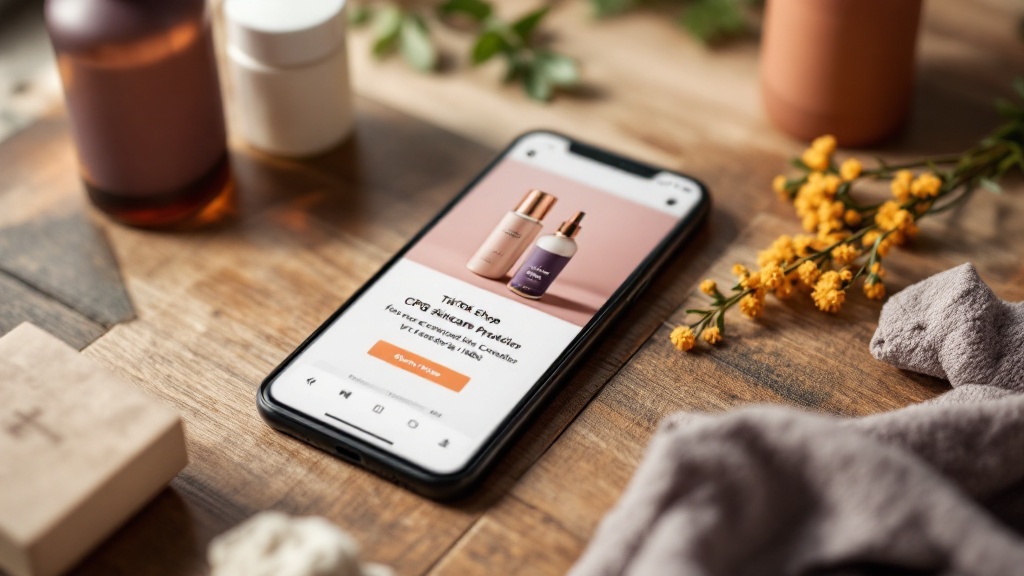
User-generated content is now a direct revenue mechanism, not a branding exercise.
CPG brands scaling on TikTok Shop are discovering that UGC drives conversion rates 2x to 4x higher than polished brand creative. This is not a trend. It is a structural shift in how consumers on short-form video platforms decide to buy. If your agency is not building a systematic UGC operation around your product catalog, you are handing margin to competitors who are.
What Separates Operators Who Win With UGC From Those Who Waste Budget
Most brands treat UGC as a content request, something you ask customers to do and hope for the best. Serious operators treat it as a production pipeline with defined inputs, quality gates, and performance feedback loops. The difference shows up in your cost-per-acquisition within 30 days.
A capable partner running your TikTok Shop presence should be doing three things consistently:
- Recruiting and briefing creators at scale, with specific hooks, claim structures, and product demonstration formats tailored to your category.
- Testing creative variants against each other with enough spend to reach statistical significance before scaling any single asset.
- Feeding performance data back into the brief cycle so that every new batch of content is smarter than the last.
If your current agency is handing you a content calendar and calling that a UGC strategy, the gap between what you are paying for and what is possible is significant.
The CPG Category Advantage That Most Brands Leave on the Table
Consumer packaged goods have a structural advantage on TikTok Shop that most brands do not fully exploit. Physical products with visible results, sensory appeal, or clear before-and-after narratives convert exceptionally well in short-form video. Food, beverage, personal care, and household categories all have inherent demonstrability that creator content can amplify far more effectively than any static ad unit.
The brands capturing this advantage are not necessarily the ones with the best products. They are the ones with the best creator ecosystems built around their products. That ecosystem requires active management: outreach, relationship development, performance tracking, and rapid iteration. It is a full-time operational function, not a campaign you run once per quarter.
What Your Agency Should Be Measuring
UGC performance on TikTok Shop is measurable at every stage of the funnel. Any partner managing this channel for you should be reporting on the following with precision:
- Video view-to-product-page conversion rate by creative asset
- Add-to-cart rate segmented by creator tier and content format
- Attributed revenue per creator relationship over 30, 60, and 90-day windows
- Content production cost relative to attributed gross margin, not just revenue
Gross margin attribution is the metric most agencies avoid because it requires them to account for fulfillment costs, platform fees, and return rates alongside topline revenue. A partner with aligned incentives, one who shares in your success rather than billing by the hour, has every reason to optimize for margin rather than vanity metrics.
The Incentive Alignment Problem in Agency-Run UGC Programs
Here is the structural issue with most agency relationships on TikTok Shop: the agency gets paid whether or not your UGC performs. Their incentive is to produce content volume and report impressions. Your incentive is profitable revenue at scale. Those two things are not the same.
Eleviam operates under a different model. As an agency-first partner that also takes on exclusive 3P distribution for qualifying brands, our economics are tied directly to your sell-through performance. When your UGC converts, we win. When it does not, we absorb the cost of that failure alongside you. That alignment changes every decision in the content pipeline, from which creators get briefed to how quickly underperforming assets get cut.
Three Questions to Ask Any Partner About Their UGC Operation
Before you hand a partner the keys to your TikTok Shop creative strategy, ask these questions and listen carefully to how specific the answers are:
- How do you structure creator briefs differently for a food brand versus a personal care brand, and what data informs that structure?
- What is your process for identifying a failing creative concept within the first 72 hours of deployment, and what happens next?
- How do you attribute UGC-driven revenue to gross margin rather than gross revenue, and how often does that reporting reach the brand?
Vague answers signal an agency that treats UGC as creative work. Precise, data-referenced answers signal an operator who treats UGC as a growth function. For a CPG brand doing $75K or more per month, the difference between those two partners is likely hundreds of thousands of dollars per year in recoverable margin.
Scale Requires Infrastructure, Not Just Content
At $75K per month, you are not testing whether TikTok Shop works. You are testing whether your current operation can scale to $300K or $500K per month without the wheels coming off. UGC is a critical input to that scale, but it cannot function in isolation. It has to be integrated with your inventory planning, your fulfillment capacity, your promotional calendar, and your platform fee structure.
A UGC spike that drives 3x your normal order volume is a win only if your logistics can absorb it. An agency that manages your content without visibility into your supply chain is setting you up for stockouts, delayed shipments, and negative reviews that undo months of creator-driven momentum. The brands that scale cleanly are the ones whose content strategy and operations are managed as a single system, not handed off to separate vendors who never talk to each other.
Running $75k+/month on Amazon or TikTok Shop? Book a free 30-minute audit call and we'll show you exactly where the margin is leaking.
Book a Free Call →More From the Eleviam Blog
Amazon AMC Data Reveals What Separates Scaling CPG Brands From Stalling Ones
September 13, 2026
Amazon CPC in 2026: What Your Brand Can Actually Afford Per Click
September 12, 2026