When AI surfaces a thousand products in seconds, 65% of shoppers still click the brand they already recognize. That single statistic rewrites how CPG brands should think about Amazon and TikTok Shop investment in 2026.
A Bazaarvoice study of more than 3,600 shoppers across the US, Europe, and Australia found that AI recommendation engines have not replaced brand trust. They have created a faster, more demanding environment in which that trust either holds or collapses in a fraction of a second. Only 24% of shoppers selected an AI-labeled best match. Only 11% went with the cheapest option. The majority defaulted to the name they already knew.
That is the environment your brand is competing in right now, whether your agency acknowledges it or not.
What AI Actually Strips Away
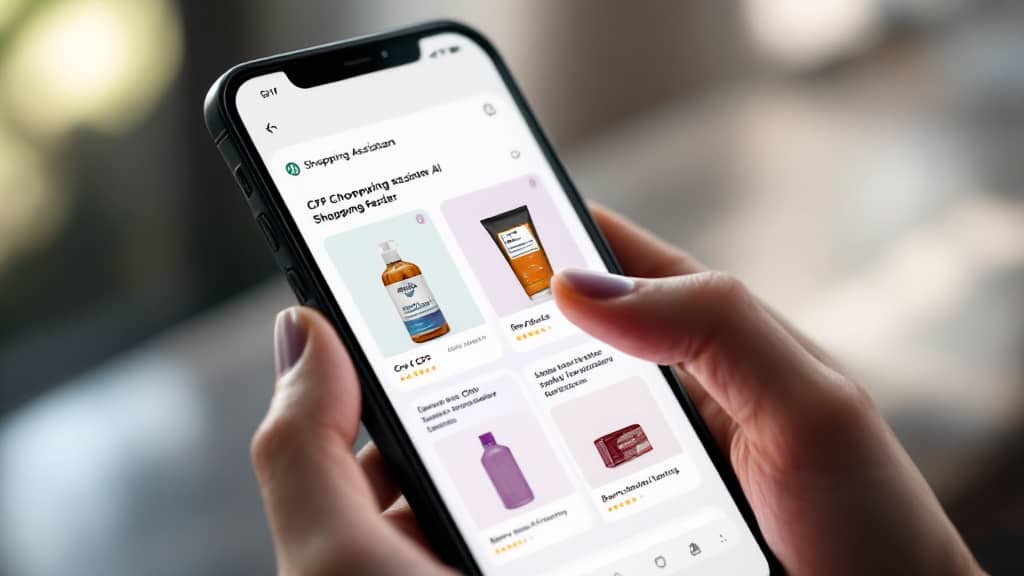
An AI shopping prompt removes almost everything a traditional retail shelf relied on: the eye-level placement, the glossy packaging, the logo visible from three feet away. What remains is a short list of specifications, a star rating, a review count, and a price. The AI filters on that data. The shopper filters on recognition.
This changes the stakes for CPG brands on Amazon and TikTok Shop dramatically. If your product page is thin, your review velocity is low, or your brand presence is inconsistent across channels, AI agents will surface you less often. And when they do surface you, an unrecognized name next to a familiar one is almost always the losing position.
The brands winning in this environment are not winning on price. They are winning because their equity is verifiable. Every review, every image, every answer to a customer question is a signal an AI model can interpret and a shopper can confirm in under two seconds.
What Separates Operators from Order-Takers
Most agencies treat brand equity as a marketing department problem and Amazon or TikTok Shop as a traffic and conversion problem. That separation is a structural mistake. A real operator understands that every product detail page is a brand equity asset and that the work of building recognition on a social channel directly compounds performance on a marketplace.
Consider the difference in how partners approach this:
- An advice-only consultant will tell you that brand equity matters and hand you a framework. The work of actually building it stays with your internal team.
- An agency billing on a percentage of ad spend has an incentive to run more ads, not to fix the underlying page quality or review count that determines whether a shopper clicks at all. Inflated budgets reward the agency even when the brand is losing the non-paid click to a competitor with stronger social proof.
- A tool-only vendor gives you a dashboard. It surfaces what is broken but deploys no capital and executes nothing.
- A distributor without an agency engine can place your product but cannot build the content infrastructure, the review velocity, or the cross-channel presence that makes an AI agent surface you and a shopper choose you.
The partner you need runs both functions together. Amazon and TikTok Shop are one engine when operated correctly. A viral TikTok Shop moment raises branded search volume on Amazon within days. That branded search volume is what an AI shopping agent reads as a trust signal. Each channel feeds the other, but only if both are managed with shared strategy and aligned incentives.
The Price Myth That Hurts Brands
The Bazaarvoice data also dismantles one of the most common misconceptions in marketplace strategy: that AI creates a race to the bottom on price. The research found that only 4% of shoppers will switch to a lookalike product for a 10% discount. It takes a 50% price reduction to meaningfully move a loyal buyer. That means margin protection is achievable, but it requires the brand equity to back it up.
Brands that chase the lowest price on Amazon to win the buy box without protecting the brand layer are setting themselves up for a race no one wins. The better path is margin recovery through stronger positioning, not price capitulation. A partner who bills on gross revenue, not ad spend, is structurally motivated to protect your margins and your price integrity, because their returns are tied to yours.
What Your Partner Should Be Doing Right Now
If your current agency has not audited your brand equity signals on Amazon and TikTok Shop as a unified problem, that is a gap worth addressing before AI agents become the default shopping interface for a larger share of your buyers. The transition is already underway.
The right partner is actively doing three things. First, building product page content that performs for both human shoppers and AI indexing. Second, running review velocity programs that create the verifiable social proof AI models and shoppers both rely on. Third, managing TikTok Shop and Amazon as connected channels so that brand recognition built on one platform compounds performance on the other.
Brands doing more than $1M per year on marketplaces cannot afford to treat these as separate workstreams managed by separate vendors with separate incentives. The window to build durable brand equity before AI agents normalize as a shopping behavior is narrowing. The brands that move now will be the ones AI surfaces first and shoppers click by default.