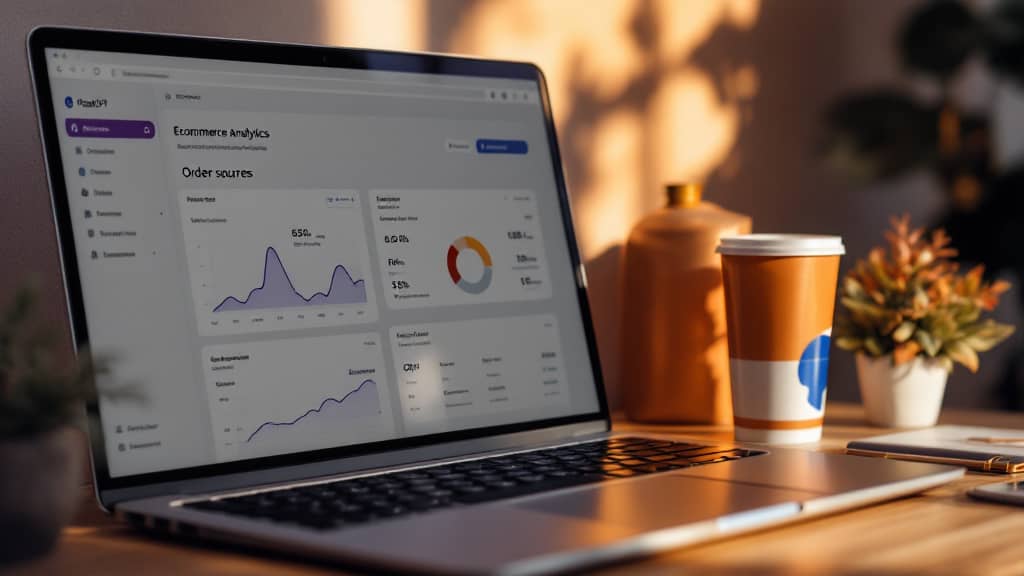
ChatGPT is already sending paying customers to ecommerce brands, and a referrer report alone can show only a fraction of them. A Spain-based florist, Persa Flores, tracked its order sources at the transaction level and found that one in five online orders since September 2026 originated from ChatGPT. That is not a rounding error. That is a channel.
The more important finding is not the volume. It is the attribution gap. Only about one in eight of those ChatGPT-driven orders showed ChatGPT as the referrer in standard analytics. The rest showed up as direct or unknown traffic. A brand relying on referrer data alone would have no idea this channel existed, let alone how fast it was growing.
Why Standard Attribution Breaks for AI-Referred Traffic
Web browsers pass a referrer in the HTTP header when a visitor clicks a link. Analytics tools read that header to record where a visitor came from. But referrer data disappears for several reasons: privacy settings, browser policies, and protocol downgrades from HTTPS to HTTP.
José Pérez Sánchez of Persa Flores told Practical Ecommerce that each of these orders came in on a link carrying a UTM tag ChatGPT adds itself. Orders tagged utm_source=chatgpt.com were traceable even when the referrer header was blank. Without UTM-level order attribution, those orders would have been counted as direct traffic indefinitely. Most of that growth also came before the florist did anything deliberate to show up in ChatGPT. It only started optimizing for the chatbot in mid-October.
For CPG brands on Amazon and TikTok Shop, this matters because the same gap exists across your off-platform channels. If a ChatGPT recommendation drives a shopper to your Amazon listing, that session is captured by Amazon's own attribution system only if you have an Amazon Attribution tag on the link. Without it, you lose the connection entirely.
What This Means for CPG Brands Scaling on Marketplaces
For a shop like Persa Flores, ChatGPT is no longer a future consideration. It is a current operating question. The brands that benefit are the ones whose product pages, reviews, and content give AI shopping assistants something to recommend confidently.
An advice-only consultant will tell you to optimize for AI search and hand you a checklist. A tool-only vendor will show you keyword rankings and call that visibility. Neither one is managing the actual attribution pipeline that connects an AI recommendation to a confirmed order on your P&L.
A strong operating partner does three things here. First, they build and maintain the attribution structure that captures AI-referred traffic at the order level, not just the session level. Second, they ensure your Amazon and TikTok Shop listings are structured so that AI assistants can extract and present accurate product information, since a recommendation is worthless if the destination listing is thin or inconsistent. Third, they monitor which channels are sending high-intent traffic and adjust your content and catalog accordingly, before a competitor earns that recommendation instead.
The Persa Flores data also shows how fast an AI channel can accelerate. Their ChatGPT order share moved from a small single-digit percentage to more than one in five orders across just a few months. That kind of acceleration in a single referral source is not something a quarterly reporting cycle catches in time to act on. You need an operator watching it in real time.
What to Demand From Your Partner on AI-Referred Attribution
When evaluating how a partner handles this, the question is not whether they know ChatGPT is sending traffic. The question is whether they have built the infrastructure to measure it and whether they connect that measurement to decisions about your catalog and content.
- Ask how they track AI-referred orders at the transaction level, not just the session or channel level.
- Ask how they structure Amazon Attribution tags for off-platform traffic, including AI-generated links.
- Ask what changes to your listing content would increase the accuracy and frequency of AI recommendations.
- Ask how often they review referral source data and what threshold triggers a content or catalog adjustment.
A distributor that never runs the agency engine has no answer to these questions. An agency billed on a percentage of ad spend has little incentive to optimize a channel that does not run through their managed budget. The partner you want treats AI referral as an organic growth channel that requires active catalog management, not a vanity metric to screenshot in a monthly deck.
We buy inventory, contribute to ads, and operate your brand with Eleviam's internal agency arm as if it was our own. We have managed over $200 million in Amazon ad spend, scaled over 40 CPG brands, and have a 98% client retention rate.
The brands that build AI recommendation visibility now are the ones that will own the top of the funnel when that channel matures. Our guide to working with an Amazon agency for CPG brands covers how operator-led partners approach catalog structure and off-platform attribution together. And if you are evaluating whether your current partner is built to manage this kind of channel growth, our guide to choosing an Amazon agency gives you the right questions to ask.
The referrer gap is not a technical nuance. It is a revenue counting problem. Brands that solve it first will know exactly how much AI-driven demand they are capturing and which listings are earning it.
Want to see exactly where your brand stands? Get the free CPG Amazon Benchmark Report and see your margins, ad costs, conversion, and fees benchmarked against the real state of Amazon in 2026.
Get the Benchmark Report →