Amazon Business is not waiting for traditional B2B suppliers to catch up. The Staples Canada rebrand into a unified Staples Business platform, covering office supplies, technology, print, and facilities services under one banner, is a direct response to the pressure Amazon's B2B marketplace is putting on every category it enters.
For CPG brands selling on Amazon, this shift matters more than most realize. When a legacy retailer with nearly 300 Canadian locations feels compelled to restructure its entire commercial identity around Amazon Business competition, it signals something important: Amazon's B2B channel is no longer a secondary consideration. It is the primary threat incumbent suppliers are building against.
What the Staples Rebrand Reveals About Amazon's B2B Momentum
The core insight from this move is not that Staples is rebranding. It is that the rebrand is being driven by a very specific competitive dynamic. Industry observers who analyzed the launch were direct: this is about defending market share against Amazon Business, not a cosmetic refresh.
Amazon Business has scaled by doing exactly what Amazon always does. It reduces friction, makes pricing transparent, and gives buyers a single place to consolidate spend across categories. When your competitor's core product promise is simplicity and consolidation, you either match it or you lose the account.
CPG brands selling on Amazon's consumer marketplace are watching this same dynamic play out in their own categories. Consolidation on the buyer side, whether that buyer is a procurement officer or a household shopper, compresses the window a brand has to differentiate on anything other than price and availability.
What This Means for CPG Brands on Amazon
The B2B consolidation story has a direct parallel for consumer CPG sellers. Amazon is not just a sales channel anymore. It is increasingly the default first search for product categories that used to belong to specialty retailers, regional distributors, and branded direct sites. Brands that treat Amazon as one of several channels are losing ground to brands that treat it as the primary battlefield.
The brands winning on Amazon right now are not winning because they run more ads. They are winning because they have a partner managing the full picture: listing quality, inventory health, buy box stability, pricing discipline, and paid media working together as one system rather than as disconnected tactics.
An Amazon agency built specifically for CPG brands approaches this very differently than a generalist shop. The distinction is not about capabilities on paper. It is about how decisions get made and who bears the cost when they go wrong.
The Structural Problem With Most Amazon Partnerships
Most brands fall into one of two traps when they try to compete seriously on Amazon. The first is the agency billed on a percentage of ad spend. That model rewards budget increases, not margin improvement. When your agency earns more as your ad costs rise, the incentive to find efficient growth disappears. Your TACoS climbs, your profitability shrinks, and the agency reports record spend as a win.
The second trap is the distributor that holds inventory and controls the buy box but runs no meaningful agency function. The brand loses visibility, loses pricing control, and ends up watching unauthorized sellers and suppressed listings chip away at their account health with no one accountable for fixing it.
Neither model can respond to what Amazon Business growth actually requires: a partner who controls the full commercial relationship, deploys capital when needed, and has incentives aligned with your growth, so that brand growth and partner growth move in the same direction.
For CPG brands serious about reducing TACoS while scaling revenue, the question to ask any potential partner is simple: are you paid more when I spend more on ads, or are you paid more when I sell more product at healthy margins? The answer tells you everything about whose interests are actually being served.
The TikTok Shop Dimension
Staples Canada is consolidating because fragmented service offerings are losing to integrated platforms. The same logic applies to brands that manage Amazon and TikTok Shop as separate programs with separate agencies and separate strategies.
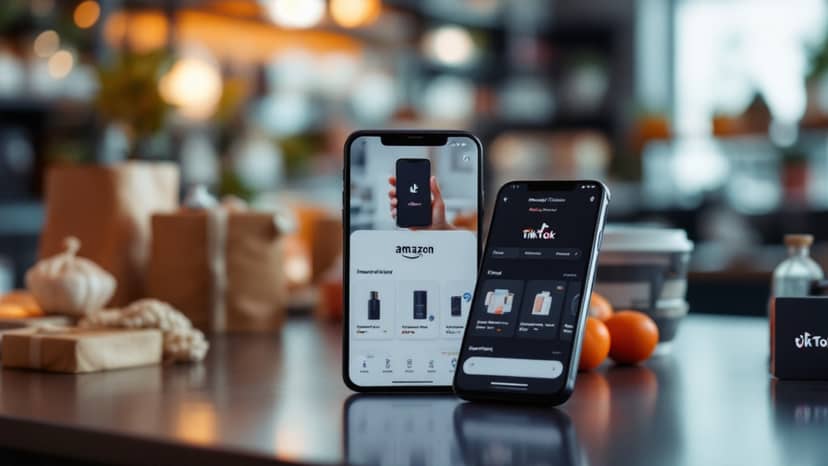
TikTok Shop is generating discovery and conversion for categories that Amazon captures in the repeat purchase phase. Brands that run both channels as one coordinated engine, where TikTok Shop drives trial and Amazon captures the retention, are building a compounding advantage that single-channel operators cannot replicate.
A TikTok Shop strategy for CPG brands only delivers its full value when it is built alongside the Amazon program, not bolted on as an afterthought managed by a separate vendor with no visibility into what is happening on the primary revenue channel.
What to Look for in a Partner Right Now
The Staples rebrand is a useful signal for CPG brand operators evaluating their own channel strategy. When the competitive pressure from Amazon is strong enough to force a 30-year-old retail institution to restructure its entire B2B identity, the brands that will win are the ones who treat Amazon as a core business function, not a marketing line item.
- Your partner's incentives should be aligned with your growth, not with ad spend or a flat retainer disconnected from performance.
- Your partner should hold accountability for buy box control, listing health, and inventory availability, not just campaign management.
- Your partner should run Amazon and TikTok Shop as one integrated growth engine, because the consumer journey increasingly crosses both.
- Your partner should deploy their own capital in a distribution model when the brand benefits, removing the cash flow constraints that slow scaling.
Amazon Business growing fast enough to force legacy retailers into major rebrands is not a trend to monitor. It is a condition already in place. The brands building the right partnerships now will be the ones with the account health, the margin structure, and the channel presence to benefit from that growth rather than be displaced by it.