TikTok Shop Is Already a Major Marketplace. Most Brands Are Still Treating It Like an Experiment.
TikTok's own numbers show the scale. In its recap of the 2025 Black Friday and Cyber Monday campaign, TikTok said sales over the four-day shopping period exceeded $500 million. Brands doing $75K or more per month on Amazon often have demand they could be capturing on TikTok Shop, and most of them are either absent, underinvested, or running the channel the same way they run paid social. That is a structural mistake with compounding consequences.
The Channel Requires a Different Operating Model Than Anything You Have Internally
TikTok Shop is not a media buy. It is not a content calendar. It is a full commerce operation that combines affiliate creator management, shoppable video production, live shopping strategy, fulfillment logistics, and real-time performance optimization inside a single platform. When brands treat it as a marketing channel managed by their social team, they get inconsistent sales, poor affiliate relationships, and zero flywheel momentum.
The brands scaling fastest on TikTok Shop in 2024 were doing three things their competitors were not. They had dedicated affiliate pipelines with deep rosters of active creators per SKU. They were running live shopping sessions several times per week, not occasionally as a test. And they had someone watching conversion data at the session level and adjusting creative, offer structure, and creator briefing in near real time. That is not a task list for an in-house team already managing Amazon PPC, DTC email flows, and retail deductions.
What Separates Operators Who Scale From Operators Who Stall
The difference between a brand that stalls on TikTok Shop and one that scales is almost never product quality or even audience size. It comes down to operational depth on the platform. A serious operator maintains an affiliate network that is constantly refreshed. Dead affiliates get replaced. High performers get exclusive offers and early access to new SKUs. Creator briefs are updated weekly based on what hooks are converting, not what looks good in a slide deck.
On the content side, scaling brands are producing a high volume of shoppable content for each product every month, with clear testing frameworks for hook duration, product demonstration format, and offer framing. Brands producing a handful of videos per month and wondering why the algorithm is not picking them up are not facing a discovery problem. They are facing an input problem.
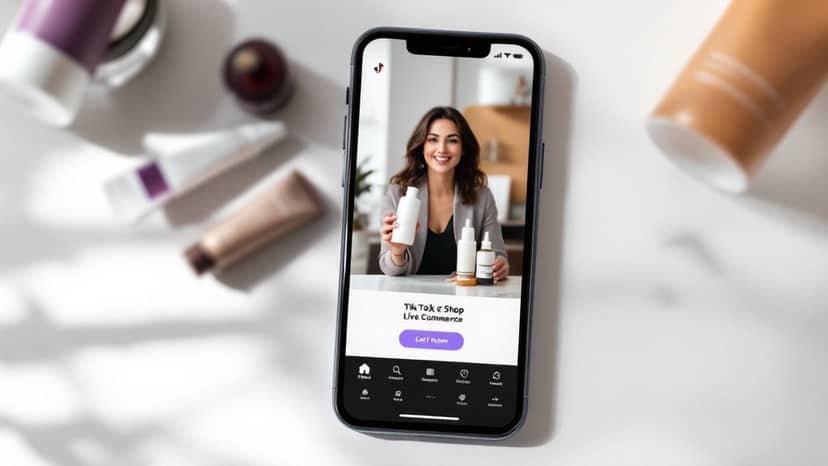
Live shopping is one of the highest-leverage formats on the platform and one of the most mismanaged. TikTok reported that brands and sellers hosting livestreams saw 84% sales growth in its 2025 Black Friday and Cyber Monday campaign period compared with the 2024 period. A well-structured live session with the right host, offer cadence, and comment moderation strategy can generate an outsized share of revenue in a single session. Brands running live without a conversion strategy, without flash offer timing, without a warm audience already primed through affiliate content, are burning hours for little return. Brands that combine affiliate, shoppable video, and live formats tend to convert better than brands using any single format alone.
Why Shops Stall After Early Growth
A shop that grows quickly and then flattens is rarely suffering from bad creative or a weak product. The usual causes are operational:
- A frozen creator pool. Recruitment stops because the existing roster is working and feels comfortable. Every quarter that passes without new creators shrinks your future options.
- Slowing repeat content. Even committed creators post less over time without new sample drops, fresh briefs, and active relationship management.
- Content that fails to convert. Volume without a conversion strategy burns creator goodwill and affiliate budget at the same time.
- Paid spend that outruns its creative. Scaling ad investment behind content that has not proven organic demand accelerates losses rather than growth.
If GMV has been flat for a couple of months, the first number to ask your partner for is not revenue share by creator. It is net new creators added in the last 30 days. Shop health matters too: TikTok rates shops with a Shop Performance Score from 0 to 5 built from product satisfaction, logistics, and customer service, and a score that falls too low costs a shop its affiliate and campaign benefits.
The Amazon Parallel That Most Brands Miss
Every CPG brand that has scaled on Amazon learned the hard way that the channel has its own operating logic. Keyword architecture, review velocity, inventory placement across fulfillment centers, suppressed listing recovery, Buy Box strategy: none of that translates from retail or DTC instincts. You either built deep internal expertise or you hired a partner who had it. TikTok Shop is at a stage Amazon went through years ago. The brands building platform fluency now will have structural advantages that compound for years. The brands waiting for the channel to stabilize will spend 2026 playing catch-up.
The parallel also holds for incentives. An agency that charges a flat retainer to manage your TikTok Shop has no economic reason to push volume. The model that aligns correctly is one where the partner shares in the upside, the same logic that governs serious Amazon distribution partnerships. When your operator eats what they kill, the affiliate network gets worked harder, live sessions get optimized more aggressively, and the brand's growth is not a line item. It is the partner's revenue.
What to Demand From a TikTok Shop Partner
If you are evaluating partners to run TikTok Shop for your brand, the questions that matter are not about team size or case study logos. Ask how large their active affiliate network is and how they segment it by niche, audience size, and conversion history. Ask how many live sessions per week they run across their brand portfolio and who manages in-session conversion optimization. Ask what their content testing cadence looks like and how they feed performance data back into creator briefs. Ask how many net new creators they added for each brand last month, and how they protect the Shop Performance Score when order volume spikes.
Ask whether they manage Amazon and TikTok Shop together for their brands or treat them as separate engagements. The reason this matters is inventory. A brand that spikes on TikTok Shop without coordinated FBA inventory planning can go out of stock on Amazon quickly, lose ranking, and spend weeks recovering organic position. The channels are not independent. An operator managing both can protect and accelerate growth across the full marketplace footprint.
The window to build compounding platform advantages is open now. The brands that move first will not just capture early revenue. They will own affiliate relationships, algorithm trust, and live audience bases that are extremely difficult for late movers to replicate.
Doing $1M+ a year on Amazon or TikTok Shop? Book a qualification call and we'll show you where demand is leaking between the two channels.
Book a Qualification Call →