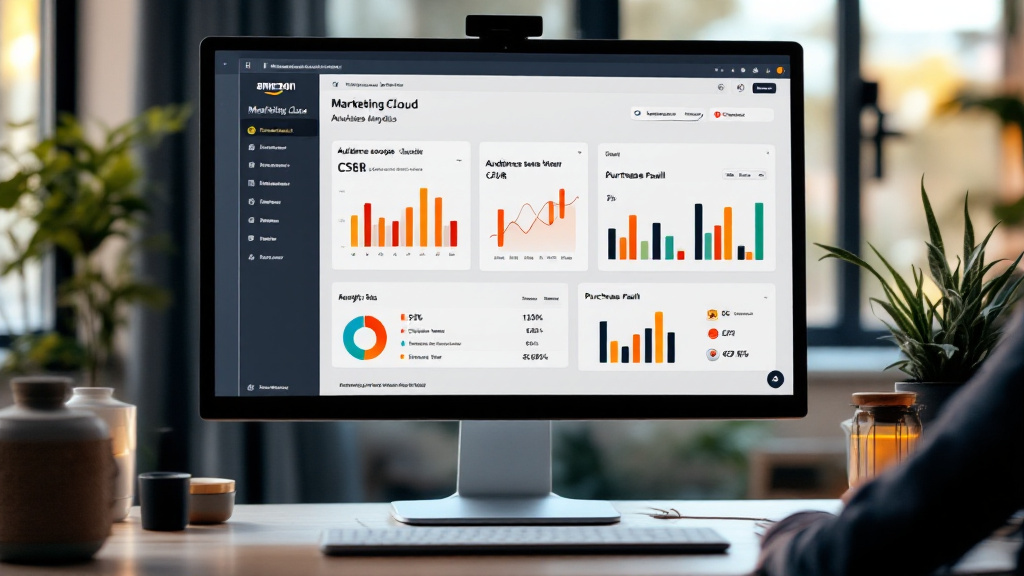
Why Your Amazon Agency Model Determines Your Brand's Growth Ceiling
The agency model you choose on Amazon will cap your growth before any algorithm does. Here is how to evaluate partners before you sign.

The agency model your brand chooses on Amazon will cap your growth faster than any algorithm change, competitor, or supply chain disruption ever could. Most CPG brands discover this too late, after 12 months of flat revenue, bloated ad spend, and a partner who can explain the problem but cannot fix it.
Understanding how different agency models are structured, and what those structures actually incentivize, is the most important due diligence a brand doing $1M or more annually can perform before signing a contract.
The Four Agency Archetypes and Why Three of Them Fail Scaling Brands
Most brands encounter the same four partner archetypes when evaluating Amazon growth partners. Each has a structural flaw that becomes more damaging as your brand scales.
- The advice-only consultant tells you what to do and bills you for the insight. Execution is your problem. At $1M in revenue this is manageable. At $5M it creates a full-time internal job just to implement what you are paying someone else to strategize.
- The ad-spend percentage agency is the most common and the most misaligned. When an agency earns 10 to 15 percent of whatever you put into advertising, its financial incentive is to increase your budget, not improve your efficiency. A brand spending $50,000 per month on ads pays that agency $6,000 regardless of whether the ads returned $150,000 or $80,000 in revenue. The agency wins either way. The brand does not.
- The tool-only vendor provides software, dashboards, and automation but no human judgment. These platforms are useful inputs. They are not a growth strategy. When your listing tanks after a policy change or a competitor floods your category with reviews, a dashboard cannot respond.
- The distributor who never runs the agency engine buys your product, puts it on Amazon, and considers the job done. Distribution without active management means your listing ages, your ad efficiency deteriorates, and your brand equity erodes quietly while the distributor collects margin.
None of these models bill on gross revenue, which means none of them are structurally motivated to grow your top line. That single structural difference separates performative partners from operators who share your risk.
What a Real Operator Looks Like in Practice
An operator-led partner does not just manage your account. It deploys its own capital, carries inventory risk, and earns money when you earn money. That alignment changes every decision made on your behalf.
On Amazon, this means active catalog management, listing optimization, and advertising strategy run by people who lose if the numbers slip. It means your TACoS reduction is not a nice-to-have metric on a monthly report. It is a direct input into whether the partnership is profitable for both sides. An agency billing on gross revenue needs your advertising to be efficient. It cannot afford to let budget inflate without results.
On TikTok Shop, the same principle applies. Running TikTok Shop as a real sales channel requires creator sourcing, affiliate management, content strategy, and live commerce coordination. A tool vendor or advice-only consultant cannot execute that. A distributor has no interest in running it at all. Only a partner with skin in the outcome will treat TikTok Shop as a revenue engine rather than an experiment.
The Compounding Cost of the Wrong Model
Brands frequently underestimate the compounding cost of a misaligned agency model. Consider a brand doing $3M annually on Amazon with a 15 percent TACoS. If an advice-only consultant identifies that TACoS should be 9 percent but execution falls short because the brand has no internal team to implement the changes, that 6 percent gap represents $180,000 per year in excess ad spend. Over 24 months, that is $360,000 in margin that never existed.
The ad-spend percentage agency has even less incentive to close that gap. Reducing TACoS from 15 to 9 percent on a $3M revenue base means cutting ad spend significantly. The agency loses revenue. The brand gains $180,000. The incentives point in opposite directions.
An operator billing on gross revenue closes the gap because efficiency directly improves the economics of the relationship for both parties. Lower TACoS at the same or higher revenue means the brand grows faster. The operator grows with it.
What to Demand from Any Amazon Partner Before You Sign
Before entering any agency relationship, ask these four questions and hold out for direct answers:
- How do you make money if our revenue stays flat? If the answer is comfortable, the model is misaligned.
- Who is responsible for execution, not just strategy? Identify the specific person accountable for your listing, your ads, and your catalog health.
- Do you manage TikTok Shop as part of the same growth engine or as a separate product? Brands that run Amazon and TikTok Shop in silos leave significant cross-channel momentum on the table.
- What capital do you deploy on behalf of brands you work with? Partners who carry no inventory risk and deploy no capital have no skin in the outcome.
The right answers to these questions describe a model that is aligned with brand growth, not agency revenue. That model is rarer than it should be, which is exactly why most $1M to $10M CPG brands plateau within 18 months of hiring an agency.
The Standard Worth Holding To
The brands that scale past $10M on Amazon and build durable TikTok Shop revenue share one thing: they found a partner whose financial success is inseparable from theirs. That means gross-revenue alignment, capital deployment, and unified management across both channels. It also means holding that partner accountable to output metrics, not activity metrics. Reports are not results. Revenue is.
If your current partner cannot tell you exactly how they make less money when you make less money, that is the answer you needed.
Want to see exactly where your brand stands? Get the free CPG Amazon Benchmark Report and see your margins, ad costs, conversion, and fees benchmarked against the real state of Amazon in 2026.
Get the Benchmark Report →More From the Eleviam Blog
Why UGC Is Now the Primary Growth Driver for CPG Brands on TikTok Shop
September 15, 2026
YouTube Organic Strategy: What CPG Brands Must Demand From Partners
September 14, 2026