Only 1% of LinkedIn Users Create Content, and Most of Them Are Doing It Wrong
That statistic from Social Media Examiner research is not a reason to celebrate low competition. It is a warning. The brands and operators filling that 1% are mostly posting polished, self-serving content that generates impressions without generating pipeline. For CPG brands scaling on marketplaces, that gap represents a real cost: credibility left on the table, partnerships that never materialized, and distributor relationships that never started.
LinkedIn content strategy matters for brands at the $75K-plus monthly revenue stage because your next wholesale deal, your next retail buyer conversation, and your next agency relationship all start somewhere. Increasingly, they start with someone reading something you or your partner put in front of them. The quality of that content signals whether you are worth a meeting.
The Foundation: Know Exactly Who You Are Talking To
The first thing that separates credible operators from noise generators is specificity around audience. Vague positioning like "people interested in growing their brand" produces vague content. It does not stop anyone from scrolling, and it does not make anyone feel seen.
The right approach is surgical. A CPG brand in the supplement space should be writing for a defined profile: say, health-focused DTC founders doing $1M or more annually who are evaluating Amazon as a new revenue channel and are worried about margin compression from paid advertising. That level of detail changes every word you write.
When evaluating whether your current agency or content partner understands this, ask them one question: who is the specific person reading this post, and what is the one thing they should believe after reading it? If the answer is vague, the content will be too.
Content Should Serve the Reader, Not the Brand
The most common failure mode in brand content is publishing that is fundamentally about the brand itself. Client win screenshots. Award announcements. Behind-the-scenes warehouse photos with generic captions. This content performs poorly not because LinkedIn penalizes it, but because readers scroll past anything that does not offer them something useful or interesting.
The shift that changes content performance is this: every post should answer the question "what does my ideal reader walk away knowing, believing, or feeling?" For a CPG brand, that might mean publishing real data about what drove a ranking improvement, or sharing an honest breakdown of why a product launch underperformed on TikTok Shop in Q1. That kind of transparency builds authority faster than any polished case study.
Your agency or growth partner should be asking this question on your behalf every time content goes out under your brand's name. If they are not, the content is probably serving their portfolio rather than your audience.
The Mechanics of Getting Someone to Stop Scrolling
Research consistently shows that two elements drive the majority of a post's initial impressions: the attached image and the first two lines of visible text. Both require deliberate decisions, not defaults.
On images, the counterintuitive finding is that polished, professional photography often underperforms casual, contextual photography. A wide-angle phone shot showing a real environment, real people, or a real moment creates more curiosity than a studio-quality headshot. One documented case showed a casual stage selfie generating 3,000 leads while a professional replacement photo of the same offer generated 200. The difference was not quality. It was difference from the surrounding feed.
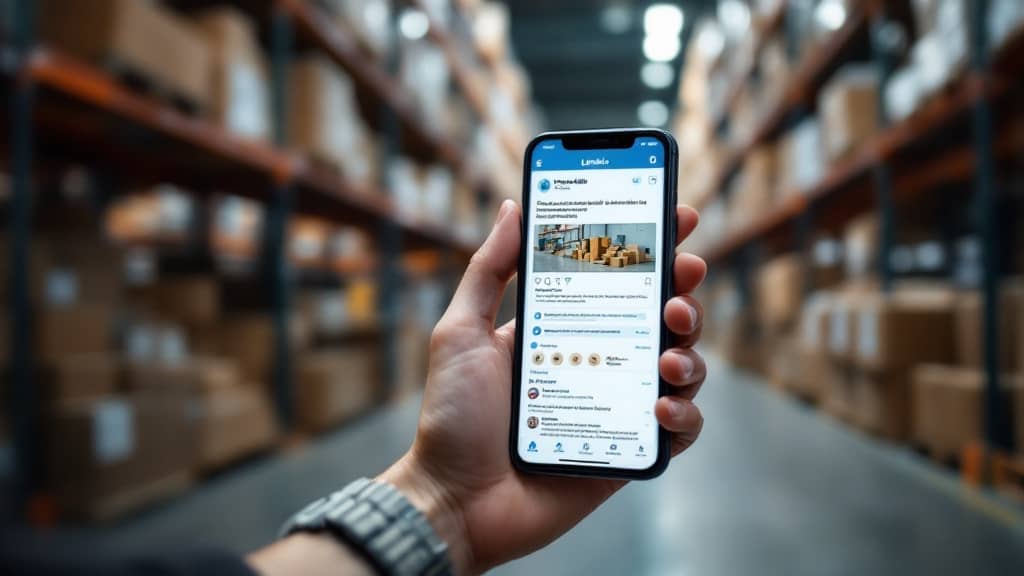
For CPG brands, this translates directly. A product shot staged on a white background performs worse than a photo of the product in an actual kitchen, in someone's gym bag, or next to a shipping label on a warehouse shelf. The context creates a story. The white background does not.
Vertical images also take up more screen real estate before the feed crops them, which increases dwell time by a fraction of a second. That fraction of a second is often the entire margin between a scroll and a stop.
What the First Two Lines of Every Post Must Do
LinkedIn truncates post text after roughly two lines before requiring a reader to click "see more." Everything that follows that truncation is only read by people the first two lines convinced. That makes the opening of every post the highest-leverage real estate in the entire piece.
Strong openings make a specific, declarative claim or surface a specific tension the reader already feels. They do not begin with questions, with context-setting, or with anything that resembles a preamble. The reader should feel, within two seconds, that what follows is worth their time.
For a brand publishing on Amazon strategy or marketplace growth, that might look like: "Brands that add a second marketplace without fixing their conversion rate first lose margin on both channels." That sentence creates enough tension that the right reader will click to see more. A generic sentence about the importance of omnichannel strategy will not.
What This Means When Choosing a Growth Partner
The brands that build real authority on LinkedIn are not doing it by posting more often. They are posting with a clear point of view, a defined audience, and content that prioritizes the reader's outcome over the brand's self-promotion.
For CPG brands at scale, this work should not sit entirely inside the brand team. A good operator, whether that is an agency partner or a distribution partner with aligned incentives, brings a perspective on what your audience cares about, what signals trust in your category, and what content actually builds toward commercial outcomes. The difference between a partner who manages your listings and a partner who helps you build market presence is often visible in whether they ever think about what your content is doing for the people reading it.
Doing $1M+ a year on Amazon or TikTok Shop? Book a qualification call and we'll show you where demand is leaking between the two channels.
Book a Qualification Call →