Most Amazon Advertisers Are Flying Blind on Attribution
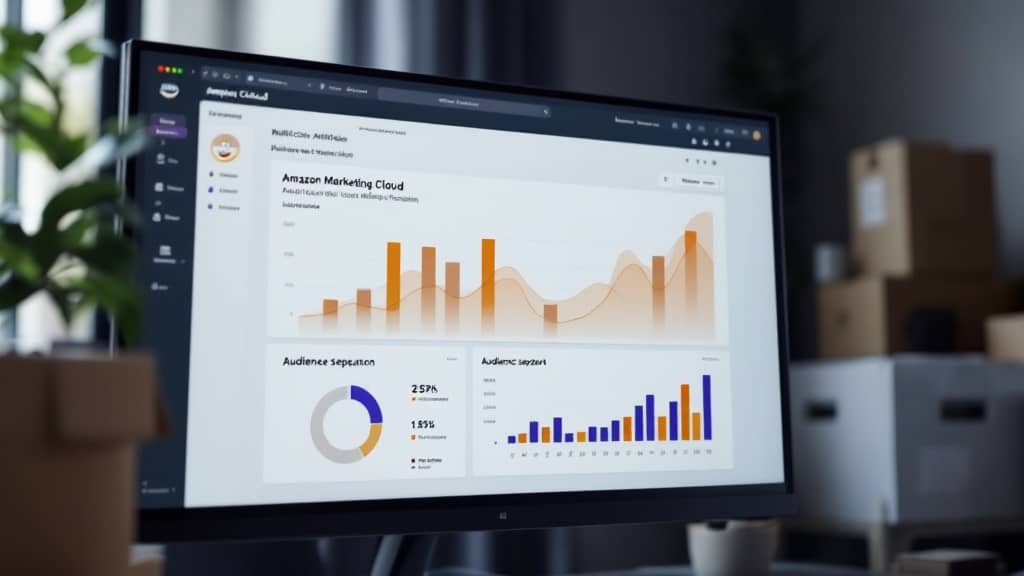
Amazon Marketing Cloud gives brands access to first-party shopper data at a depth that standard Seller Central reporting cannot touch. Brands using AMC are making budget decisions based on actual multi-touch purchase paths. Brands not using it are optimizing for last-click ROAS and wondering why their TACoS keeps climbing. The gap between those two groups is widening every quarter.
AMC is not a dashboard you log into and read. It is a clean room environment where you run SQL queries against pseudonymized Amazon event data to answer questions that Sponsored Ads console will never answer: How many touchpoints did a customer have before converting? Which audience segments show the highest lifetime value after first purchase? What is the true incremental contribution of Sponsored Display versus DSP? These are the questions that determine whether a brand scales profitably or bleeds margin on top-of-funnel spend.
What a Sophisticated AMC Operator Actually Does
The difference between an agency that has AMC access and one that actually deploys it effectively comes down to three things: query infrastructure, audience activation, and reporting cadence tied to real business decisions.
- Query infrastructure: Pre-built AMC query libraries covering path-to-purchase, new-to-brand overlap, frequency analysis, and DSP attribution take months to develop properly. A brand should ask any prospective partner how many custom queries they run per month and what decisions those queries have changed in the last 90 days.
- Audience activation: AMC data becomes actionable when it flows back into DSP campaigns as custom audience segments. Brands that suppress existing customers from conquest campaigns, or retarget high-frequency non-converters with different creative, are operating at a fundamentally different level than brands running static demographic targeting.
- Reporting tied to decisions: AMC insights that sit in a slide deck accomplish nothing. The output of every analysis should be a specific budget reallocation, a creative test, or a targeting change executed within the same billing period. If your agency is showing you AMC data quarterly without changing anything, they are using it as a conversation piece, not a tool.
The New-to-Brand Problem Every Scaling CPG Brand Faces
One of the highest-value AMC applications for CPG brands is new-to-brand customer analysis. Amazon defines a new-to-brand purchase as the first time a customer has bought from that brand on Amazon in 12 months. Standard reporting gives you a new-to-brand rate. AMC tells you which specific campaigns, ASINs, and audience segments are actually acquiring new customers versus recycling existing ones.
For a brand doing $100K per month on Amazon, the difference between a 40% new-to-brand rate and a 65% new-to-brand rate across Sponsored Brands campaigns can represent $15,000 to $25,000 per month in incremental customer acquisition. That is not a marginal improvement. That is the difference between building a compounding customer base and spinning in place.
Partners who run AMC at this level will proactively surface new-to-brand performance by campaign and ASIN without being asked. If you are requesting this data rather than receiving it, that is a signal about how your current operator prioritizes growth versus maintenance.
AMC and TikTok Shop Are Not Separate Conversations
Brands scaling simultaneously on Amazon and TikTok Shop face a specific attribution challenge: neither platform natively shows you how the other one is affecting purchase behavior. A customer who discovers a product through a TikTok Shop creator haul and then purchases on Amazon weeks later shows up as organic or branded search in Seller Central. That conversion is being systematically under-attributed to TikTok, which distorts how brands allocate creator budgets.
AMC path-to-purchase analysis, combined with TikTok Shop attribution data, starts to close that gap. Brands with operators managing both channels inside the same team have a structural advantage: they can correlate TikTok Shop traffic spikes with Amazon new-to-brand conversion rates and build a more accurate picture of cross-platform customer acquisition cost. Brands with siloed agency relationships are making channel budget decisions based on incomplete information.
This is one of the core reasons a full-service operator model matters at scale. When the Amazon team and the TikTok Shop team are the same team, the data conversation happens internally and the brand benefits from integrated decisions. When those functions are split across two vendors, the data conversation usually does not happen at all.
What to Ask Before Signing With Any Amazon Growth Partner
AMC capability is now a baseline qualification criterion, not a differentiator. Any agency pitching Amazon management in 2025 that cannot demonstrate active AMC deployment is operating below the current standard. Here is what separates credible operators from agencies that have AMC in their pitch deck but not in their workflow:
- Ask for three specific business decisions made in the last six months that were driven by AMC analysis. If the answer is vague, the capability is not real.
- Ask how AMC audiences are currently being activated in DSP campaigns. A real operator will describe suppression lists, lookalike segments, and frequency caps with specifics.
- Ask what the reporting cadence is and who owns the query roadmap. AMC should have a dedicated analyst, not a generalist account manager running queries when clients ask.
Brands doing $75K or more per month on Amazon are large enough to benefit from AMC and small enough that the incremental gains from proper implementation can meaningfully change trajectory. The brands that treat AMC as a checkbox are leaving measurable margin on the table. The brands that treat it as an operating system for their Amazon business are compounding advantages that competitors cannot easily close.
Doing $1M+ a year on Amazon or TikTok Shop? Book a qualification call and we'll show you where demand is leaking between the two channels.
Book a Qualification Call →