Brands spending six figures on Amazon ads are making decisions with 20% of the available data.
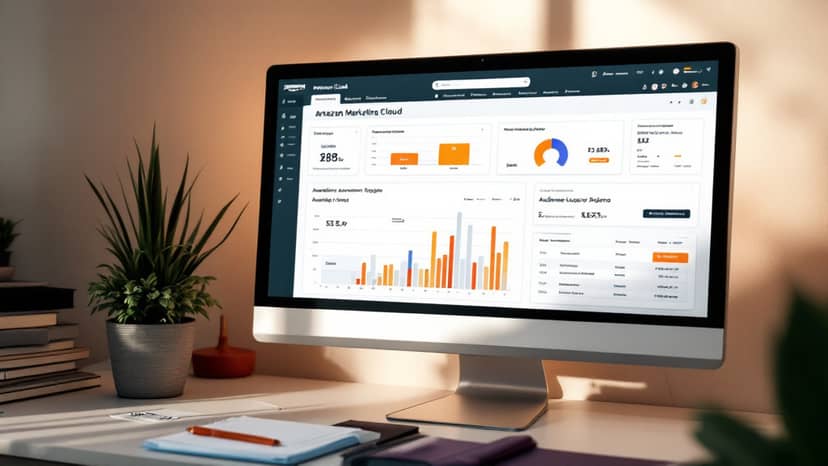
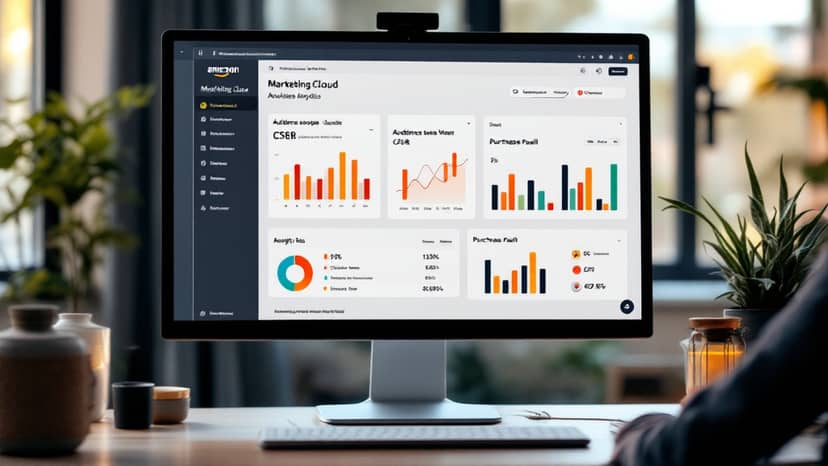
Amazon Marketing Cloud is not a new tool. It has been available to advertisers for years. But the gap between brands that have AMC access and brands that are actually extracting actionable intelligence from it is enormous. Most sellers and their agencies run standard campaign reports, pat themselves on the back for a 3x ROAS, and move on. That is a costly habit when AMC is sitting there with audience overlap data, full path-to-purchase attribution, and multi-touch modeling that the default Amazon console will never show you.
For CPG brands doing $75K or more per month on Amazon, this is not an academic distinction. The difference between a partner who uses AMC fluently and one who ignores it often translates directly to 15 to 25 points of wasted ad spend that compounds every single month.
What AMC Actually Reveals That Standard Reporting Hides
Amazon's default campaign manager shows you last-touch attribution. A customer saw a Sponsored Product ad, clicked it, bought the product. Attribution goes to that ad. Done. The problem is that most purchase decisions on Amazon involve three to five touchpoints across Sponsored Products, Sponsored Brands, Sponsored Display, DSP, and organic search over a window of several days or weeks.
AMC lets you query that entire journey using SQL against Amazon's own first-party data, which is not sampled or modeled. It is actual signal. A competent AMC operator can answer questions like: which ad types are generating new-to-brand customers at the lowest cost, which audience segments are buying multiple SKUs in the same session, and where in the funnel budget is being burned on customers who were already going to convert anyway.
That last point matters enormously for CPG brands with subscription or repeat-purchase dynamics. Retargeting a customer who buys your protein powder every 28 days is not winning; it is paying for a conversion that was already happening. AMC tells you exactly how much of your retargeting budget falls into that category.
What Separates a Real AMC Operator from an Agency Running Queries
There is a version of AMC work that looks good on a slide deck and does almost nothing for your business. An agency pulls a path-to-purchase report, shows you a funnel graphic, and recommends you increase upper-funnel DSP spend. That is not analysis. That is decoration.
Real AMC operators build custom audience segments from query outputs and push them directly back into live campaigns. They identify new-to-brand conversion rates by ad type and restructure budget allocation around what actually acquires customers, not what inflates ROAS. They run overlap analyses to find out whether your Sponsored Brand and DSP campaigns are hitting the same people twice, and they eliminate that redundancy to free up budget for net-new reach.
The technical bar here is real. AMC requires SQL proficiency, familiarity with Amazon's data schema, and enough campaign context to know which questions are worth asking. Most generalist Amazon agencies do not have this capability in-house. They have access to the tool but not the expertise to use it at a level that moves the needle.
The Aligned Incentives Question Every Brand Should Be Asking
Here is something most brands do not think to ask their agency: are you optimizing my campaigns for my profitability, or for metrics that make your reporting look good? This question becomes much sharper once you understand what AMC makes visible.
An agency paid on a percentage of ad spend has a structural reason to grow your ad budget, not to identify the 30% of your spend that is redundant or targeting customers who were already converting organically. AMC puts that 30% in plain sight. Whether an agency shows it to you depends entirely on whether their incentives are aligned with yours.
The model Eleviam operates under, which combines agency management with 3P exclusive distribution, only works when the brand grows profitably. There is no percentage-of-spend fee that rewards burning budget. That alignment changes how AMC data gets used. The goal is to find inefficiency and eliminate it, not to justify next month's retainer.
Three Things Your Amazon Partner Should Be Doing With AMC Right Now
- New-to-brand cost analysis by ad type: Your partner should know exactly what it costs to acquire a first-time buyer through each campaign type and be allocating budget accordingly. If they cannot tell you this number within 48 hours, they are not running AMC queries on your account.
- Overlap and frequency audits: Every 60 days at minimum, a proper AMC operator should be checking whether your DSP and Sponsored Brands audiences are significantly overlapping, and adjusting suppression lists to stop paying for duplicate impressions.
- Cohort-based LTV modeling: AMC allows you to track what customers acquired through different ad types do over a 90 to 180 day window. A partner operating at the right level will use this data to argue for or against upper-funnel investment with actual numbers, not assumptions.
The Brands That Win on Amazon in 2025 Are Not Spending More. They Are Spending Smarter.
Amazon's ad marketplace is more competitive and more expensive than it was 24 months ago. Brands that keep scaling spend without tightening attribution and audience strategy are going to see margins compress until the channel stops making sense. The ones that win are treating AMC as an operating system for their ad strategy, not a reporting add-on.
If your current partner has never walked you through a custom AMC audience build or shown you a multi-touch attribution model for your specific catalog, you should take that seriously. It is not a minor gap. It is the difference between running a precise growth operation and running an expensive guessing game.
Doing $1M+ a year on Amazon or TikTok Shop? Book a qualification call and we'll show you where demand is leaking between the two channels.
Book a Qualification Call →