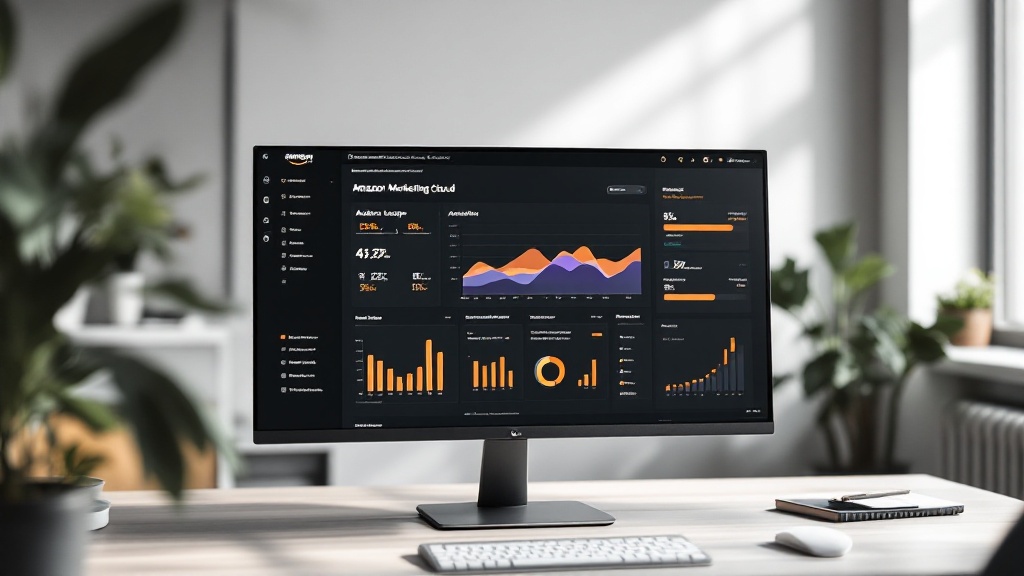
Most brands are sitting on a goldmine of audience data and have no idea what to do with it.
Amazon Marketing Cloud has been available to serious advertisers for several years now, and the gap between brands that extract real value from it and brands that treat it as a checkbox feature is widening fast. AMC is not a reporting tool. It is a signal engine, and the operators who understand that distinction are compounding margin advantages every single quarter.
The core problem is that AMC requires SQL-based querying against Amazon's clean room data environment. That means most brand-side marketing teams, and frankly most mid-tier agencies, never move past the default dashboards. They see impressions, clicks, and attributed sales. They miss the actual intelligence sitting underneath: multi-touch path analysis, new-to-brand customer behavior, household-level frequency data, and overlap between Sponsored Products, DSP, and Streaming TV audiences.
What AMC Actually Unlocks for Scaling CPG Brands
The brands seeing outsized returns from AMC are doing three specific things their competitors are not.
- Full-funnel attribution modeling: Standard Amazon attribution gives last-touch credit. AMC lets you model how DSP awareness placements influence Sponsored Products conversion 7, 14, and 30 days later. For CPG brands running both upper and lower funnel spend, this changes budget allocation decisions dramatically. Brands that reallocate based on AMC path data routinely find 15 to 25 percent efficiency gains in blended ACOS.
- New-to-brand customer cohort analysis: AMC separates new-to-brand purchasers from repeat buyers and lets you trace which ad exposures drove first purchase. For a CPG brand where customer lifetime value compounds over 12 to 36 months, knowing which campaigns acquire versus which campaigns retain is the difference between scaling profitably and scaling into a margin hole.
- Audience suppression and overlap mapping: Running Sponsored Products and DSP simultaneously without audience coordination means you are paying to reach the same customer multiple times across channels. AMC identifies that overlap so you can suppress converted buyers from acquisition campaigns and redirect that spend toward cold audiences.
Why This Is a Partner Evaluation Question, Not a Tactics Question
If you are a brand doing $75K or more per month on Amazon, the question is not whether AMC matters. It does. The question is whether your current agency or partner has the infrastructure to actually run it properly.
Most agencies do not. AMC requires a dedicated data team, active SQL query development, and someone who can translate raw clean room output into actionable campaign changes within a weekly cadence. It also requires DSP access, since a significant portion of AMC's value comes from connecting DSP impression data to Sponsored Ads conversion events. Agencies that only run Sponsored Ads are operating with one hand tied behind their back in this environment.
When evaluating a partner's AMC capability, ask four direct questions. First, can they show you custom AMC query outputs from an existing client, not a demo screenshot. Second, are they running DSP in-house or outsourcing it. Third, how frequently are they pulling and acting on AMC data. Monthly is not good enough; weekly is the minimum for brands spending at scale. Fourth, how do they define new-to-brand acquisition cost as a standalone metric separate from blended ACOS.
If the answers are vague, the agency is not actually running AMC in any meaningful way. They may have access to the platform, but access and execution are entirely different things.
The Aligned Incentives Problem in Agency-Brand Relationships
There is a structural issue in how most agencies approach AMC that rarely gets discussed directly. Agencies paid on a flat management fee have limited incentive to do the heavy analytical work AMC requires. It takes time, it requires specialized headcount, and the insights it surfaces often point toward reallocating budget in ways that complicate the agency's existing campaign structure.
The agencies that invest in AMC infrastructure are almost always the ones with revenue-aligned models, where their compensation is tied to the actual sales and margin outcomes they drive. When an operator's upside is connected to your brand's performance, the calculation around investing in deeper data work changes completely.
This is part of why the 3P exclusive distribution model that Eleviam operates under creates better outcomes than the typical agency-of-record arrangement. As a reseller partner with skin in the game, the incentive to squeeze every point of efficiency out of AMC data is built into the business model, not bolted on as an optional service tier.
What Good AMC Execution Looks Like in Practice
A brand scaling from $100K to $400K per month on Amazon over 18 months does not get there on creative and listing optimization alone. The compounding advantage comes from increasingly precise audience targeting informed by clean room data, smarter suppression of wasted impressions, and budget reallocation that follows actual purchase path evidence rather than intuition.
Concretely, this means a partner who is pulling new-to-brand acquisition cost by campaign weekly, adjusting DSP bids based on overlap reports, building lookalike segments off high-LTV purchaser cohorts, and stress-testing full-funnel attribution assumptions every quarter as the media mix evolves. Amazon's own documentation on AMC outlines the technical infrastructure involved, and it makes clear why this is not a solo operation for most brand teams.
The brands that treat AMC as a vendor upsell to ignore are the same brands wondering why their cost-per-acquisition keeps rising despite flat or growing ad spend. The data to diagnose and fix that problem exists inside AMC. The question is whether the partner managing your account knows how to find it.
Running $75k+/month on Amazon or TikTok Shop? Book a free 30-minute audit call and we'll show you exactly where the margin is leaking.
Book a Free Call →