Catalog Defects Are the Silent Margin Killer on Amazon in 2026
Most brands don't discover their catalog is broken until a variation tree collapses, a suppression cascade hits their top ASINs, or a case sits open for 45 days with no resolution in sight. By then, the revenue damage is already done. Choosing the right partner for Amazon catalog and case management is not a tactical decision; it is a structural one that determines how stable your entire marketplace business is.
This is what separates brands that scale cleanly on Amazon from those that spend quarters firefighting the same recurring defects.
Why Most Agencies Fail at Catalog and Case Work
The advice-only consultant will audit your catalog, hand you a spreadsheet of issues, and leave you to file the cases. The agency billed on a percentage of ad spend has no financial incentive to fix catalog problems; its model rewards budget growth, not listing health. The tool-only vendor will flag suppressed ASINs but won't own the outcome of a reinstatement appeal.
None of these models treat catalog management and case management as one connected job. That is the core problem. A suppressed listing is not a catalog issue or a case issue. It is both simultaneously, and a partner that only owns one side of that equation will almost always let the other side slide.
According to Amazon's own seller data, brands with broken variation structures see conversion rates drop 30 to 50 percent on affected ASINs even before a formal suppression occurs. Shoppers can't find the right size or format. Buyability degrades quietly. The revenue bleed is real before any case is ever opened.
What a Real Catalog and Case Management Partner Owns
When evaluating partners, the scope of ownership is the first thing to pressure-test. A capable partner for CPG brands on Amazon should own all of the following without carving out exceptions:
- Parent and child variation architecture, including merges, splits, and legacy structure repair
- Flat file corrections and attribute conflict resolution across bulk catalogs
- UPC, GS1, and barcode conflict identification and remediation
- Suppressed listing reinstatement, including written appeals to Seller Performance
- Proactive catalog backups before any major change is pushed through Seller Central
- Case escalation pathways when standard resolution channels fail
If a partner draws a line between "catalog work" and "case work" and bills them separately, that is a structural warning sign. The two functions are inseparable in practice.
The Metrics That Prove Case Work Is Actually Performing
Ticket counts are not a performance metric. An agency that opens 200 cases per month is not doing twice the work of one that opens 100. What matters is resolution rate, resolution speed, and downtime per incident.
The KPIs a serious partner should be reporting every month include: percentage of cases resolved within 72 hours, average days to full reinstatement per suppression event, number of ASINs with active catalog defects at any given time, and revenue recovered per billing cycle from resolved cases. If your current partner is showing you case volume rather than these outcomes, the reporting is designed to look busy rather than demonstrate value.
Brands operating 200 or more ASINs across multiple formats face compounding catalog risk. A single attribute error pushed through a bulk flat file can suppress dozens of child listings before it is caught. A partner managing a catalog of that scale should be running proactive audits weekly, not waiting for suppression notifications to trigger reactive work.
How Agency Fee Structure Shapes Catalog Incentives
This is the point most brands miss entirely. An agency billed on a percentage of ad spend is economically rewarded for spending more of your budget. Catalog health and case resolution do not move that number. There is no financial incentive for that agency to prioritize reinstatement speed or variation architecture integrity.
A partner billed on gross revenue, by contrast, makes more money when your catalog performs better. Faster reinstatements, cleaner variation trees, and fewer suppression events mean higher total sales. That is the model where incentives actually align with brand outcomes. It is also why a distributor-first partner that never runs the agency engine will always underperform: distribution volume and catalog precision require different organizational muscles, and most pure distributors never build the latter.
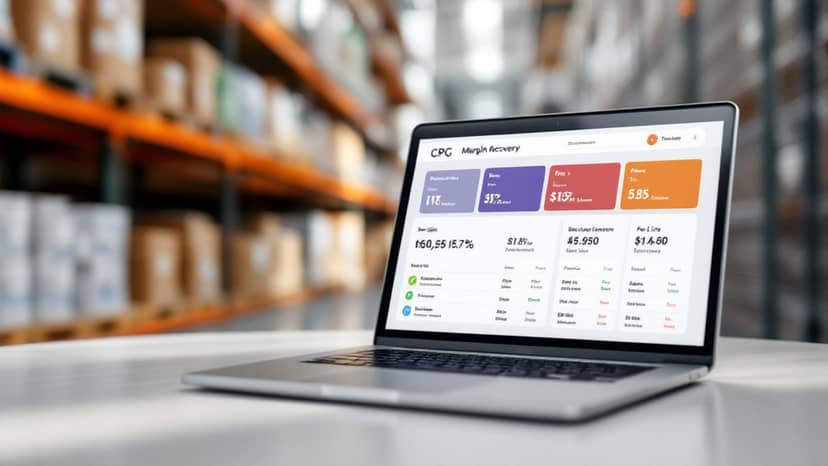
Understanding margin recovery on Amazon starts with catalog integrity. Fee overpayments, suppressed ASINs, and broken variations all compress net margin in ways that PPC optimization cannot fix upstream.
What to Ask Before You Sign with Any Catalog Partner
Three questions cut through agency positioning faster than any RFP:
- What is your 30-day and 90-day reinstatement rate for suppressed listings, and can you show case-level data from a current client in our category?
- Who on your team owns escalation when Seller Performance does not respond to a standard case, and what is your escalation pathway?
- How do you handle a flat file error that suppresses 50 ASINs simultaneously? Walk me through the response protocol hour by hour.
A partner that answers these questions with specifics and data is operating at a different level than one that responds with general assurances about their team's experience. The difference in outcomes over a 12-month engagement is significant. Brands that get catalog management right spend less time recovering lost ground and more time compounding growth on a stable foundation.
That is the only version of Amazon operations worth building.
Want to see exactly where your brand stands? Get the free CPG Amazon Benchmark Report and see your margins, ad costs, conversion, and fees benchmarked against the real state of Amazon in 2026.
Get the Benchmark Report →