Most CPG brands bleeding margin on Amazon are losing it in three places at once: inflated ad spend, uncaptured fee reimbursements, and pricing that has drifted below the threshold where the business actually works. A competent operator identifies all three within the first 30 days. Most agencies address none of them systematically because their incentive structure does not reward it.
This is the core problem with how brands typically hire Amazon help. An agency billing on a percentage of ad spend has a direct financial incentive to grow that spend, not to make it more efficient. A consultant delivering monthly reports has no capital at risk. A distributor moving your units cares about velocity, not your net margin. None of those models produces the outcome a scaling CPG brand actually needs.
Why Margin Erosion Happens Faster Than Brands Expect
Amazon's fee structure is not static. FBA fulfillment fees, referral fees, storage surcharges, and inbound placement costs have increased meaningfully over the past two years. A brand that modeled its unit economics in 2022 is almost certainly operating on assumptions that no longer hold. The math that made a product viable at a certain ad spend level may now make it unprofitable at the same spend.
Meanwhile, most brands are sitting on unclaimed reimbursements. Amazon's logistics network generates inventory discrepancies, damaged goods credits, and return processing errors at a rate that adds up to real money across a catalog of any size. The industry estimate is that brands recover less than 40 percent of what Amazon actually owes them, simply because no one is filing systematically.
Pricing drift compounds the problem. Unauthorized sellers, bundle undercutters, and MAP violations suppress the buy box price over time. A brand that started at a healthy ASP watches its effective selling price erode quarter over quarter, and the typical agency response is to increase ad spend to compensate for declining conversion. That is the wrong direction entirely.
What a Real Operator Does Differently
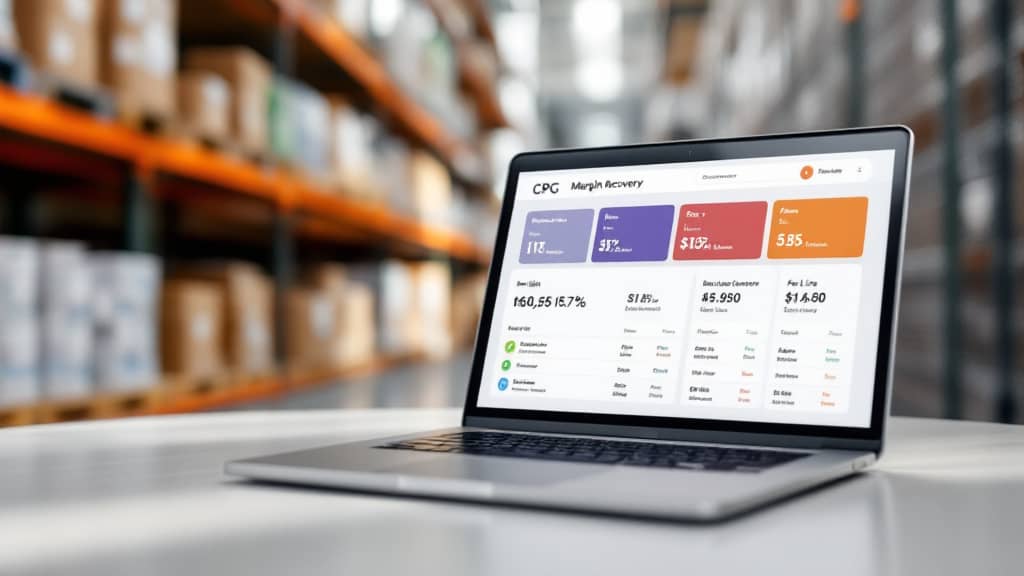
The starting point is a margin audit, not a campaign audit. Before touching bids or budgets, a real operator maps every cost layer: fulfillment fees by ASIN, referral fee tier, return rate by SKU, storage exposure by velocity, and ad spend as a true percentage of revenue rather than a vanity ROAS number. That audit tells you where the brand is actually losing money, and the answer is almost never simply that the CPCs are too high.
From there, the work splits into three tracks running simultaneously. First, fee recovery: filing reimbursement claims for inventory discrepancies, overcharges, and return errors, which is recoverable cash that has already been earned and should not require ongoing spend to recapture. Second, pricing integrity: identifying unauthorized sellers, enforcing MAP where applicable, and in some cases deploying exclusive distribution as a structural fix rather than a whack a mole enforcement strategy. Third, ad efficiency: reducing total ad cost as a share of revenue, which is a very different goal than reducing CPC or increasing ROAS in isolation.
On the ad efficiency side, the relevant metric is TACoS, total advertising cost of sales, measured against organic revenue, not just against ad attributed revenue. A brand scaling spend without growing organic share is building a business that stops the moment it cuts budget. Reducing TACoS sustainably means building organic rank, not just defending it with paid placement.
The Distributor Gap and Why It Matters
Some brands have turned to third party distributors as a shortcut to Amazon scale. The distributor buys inventory, controls the listing, and handles fulfillment. The brand gets a purchase order and stops thinking about Amazon. That arrangement solves one problem and creates several others.
A distributor has no reason to invest in brand building, review velocity, content quality, or advertising strategy. The listing drifts. Organic rank erodes. When the brand eventually wants to take back control, it faces a listing with outdated content, a suppressed buy box, and a competitor seller ecosystem that has grown around the neglect.
The model that works for scaling CPG brands combines the capital commitment of a distributor with the operational discipline of an agency. That means a partner who deploys their own capital to hold inventory, takes ownership of the listing, AND runs the advertising and content engine as if the brand's equity is at stake. Because in this model, it is.
TikTok Shop Is Not a Separate Problem
Brands managing Amazon margin recovery in isolation are missing a structural opportunity. TikTok Shop is now a meaningful demand generation channel for CPG, and the brands treating it as a separate experiment are leaving money on the table twice: once by not capturing the revenue, and once by not using TikTok's halo effect to drive Amazon organic rank through external traffic signals.
A partner running both channels as one engine can deploy creator content that drives TikTok Shop conversion, attribute the downstream Amazon search lift, and use that data to allocate ad budget more precisely across both platforms. That is a fundamentally different capability than an agency running your Sponsored Products in isolation.
If you are evaluating partners for Amazon margin recovery, the right question is not what their average ROAS is. The right question is: what does their model actually incentivize, and does that incentive align with your brand's net profitability, not their own revenue growth.
The brands that recover margin and hold it are the ones working with operators whose economics depend on the same outcome.
Want to see exactly where your brand stands? Get the free CPG Amazon Benchmark Report and see your margins, ad costs, conversion, and fees benchmarked against the real state of Amazon in 2026.
Get the Benchmark Report →