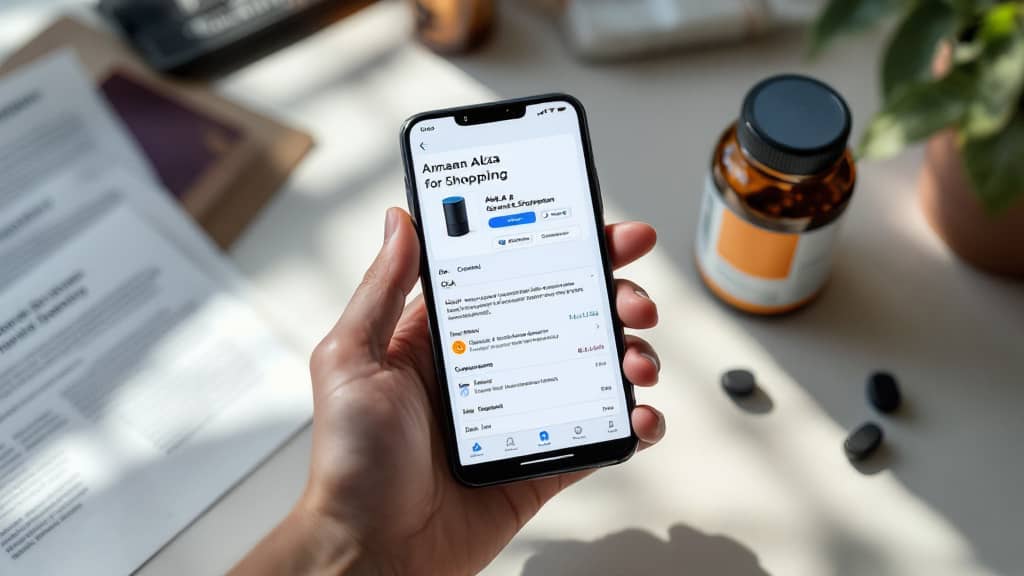
Amazon removed the Q&A block from the product detail page in early 2026, and most brands have not adjusted their content strategy once since it happened. The browsable section is gone. Shoppers who want answers now type into a search field, land on a secondary page, and frequently give up. But two AI systems, Alexa for Shopping and Join the Chat, are reading every word of that same Q&A content at full depth, every time a shopper asks a question on your listing.
The audience for your Q&A shifted from browsing humans to retrieval machines. Brands doing $1M to $10M per year on Amazon that have not rewritten their Q&A for this reality are feeding thin, vague, or contradictory content directly into the systems that now mediate purchase decisions.
What Amazon Actually Changed
Research published in January 2026 documents the shift plainly: Amazon eliminated the Q&A section from the main product detail page and moved it to secondary pages accessible only through a search prompt. Shopper complaints on Amazon's own question pages reflect real frustration, with buyers explicitly asking for the browsable format back.
Amazon has not published seller guidance explaining why. The practical interpretation is that a public section where any stranger could post an answer on behalf of your product introduced too much liability. An AI assistant trained on the same content and controlled through Amazon's own systems is a cleaner delivery mechanism from Amazon's perspective.
The consequence for brands is twofold. Your Q&A no longer earns direct conversions from shoppers scrolling the detail page. And it kept every bit of its value as source material for AI retrieval, which is now where it actually goes.
The Two Systems Still Reading Your Content
Alexa for Shopping replaced Rufus in May 2026 and is now embedded in the search bar, the results page, and the detail page. It draws on your listing copy, customer reviews, and community Q&A alongside broader web data to answer shopper questions in real time. A shopper asking whether your protein powder mixes in cold water gets an answer assembled from everything you wrote or failed to write.
Join the Chat launched in April 2026. Amazon's vice president of conversational shopping described it as a system that lets shoppers interrupt an audio product summary, ask a specific question, and receive an answer built from product information, reviews, and other available content before the summary resumes. A shopper listening to your product rundown can stop it mid-sentence and ask whether the item fits in a carry-on. Something answers. What it says is built from content you either wrote precisely or left thin.
Neither system discloses which content it pulled. You discover what they say by asking them questions and reading the responses. That is now part of the optimization process for any brand serious about managing organic share on Amazon in 2026.
What Separates a Good Partner From a Bad One Here
Most agencies have not updated their Q&A workflows since 2023. An advice-only consultant will tell you Q&A matters and send you a template. An agency billing on a percentage of ad spend has no structural incentive to spend time on content that does not move their invoice. Neither of those models produces the sustained content audit work that AI-optimized Q&A requires.
What a real operator does is different. They audit your full ASIN set on a scheduled cadence, not when you ask. They map the intent gaps between what shoppers are asking and what your Q&A actually answers. They write answers that are precise, complete, and structured so that a retrieval system can extract a factual response without interpretation. And they test by querying Alexa for Shopping directly and measuring whether your content surfaces in the responses.
This is not a one-time project. Competitors update their Q&A. New questions accumulate. AI retrieval behavior shifts as Amazon updates its models. A partner running this as an ongoing operation will hold share. A brand doing it once during an onboarding sprint will fall behind within two quarters.
How to Audit the Q&A You Can No Longer Browse
The full question set for any ASIN still exists. Append the ASIN to the amazon.com/ask/questions/asin/ path and the complete list loads on its own page. This is one of the few competitive signals that remains fully public, and most brands stopped checking it the moment it disappeared from the detail page.
A proper audit scores three dimensions across your top ASINs. How many questions exist total. How many answers carry real specificity rather than a one-word confirmation. How many of your core use cases have at least three questions covering them from different angles.
Running the same audit on your three closest competitors gives you a gap map. Q&A depth is a competitive signal most brands are ignoring right now, which means closing that gap is still a low-competition move.
What AI-Optimized Q&A Actually Looks Like
Answers written for browsing humans rely on implication, tone, and context. A shopper reading your answer fills in gaps using surrounding information. An AI retrieval system does none of that. It extracts the literal content of the answer and uses it to construct a response. Vague answers produce vague AI responses. Incomplete answers produce incomplete AI responses.
Effective Q&A answers for machine retrieval share four qualities. They state the fact first, without preamble. They include the specific number, measurement, or condition that makes the answer actionable. They do not contradict information in your title or bullet points. And they address the actual concern behind the question, not just the surface question asked.
A question asking whether a supplement is safe for pregnancy is not really asking for a yes or no. It is asking for the specific reason your product is or is not appropriate, the ingredient or certification that answers the concern, and where to find more detail. An answer that says only "consult your doctor" fails the machine audience entirely. That answer contributes nothing to what Alexa for Shopping will say when a shopper asks the same question.
Brands that get this right see measurable improvement in conversion on voice and AI-mediated traffic. Brands that leave it alone are handing that traffic to competitors whose content is more complete. The margin and efficiency implications compound quickly when organic AI-assisted traffic is the difference between profitable and break-even on a category.
The brands that will hold share through 2026 and beyond are not the ones running more ads. They are the ones whose content is precise enough to answer a machine's question before a competitor's content does.
Want to see exactly where your brand stands? Get the free CPG Amazon Benchmark Report and see your margins, ad costs, conversion, and fees benchmarked against the real state of Amazon in 2026.
Get the Benchmark Report →