IP Licensing Is Now a Serious Customer Acquisition Channel for CPG Brands
Toy Story 5 opened to $312 million globally in its first three-day weekend, and CPG brands that planned ahead are sitting on some of the most conversion-ready limited edition product lines of the summer. Dr. Squatch, SmartyPants, Simple Modern and Away all moved early, tying licensed SKUs to one of the highest-grossing Pixar releases in history. The brands doing this well are not just slapping a character on a label. They are engineering a multi-touchpoint acquisition funnel that runs straight through Amazon and TikTok Shop.
If your brand is doing $75K or more per month on Amazon and you are watching this trend from the sidelines, you are leaving a measurable amount of new customer revenue on the table. Here is what separates the brands capturing that revenue from the ones who will restock plain packaging in September wondering why Q3 underperformed.
What the Barbie and Wicked Playbooks Actually Proved
The Barbie movie in summer 2023 generated over 100 brand collabs across apparel, beauty and personal care. Wicked and its sequel Wicked: For Good produced more than 400 brand partnerships and over $330 million in media and promotional value, with roughly 28 billion impressions in the first few months. Those numbers are not marketing fluff. They represent real shelf velocity, real search volume spikes and real new customer data flowing into brand accounts.
P&G understood this. Gain laundry detergent and Dawn PowerWash both carried licensed Wicked packaging and participated in a 360-degree campaign that extended far beyond the product itself. These were not novelty plays. They were structured acquisition programs with measurable return on ad spend tied to incremental category buyers.
The brands that won during those windows shared one trait: they treated the IP partnership as a full-funnel commercial event, not a branding exercise.
What a Strong Operator Should Be Doing With Your IP Drop
When Dr. Squatch launched its Toy Story 5 collection in May, including three soaps and two deodorants like the Woody-inspired Howdy Hero scent blending snake root extract with desert sage, warm vanilla and leather, the goal was explicit new customer acquisition. Their director of brand marketing described IP partnerships as a Trojan horse with new audiences. That framing is exactly right, and it tells you something important about how to evaluate whether your Amazon partner knows what to do with a moment like this.
A strong operator should be executing all of the following around an IP drop:
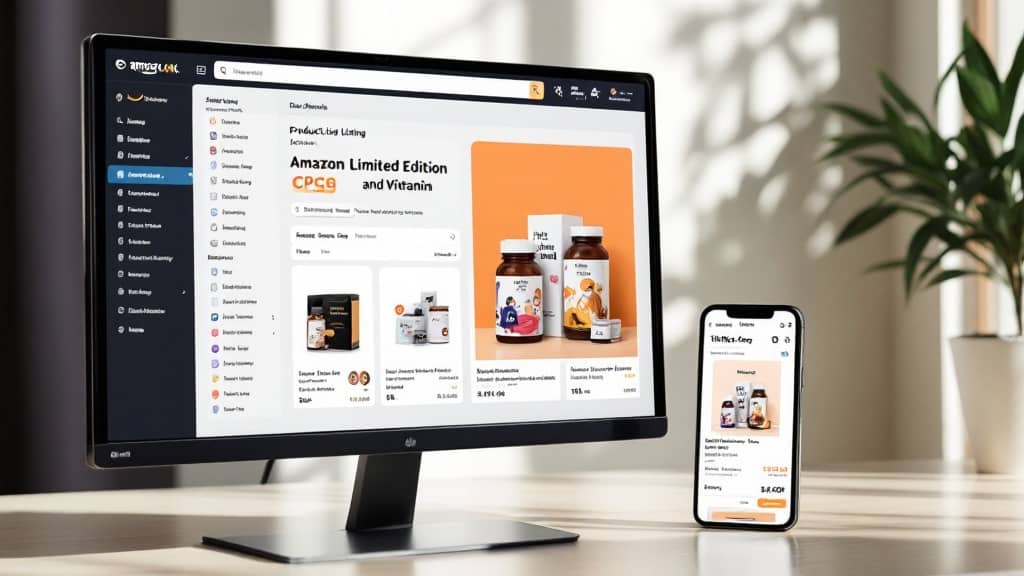
- New ASINs built with franchise-specific keyword architecture targeting both the IP audience and your existing category buyers
- A+ Content and Brand Story modules updated to reflect the collab creative within 48 hours of launch
- Sponsored Products and Sponsored Brands campaigns segmented by audience intent, buyers searching for the IP, buyers searching for the product category and existing brand loyalists
- A DSP or video campaign targeting the demographic cohort most likely to convert, in this case millennial parents who grew up with Toy Story and are now buying personal care and household products
- TikTok Shop integration for the limited edition SKUs, with creator seeding timed to opening weekend and the weeks following
If your current agency is not building a go-to-market plan that covers all of these vectors before a licensed product ships, you are funding a missed opportunity.
The Multi-Generational Angle Is a Specific Targeting Advantage
SmartyPants launching its first-ever licensed tie-in with Toy Story 5 branded packaging for Kids Multi and Omegas is a signal worth paying attention to. The brand did not treat this as a single SKU swap. It launched a full campaign called Fuel Their Imagination spanning social media, retail shelves, online video, podcasts and streaming video. That is a brand thinking about the licensed moment as a traffic driver across every channel where its buyer exists.
Simple Modern tied its Toy Story themed lunchboxes and water bottles directly to back-to-school season, compressing two major commercial events into one purchase decision. That kind of calendar intelligence is what your Amazon and TikTok Shop partner should be bringing to every major cultural moment, not just the ones you flag yourself.
The multi-generational nature of Toy Story specifically creates a rare targeting condition. You can reach millennial parents through nostalgia-driven creative while simultaneously converting their children as the primary user. That dual audience structure means your ROAS calculation on advertising spend has to account for longer lifetime value, not just first purchase return.
What Separates Good Partners From Bad Ones During a Trend Window
Trend windows on Amazon and TikTok Shop are narrow. Search volume for a movie-driven collab peaks in the first two to four weeks post-release and decays faster than most brands expect. The brands that capture the most incremental revenue are the ones whose operator had the catalog, creative and campaign structure live before the cultural moment peaked.
Three things reveal whether your partner is built for this kind of execution. First, do they have a process for identifying cultural moments 60 to 90 days in advance and building commercial plans around them. Second, do they control enough of your Amazon account infrastructure to move quickly without waiting for approvals on every asset. Third, do they have TikTok Shop creator relationships that can be activated in days rather than weeks.
Eleviam manages Amazon and TikTok Shop as a connected system, not two separate channels. When a brand brings a licensed SKU or a limited edition drop, the commercial plan runs across both platforms with aligned inventory positioning and coordinated ad spend. That alignment is what turns a cultural moment into a Q3 revenue event rather than a footnote in a post-mortem.
Doing $1M+ a year on Amazon or TikTok Shop? Book a qualification call and we'll show you where demand is leaking between the two channels.
Book a Qualification Call →