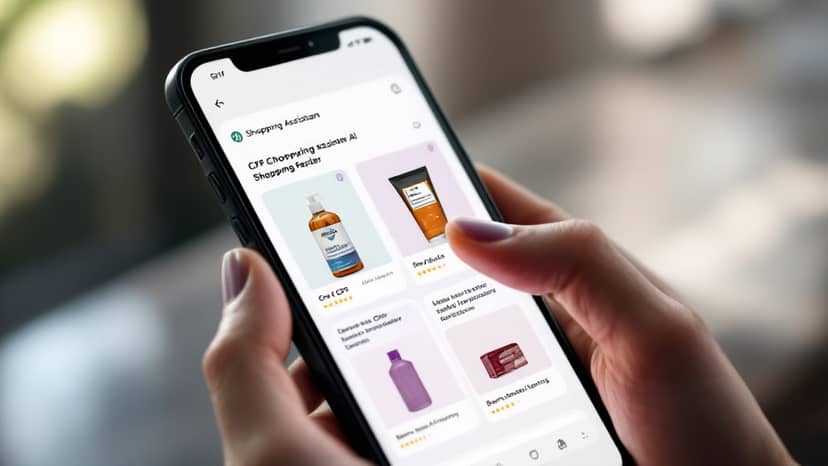
74% of shoppers now use AI for some form of product discovery, and 62% of AI-enabled shoppers use it specifically to compare brands side by side. Most CPG brands are structurally unprepared for this shift.
The problem is not traffic volume or ad spend. It is the underlying quality of the product data and social proof your brand sends into the world. AI models like ChatGPT, Gemini, and Perplexity pull from structured, consistent, verifiable signals when they generate recommendations. Brands that have invested in review velocity, accurate listing content, and authentic user-generated content will appear in those answers. Brands that have not will be described thinly, inaccurately, or not at all.
This is a partner selection problem before it is a marketing problem. The agency or operator managing your Amazon presence directly controls whether the data feeding those AI models is clean, consistent, and compelling.
What AI Visibility Actually Measures
Traditional search rank is a single metric: position on a results page. AI-driven discovery operates on a different set of signals entirely. NielsenIQ frames the emerging KPIs as share of conversation, share of recommendation, and share of trust. These ask whether a model knows your brand, believes your product claims, and surfaces you in comparison answers.
For a CPG brand, that means every product detail page on Amazon, every review your brand has accumulated, and every piece of content tied to your ASIN becomes an input into how AI systems describe and recommend you. The operator managing your Amazon account is, functionally, managing your AI search footprint too, whether they know it or not.
Most agencies are not thinking about this connection. An advice-only consultant tells you to collect more reviews and leaves the execution to your internal team. An agency billing on a percentage of ad spend has a financial incentive to run more campaigns, not to clean up your product data. Neither model is positioned to treat listing quality and review depth as a strategic priority tied to long-term brand discovery.
Why Product Data Quality Is the Core Issue
NielsenIQ's analysis of AI-driven discovery is direct: the brands that fall out of AI-generated answers are not losing because of bad marketing. They are losing because their product information is inconsistent, sparse, or unverifiable across channels. AI models cannot reconcile conflicting data. When your title, bullet points, A-plus content, and review language tell different stories, the model defaults to a thin or inaccurate description.
This is what a strong Amazon operating partner should be fixing continuously, not just at onboarding. Listing optimization is not a one-time task. It is an ongoing function that compounds over time. The brands that will dominate AI search answers in 2027 are the ones whose partners are treating content accuracy as a standing priority today.
At Eleviam, the operating model is built around this reality. Managing Amazon and TikTok Shop as a unified brand engine means the content signals your brand sends on both platforms are consistent, structured, and designed to build compounding trust, not just short-term conversion.
Reviews Are a Data Asset, Not Just Social Proof
Review volume and review quality are two of the strongest inputs an AI model uses when evaluating whether to recommend a product. A brand with 2,400 reviews that reference specific use cases, ingredients, or outcomes will outperform a brand with 200 reviews of generic five-star praise in virtually every AI comparison prompt.
The operator managing your brand needs to have a review strategy that goes beyond asking customers to leave feedback. The language in your reviews should reflect the real reasons people choose your product. That kind of specificity happens when your content, sampling programs, and post-purchase flows are tightly coordinated, not siloed across three different vendors.
A distributor that holds your inventory but does not run the agency engine cannot build this. A tool-only vendor can flag gaps in your review count but cannot fix the upstream problem. The structural advantage of a full-service operator is that listing content, review strategy, and paid media work from the same brief.
TikTok Shop Feeds the Same AI Engine
AI models do not pull exclusively from Amazon. They synthesize signals from across the open web, including social commerce platforms where shoppers post authentic product experiences. A brand with strong TikTok Shop presence generates creator content, organic reviews, and purchase-validated signals that feed directly into the data pool AI systems draw from.
This is one of the clearest structural advantages of running Amazon and TikTok Shop through the same operator. TikTok Shop management done well does not just drive incremental revenue. It produces a body of authentic, crawlable, verifiable content that strengthens how AI models represent your brand across every discovery surface.
Brands treating TikTok Shop as a separate initiative managed by a different agency are losing this compounding benefit entirely. The signals stay disconnected. The AI answer reflects that fragmentation.
What to Demand from Your Operating Partner
When evaluating whether your current partner is positioning your brand well for AI-driven discovery, ask four questions. First, is your product data consistent and fully structured across every surface your brand appears on. Second, does your partner have a proactive review strategy tied to your listing content, not just a reactive one. Third, is your TikTok Shop presence generating authentic content that reinforces your Amazon positioning. Fourth, does your partner bill on gross revenue, meaning their incentive is brand growth, not budget inflation.
An agency billing on a percentage of ad spend has no financial reason to invest time in listing quality, review architecture, or cross-channel content consistency. Those tasks do not increase the media budget. An operator with aligned incentives, one that bills on gross revenue and deploys its own capital into the brands it manages, is structurally motivated to build the foundation that drives compounding returns across every discovery channel, including the AI-powered ones.
The brands that win AI search over the next 24 months will not win because they published more content. They will win because their operating partner treated data quality, review depth, and cross-channel consistency as a revenue function, not a checklist item.
Want to see exactly where your brand stands? Get the free CPG Amazon Benchmark Report and see your margins, ad costs, conversion, and fees benchmarked against the real state of Amazon in 2026.
Get the Benchmark Report →