Most Amazon agencies are optimizing for the wrong metric entirely.
Brands doing $75K to $500K per month on Amazon are not losing to competitors because of bad products. They are losing because their operator is measuring success by ad spend managed, not by contribution margin per unit. That single misalignment costs growing CPG brands an average of 12 to 18 points of margin every year, margin that compounds into real money at scale.
The agency selection decision is one of the highest-leverage choices a brand makes. Yet most brands evaluate partners on creative portfolios and case study screenshots rather than on the operational frameworks that actually determine whether a brand scales or stagnates.
What elite operators actually do differently
The gap between a good Amazon operator and an average one is not effort. It is system architecture. Here is what separates the top tier from the rest.
- Catalog architecture built for algorithm performance, not human browsing. Elite operators structure parent-child relationships, variation strategy, and keyword indexing to maximize the surface area the A9 algorithm can crawl. Average agencies build listings that look clean to the human eye and leave 30 to 40 percent of organic visibility on the table.
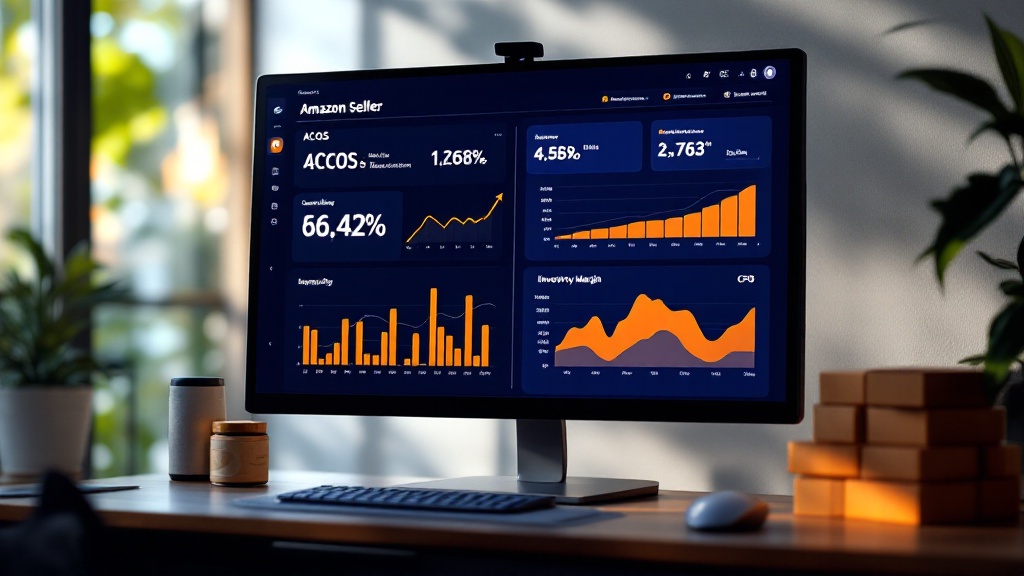
- PPC treated as a margin lever, not a visibility lever. Budget allocation decisions should always be downstream of target ACoS by product line, contribution margin, and inventory velocity. If your agency cannot tell you the exact ACoS threshold at which a specific ASIN becomes unprofitable after COGS, FBA fees, and returns, they are flying blind with your money.
- Inventory planning integrated with paid strategy. Running out of stock after a successful PPC push is not bad luck. It is a planning failure. Best-in-class operators build a 90-day rolling demand forecast that accounts for ad-driven velocity spikes, Amazon lead times, and seasonal index shifts. Brands that treat inventory and advertising as separate workstreams will hit stockouts and rank collapse repeatedly.
- Review velocity and conversion rate treated as a unit economics input. A single point of conversion rate improvement on a $200K per month listing is worth roughly $24K in annualized revenue at flat traffic. Operators who monitor this weekly and run systematic split tests on main images, titles, and A-plus content treat the listing itself as a performance asset.
The incentive alignment problem most brands ignore
Here is the structural issue almost no one discusses openly. When an agency charges a flat monthly retainer plus a percentage of ad spend, their financial incentive is to increase ad spend. Full stop. That model is directly misaligned with a brand's goal of improving profit per unit.
The right operator model ties compensation to outcomes: revenue growth, margin improvement, or both. At Eleviam, we operate under an agency-first plus 3P exclusive distribution model, which means our incentives are structurally identical to the brand's incentives. When the brand wins more margin, we win. That alignment changes every decision made inside the account.
When evaluating any Amazon partner, ask directly: how does your fee structure change if we scale ad spend by 50 percent without improving ROAS? If the answer benefits the agency, you have a misalignment problem that no amount of reporting dashboards will fix.
TikTok Shop is now a required channel, not an experiment
Brands that treat TikTok Shop as optional in 2025 are making a strategic error that will compound over the next 24 months. TikTok Shop's gross merchandise volume crossed $20 billion in 2024, driven almost entirely by CPG categories including beauty, wellness, food, and household goods. The discovery-to-purchase funnel on TikTok converts at rates that search-based platforms cannot replicate for impulse-heavy categories.
The operational complexity of TikTok Shop is significantly higher than most brands expect. Creator affiliate management, live shopping coordination, fulfillment compliance, and content-to-conversion attribution require a different operational stack than Amazon. Brands that try to layer TikTok Shop onto an already stretched internal team or hand it to an Amazon-only agency consistently underperform.
The right partner manages both channels inside a unified commercial strategy, allocating margin and inventory across platforms based on where the return on spend is highest at any given time. Siloed channel management leaves significant cross-platform revenue unrealized.
What your operator should be reporting every week
If your weekly report from your Amazon or TikTok Shop partner does not include the following, you are getting a vanity metrics dashboard, not operational intelligence:
- Contribution margin by ASIN, not just revenue and ACoS
- Inventory days on hand versus projected sell-through velocity
- Organic rank movement on the top 10 keywords for each hero ASIN
- Return rate trends and the primary return reason codes from the customer feedback loop
- Buy Box ownership percentage and any third-party seller activity on your listings
These five metrics tell you the actual health of the business. Revenue growth without margin improvement is not scaling. It is subsidizing volume. Industry data consistently shows that brands without this operational visibility average 6 to 9 months longer to reach profitability targets compared to brands with a structured reporting framework in place.
The cost of waiting to get this right
Every month a brand operates with a misaligned agency, an underbuilt catalog, or a siloed channel strategy is a month of compounding inefficiency. At $100K per month in Amazon revenue, a 10 percent margin improvement from better operations is $120K in annualized profit. That number scales linearly with revenue, which means the brands fixing this infrastructure at $100K per month arrive at $500K per month with dramatically better unit economics than the ones who wait.
The brands that win on Amazon and TikTok Shop over the next three years will not be the ones with the best products. They will be the ones with the best operators. Choosing that partner correctly, early, is the highest-return decision a CPG brand can make right now.
Running $75k+/month on Amazon or TikTok Shop? Book a free 30-minute audit call and we'll show you exactly where the margin is leaking.
Book a Free Call →