83% of shoppers have used AI in the past six months, and 43% used it specifically for shopping. Your product detail page now has two audiences: the human shopper and the AI deciding whether that shopper ever sees your product at all.
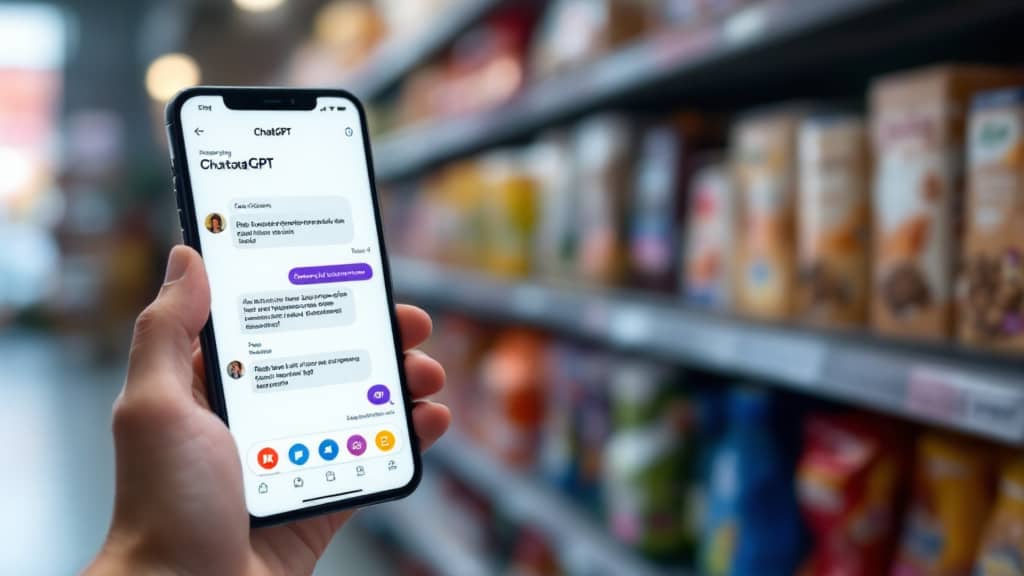
That shift matters enormously for CPG brands scaling on Amazon and TikTok Shop. AI chatbots like ChatGPT are increasingly the first point of contact in a purchase journey, pulling product data, ratings, and reviews to form recommendations before a shopper ever lands on a retailer page. Brands that are not structured for that retrieval are invisible in that conversation, regardless of how strong their Amazon listings look today.
What ChatGPT Actually Uses to Recommend Products
ChatGPT Shopping does not operate like a keyword search engine. When a prompt carries shopping intent, the model draws from structured product feeds submitted by merchants, web retrieval from brand and retailer pages, and third-party content including ratings and reviews. The weight given to each source shifts depending on the prompt. A budget query surfaces price data. A needs-led query surfaces use-case content. A comparison query surfaces reviews and specifications.
What this means practically: your product has to hold up across a range of prompts, not just rank for one target keyword. Thin listings, vague benefit claims, and sparse review profiles do not give an AI model enough to work with. It will surface a competitor that does.
Research from Yale and Columbia into how AI shopping agents select products found that a small uptick in star rating or review count influenced an agent's recommendation as much as a meaningful price reduction. That is a significant finding for any brand still treating reviews as a nice-to-have.
Product Feeds Versus PDPs: The Answer Is Both
Analysis of roughly one million ChatGPT Shopping results from June 2026 gives a useful signal on retrieval mechanics. Feed-derived citations, meaning results pulled directly from structured merchant data feeds rather than crawled web pages, grew from 4.3% to approximately 20% of shopping retrievals over the study period. Nearly all of those feed-derived citations landed in the first offer position.
The implication for CPG brands is direct. Structured data feeds, the same infrastructure used for Google Shopping and retail media, now feed AI recommendation engines too. Brands treating their product data as a static PDP exercise are leaving a fast-growing retrieval channel unaddressed. Your agency or operator partner should be managing both.
Why This Is an Operator Problem, Not a Content Problem
Most brands encountering this challenge for the first time assign it to their content team. Rewrite the bullets, add more keywords, improve the copy. That response misses the structural issue.
AI retrieval rewards data clarity, review volume, and structured product feeds built to specification. Those are infrastructure problems. They require an operator who manages the full listing stack: feed submission, review generation strategy, PDP architecture, and how all of that connects across channels.
An advice-only consultant can tell you what ChatGPT prefers. A tool-only vendor can audit your current listings. Neither one executes the infrastructure changes that move the needle. And an agency billing on a percentage of ad spend has little financial incentive to push into organic and AI-driven discovery, which costs budget to build but does not inflate media spend.
The brands winning AI recommendation share in 2026 have partners managing their product data the way a retailer manages its shelf. Every data point is accurate, structured, and current. Review programs are running continuously, not in bursts. Listings are built to serve multiple retrieval contexts, not optimized for one keyword cluster.
What Strong AI Visibility Actually Requires
Three things separate brands that show up in AI recommendations from those that do not.
- Structured product feeds submitted to spec. Not just a clean PDP. An actual data feed formatted for the retrieval systems ChatGPT and similar tools pull from, kept current as specifications evolve.
- Review volume and recency. AI models weight social proof heavily. A product with 50 reviews from three years ago performs worse than a comparable product with 200 reviews from the past six months. Ongoing review generation is not optional for AI visibility.
- Use-case content that answers needs-led queries. Shoppers asking AI chatbots for product recommendations often ask in scenario terms: best protein powder for travel, cleanest energy drink for afternoon focus. Your listing needs content structured around those scenarios, not just product features.
These requirements overlap directly with what drives conversion on Amazon and virality on TikTok Shop. A strong Amazon operator is already building listings with structured data, review depth, and use-case positioning. Those same assets are what feed AI retrieval engines. The brands with the strongest AI visibility in 2026 are almost always the brands with the strongest Amazon and TikTok Shop execution, because the underlying infrastructure is the same.
The Practical Takeaway for CPG Brands
AI shopping recommendation is not a separate channel requiring a separate strategy. It is an output of how well your product data, review profile, and listing architecture are built across the channels that already matter. Brands with fragmented execution, where Amazon runs separately from TikTok Shop, and content is siloed from data feeds, will accumulate gaps in every retrieval system that emerges.
The question to ask your current partner is not whether they have an AI SEO service to sell you. The question is whether they manage your product data infrastructure as a unified asset across every surface where your product can be found, and whether they have the operational depth to keep that infrastructure current as retrieval systems evolve. If the answer is unclear, that is the answer.
Want to see exactly where your brand stands? Get the free CPG Amazon Benchmark Report and see your margins, ad costs, conversion, and fees benchmarked against the real state of Amazon in 2026.
Get the Benchmark Report →